 Μake us preferred on Google
A massive investigation into one of Greece’s largest investigations of tax and social security fraud networks has reportedly uncovered a system of hundreds of shell companies, thousands of tax ID numbers and more than 1,300 so-called “front men”, used to conceal the identities of the actual owners of businesses and to transfer financial liabilities to unsuspecting individuals.
The case, centred on eateries, bars and nightclubs operating primarily in Thessaloniki and tourism-laden Halkidiki prefecture, is estimated to have generated losses exceeding 206 million euros to the Greek state and the country’s social security system. The investigation has identified more than 2,000 businesses, 1,300 nominal company managers and shareholders, approximately 700 individuals suspected of exercising actual control over the businesses and 4,200 tax identification numbers.
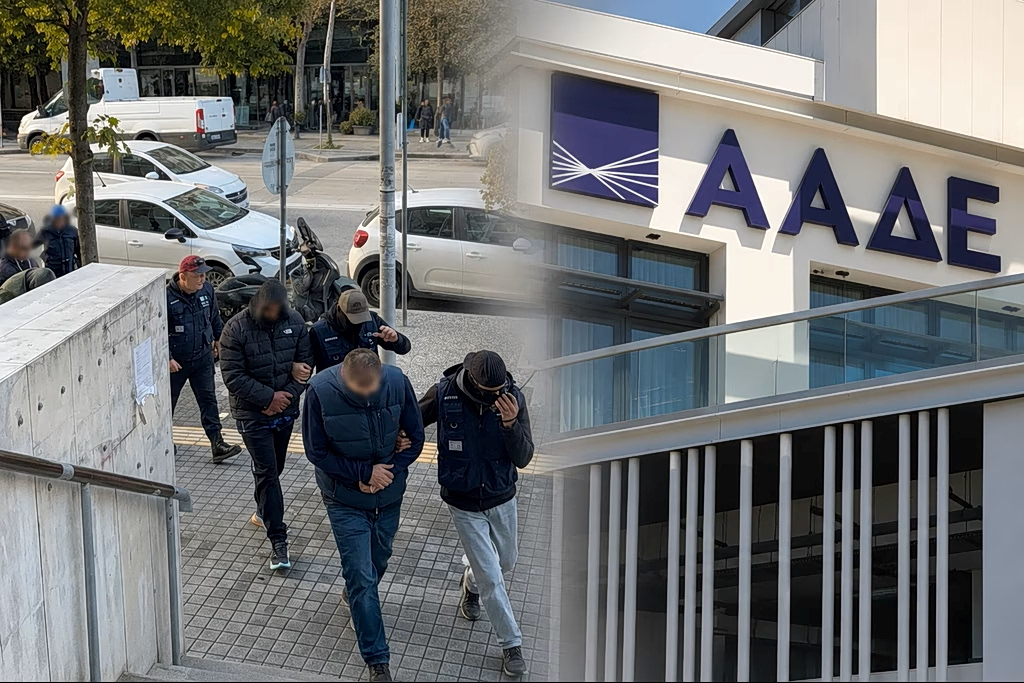
The Independent Authority for Public Revenue (AADE), through its Financial and Economic Transaction Control Forces (DEOS), coordinated the operation, which involved 60 tax inspectors and seven prosecutors. The investigation covered more than 700 business locations in northern Greece and other parts of the country.

Eighteen people were initially arrested during the operation, while 16 suspects remained in custody pending their appearance before an investigating magistrate. Two businessmen suspected of playing central roles in the alleged network were still being sought on Tuesday.
According to the financial authorities, the outstanding liabilities initially identified amounted to more than 203 million euros, comprising approximately 68 million euros in unpaid VAT and income tax and 135 million euros in social security contributions owed to the Unified Social Security Fund (EFKA).
Subsequent examination of the extensive case file put the liabilities associated with 917 companies at 206.27 million euros, including approximately 138 million euros in taxes and 68 million euros in social security contributions.
How the alleged network operated
The investigation, codenamed “Front Men” (Straw Men), revealed an elaborate system in which businesses continued operating normally while their legal ownership and management were repeatedly transferred to individuals who had little or no actual involvement in their activities.
According to the findings, the actual owners and operators remained behind the scenes, while other individuals appeared in official company documents as managers, shareholders or sole proprietors.
The arrangement allegedly allowed the businesses to accumulate substantial tax and social security liabilities without exposing their actual owners to the corresponding legal and financial consequences.
When debts became excessive, the companies were closed or abandoned and new legal entities were established under different names and with different nominal managers. The commercial activities could continue under a new corporate structure, while the accumulated liabilities remained attached to the individuals whose names appeared in the previous companies’ registration documents.
The investigation also established that accounting offices and legal professionals allegedly played a central role in establishing the companies, recruiting nominal managers and handling the necessary documentation.
Three accountants and a lawyer are among those whose alleged involvement is being examined. The lawyer is accused of using forged authorizations to secure operating permits from municipal authorities, the fire brigade and public health services.
Patients, low-paid workers and even deceased people used as front men
One of the most disturbing aspects of the investigation concerns the alleged recruitment of vulnerable individuals to serve as nominal company managers.
According to AADE’s findings, members of the network approached people with serious health problems, particularly outside the Theageneio Hospital in Thessaloniki and Agios Savvas Hospital in Athens. They were allegedly offered relatively small payments to allow their personal details to be used in company registrations.
Many of those recruited reportedly had no knowledge of the businesses’ actual activities or the financial obligations being accumulated in their names.
Others were low-paid employees in the restaurant and nightlife sectors, including waiters, kitchen workers and cleaners, who were allegedly persuaded to sign company documents in exchange for additional payments.
The case file also contains evidence that at least 12 nominal managers had already died, with their identities allegedly continuing to be used in corporate registrations and business transactions.
In some instances, companies continued issuing invoices and conducting transactions under the names of deceased individuals. One person who died in 2025 was reportedly listed as the manager of 22 companies carrying debts exceeding 2 million euros, while another deceased individual remained registered as manager and shareholder of 19 businesses.
The extent of the liabilities attributed to some of the nominal managers is particularly striking. One employee working as a cashier at entertainment venues was reportedly associated with 32 companies and faced liabilities of approximately 18.4 million euros. A kitchen worker earning around 450 euros a month was listed as owing 2.6 million euros, while a delivery driver was associated with 19 companies and debts of approximately 3 million euros.
Businessman discovers 18 companies registered in his name while in a coma
Several complaints from individuals whose personal details were allegedly exploited have brought further details of the operation to light.
One businessman from Thessaloniki said he discovered that 18 companies had been established in his name while he was hospitalised following a haemorrhagic stroke that left him in a coma for two months.
He said the accountant allegedly involved in the scheme had exploited his personal TAXISnet credentials to establish businesses without his knowledge, including a pizzeria, a computer rental company and even an accounting office.
After recovering and attempting to resume his professional activities, he discovered that the companies had accumulated debts exceeding 1 million euros in his name.
He also alleged that the accountant had recruited members of his family into some of the businesses and subsequently dismissed them, allowing them to claim unemployment benefits.
Another individual said he had initially agreed to become a partner in a catering business after being approached by people he knew. He began receiving dividends but became suspicious when tax liabilities from companies he did not recognise started appearing in his name.
The investigation has also identified a digital network of connections between the companies. Inspectors discovered a file containing 161 tax identification numbers and associated telephone numbers. At least 250 companies were found to be using identical email addresses or variations of the same addresses when communicating with public authorities.
Cross-checking telephone numbers revealed that calls were frequently answered by the actual business owners and managers rather than the individuals officially registered as company representatives.
Well-known names appear in the case file
The extensive list of 1,283 individuals under investigation also includes people from the worlds of business, sports and entertainment.
Among those named are former professional footballers Pantelis Kafes, Spyros Vallas and Petros Kanakoudis, as well as former international basketball player Panagiotis Liadelis. The latter have not been charged with any offense.
Former actor and model Errikos Petillon, who was among those arrested, was released following his appearance before the investigating magistrate on Tuesday. Prosecutors and a magistrate imposed restrictive conditions, including a travel ban and an obligation to report regularly to a local police station.
Petillon denied knowingly participating in the alleged scheme, claiming that he had been deceived into providing his personal TAXISnet credentials. He said he had known only one woman among the co-defendants and had not understood how his personal information was being used.
He had reportedly been registered as a manager/operator of six legal entities and a partner in two others. The eight companies in which he participated had combined debts of approximately 596,000 euros.
Other defendants have similarly denied the accusations, claiming that their personal credentials were obtained or exploited without their knowledge.