 Μake us preferred on Google
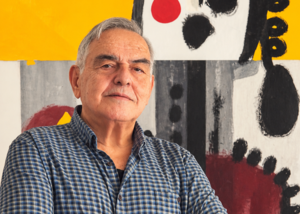
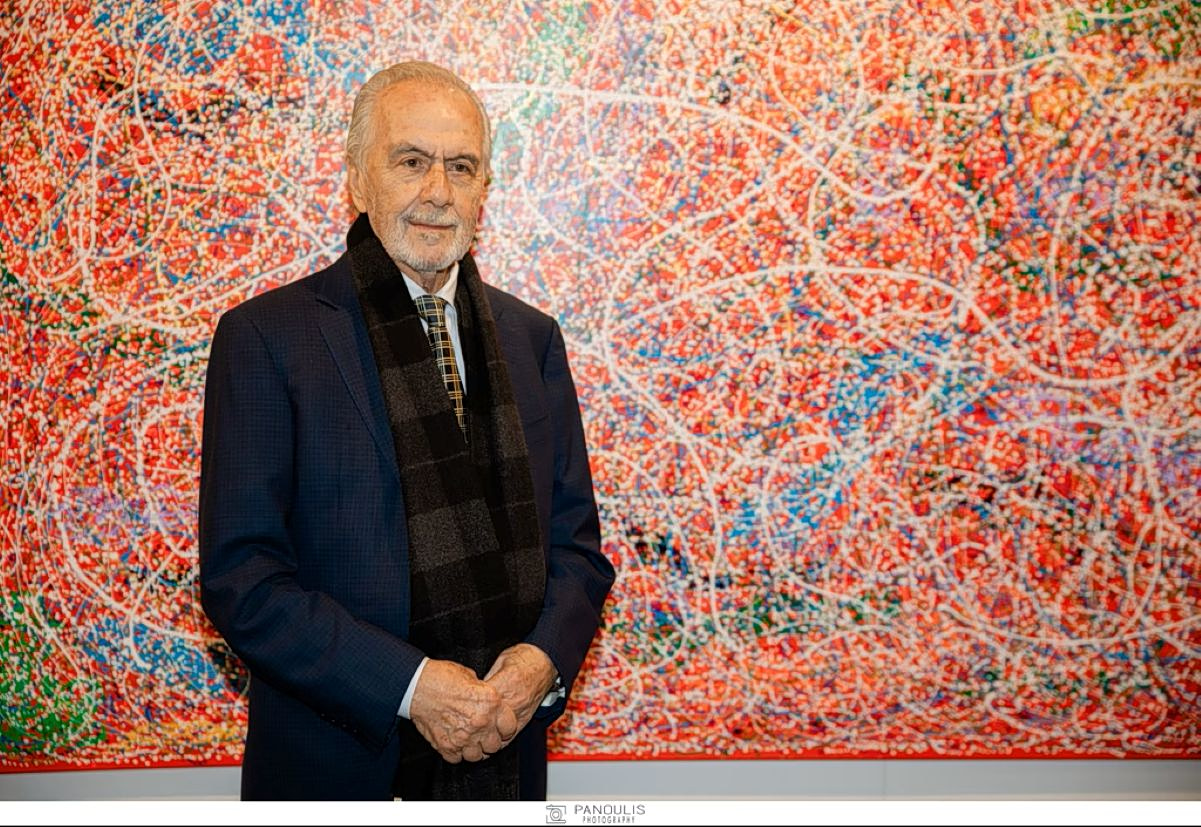
The Miró Room at UNESCO headquarters in Paris is dominated by Joan Miró’s monumental ceramic murals, The Wall of the Sun and The Wall of the Moon. This fall, the paintings of Peter Katsichtis found their own place in that iconic space. His exhibition, Synthesis and Diversity: The Perpetual Motion of Colors, curated by art theorist and critic Takis Mavrotas, opened on October 27. Guests from the worlds of art, politics, and business attended, among them George Koumoutsakos, Greece’s Permanent Representative to UNESCO, and Lazare Eloundou Assomo, Director of the UNESCO World Heritage Centre.
Behind the bursts of color in Katsichtis’s work is an unusual life story. Before he turned 18, he left Anavryti, a village on Mount Taygetus, for America. When it came time to say goodbye, his father gave him no advice. He said only that he believed in him. Carrying that trust with him, Katsichtis built a highly successful business career in New York. For him, though, success was never only about the numbers. He came to love art first as a collector, and in the end he stepped to the other side of the canvas.
His friendship with Mavrotas goes back several decades, to when Mavrotas curated an exhibition of Dimitris Mytaras’s work in New York. Over the years it grew into a lifelong bond.
“Peter Katsichtis’s painting belongs to the questions and explorations of contemporary art,” Mavrotas told To Vima. “He works without preliminary sketches or a predetermined narrative structure, giving the painterly gesture free rein. His lines sometimes recall flashes of lightning, at other times whirlwinds, and his compositions draw on the power of color and light. There is a boundless freedom in his work, and his images never repeat themselves. Each piece has its own character and reveals his emotion and his optimism about life.”
He added: “What matters most is his inexhaustible creativity and the dedication with which he keeps working. He is a man who deeply respects art and serves painting with consistency and hard work. The works shown at UNESCO are the result of intensive work over the past few years. It is heartening to have people among us with such creative drive, for whom art is a compass for life.”
Katsichtis left Taygetus as a boy and became a businessman who fell in love with painting. He still seems to have the same quiet confidence in his eyes that his father once saw in him. Today it finds a new expression on his canvases.