 Μake us preferred on Google
In 2015, on a planet that was not exactly peaceful but was certainly different from today’s, TIME magazine named Angela Merkel its “Person of the Year.” Why? “Because,” the magazine wrote, “she showed steadfast moral leadership in a world where it is in short supply.”
The “shortage” certainly had nothing to do with her country’s dependence on Russian natural gas, the muted response with which she accepted Russia’s annexation of Crimea a year earlier, or the economic repression and austerity measures she imposed on our bankrupt country. What earned her the halo of morality was her handling of the refugee crisis. “The German leader is receiving rave reviews for her moral leadership,” The Washington Post wrote in the fall of that same year, while Newsweek recognized her as “the conscience of Europe.”
Morality, at least in one respect, during 16 years as chancellor. One moment amid a multitude of Machiavellian moments, including a political patricide: that of Helmut Kohl. So what? The world back then was not angelic, but today it is post-Machiavellian. It is a world of unapologetic leadership, unrestrained ambitions, and raw displays of power. No political conspiracies, no political assassinations in the dead of night at Florence Cathedral or in the canals of Venice. Never before in the modern world has power been so closely tied to the power of money, and never before has wealth been so voraciously ostentatious. Welcome to the “new Yalta.”
At the “Coalition of the Willing” summit in Berlin, another chancellor, unpopular and expendable, Friedrich Merz, reminded reporters at a press conference that Yalta “did not symbolize a world of unity but one of division.” A little earlier, while traveling from China to the United States aboard his “brand-new, beautiful” Air Force One, Donald Trump was speaking by phone with European leaders to tell them that “you spend too much money” on Ukraine and that “it would be nice if you spent it in Germany, France, and the other places where you are, because you have great countries.” Never before in the modern world have the end of a war and peace been so closely associated with the smell of money. So? Let us look at our pockets.
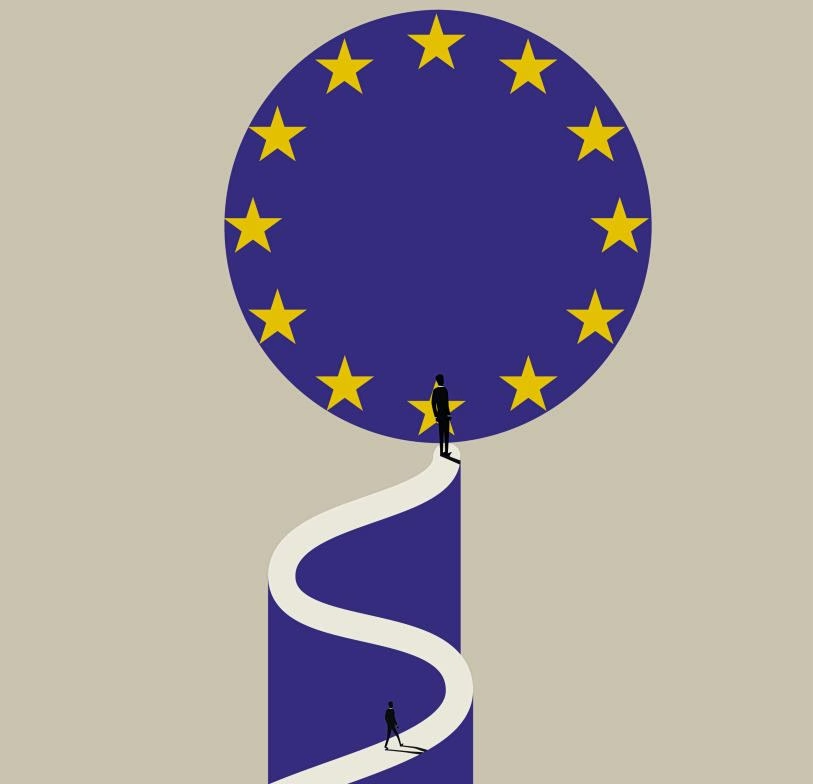
The West has always looked after its own pockets – and usually those of others, too. But if one can detect traces of moral leadership in this post-Machiavellian world, they are to be found in the part of the West that has not abandoned its system of values in order to flirt with an international alliance of authoritarians. A certain moral stance can be found in Europe acting collectively, not in Trump’s United States. A stance that Europe certainly did not inherit from Angela Merkel. Morality, as a defining quality of governance, was built upon the devastation and ruins of World War II. It is the legacy of Robert Schuman and Altiero Spinelli. Europe’s stance on the war in Ukraine is dictated by its own historical memory.
As always, the wheel of history will turn. With international law torn apart page by page, but it will turn nonetheless. The next world may find the MAGA movement battered, or even buried in oblivion. America, although wounded by the experience of Trump’s administration, may find its way again. But what kind of Europe will it find, with its expendable leaders? Will its next leaders also be heirs to Schuman and Spinelli, or will they be sociopaths from the extremes, flirting now with one authoritarian regime and then with another, while doing business in territory and resources?
The answer will become clear from the new heirs. From the “People of the Year” of our not-so-distant future.