 Μake us preferred on Google
In Paris, a young conductor is captivating the crowd. The mass uprising of young people that is shaking France seems to be transforming. Étienne Jarrier, the conductor of the Orchestre du Nouveau Monde, is only 25 years old!
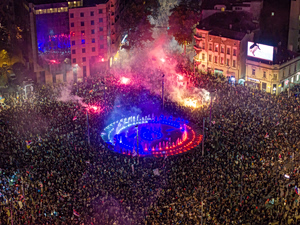
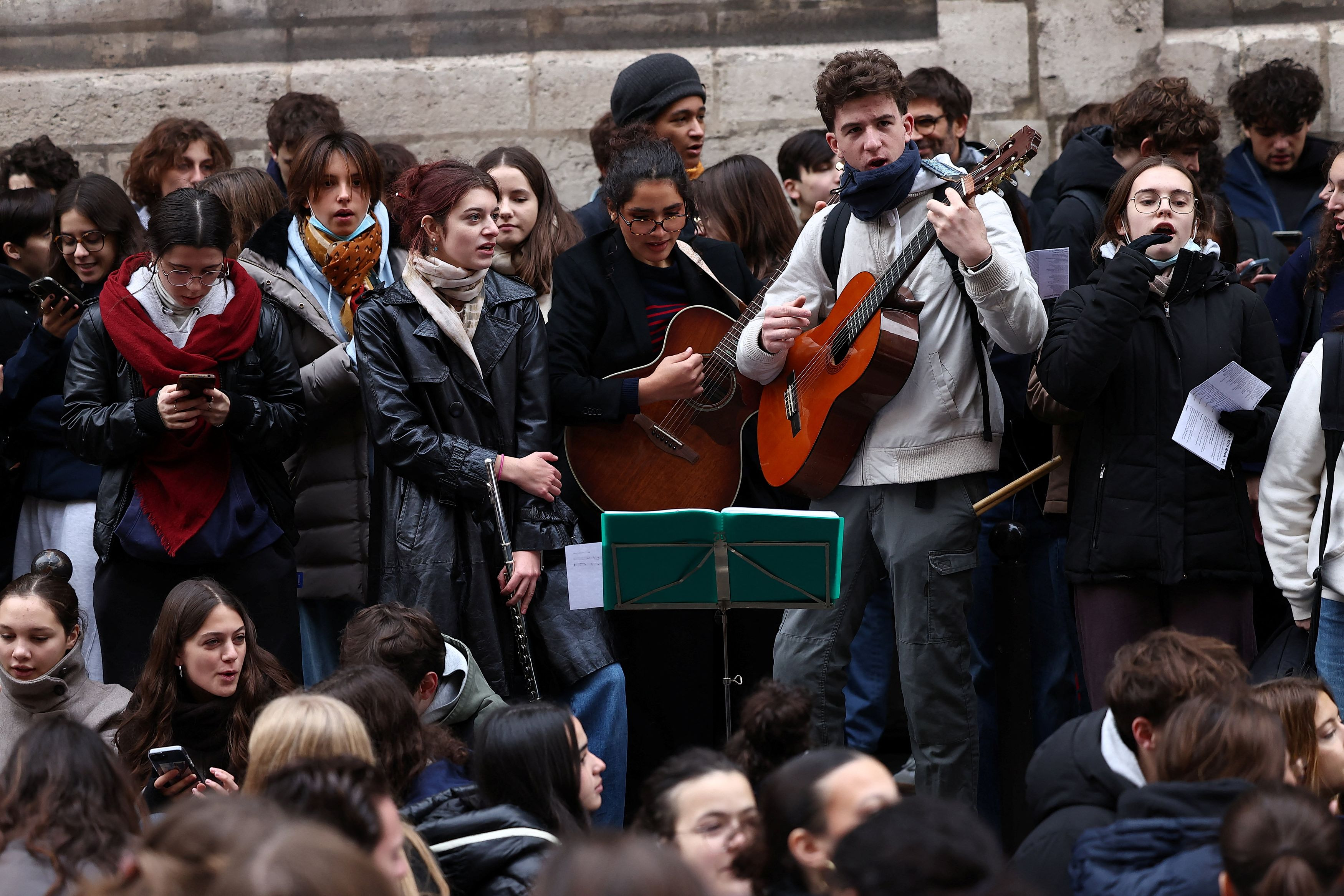
On October 17, 2026, hundreds of musicians gathered in Paris at Place de la République. The gathering was interrupted by tear gas. A few days later, on November 5, the musicians returned to the very same square. They played again, with the same passion. Within minutes, the crowd that had gathered was overcome with emotion and joy.
The lyrics of Dionysis Savvopoulos’s song “Perivoli” (“Garden”), from the distant year of 1969, seem to resonate with what is happening in France today. “Something truly is happening here, something secret, something rich and strange, like a landscape beneath the sea.” Yes, something different seems to be happening here. An underground bridge connects what was once elsewhere with the here and now.
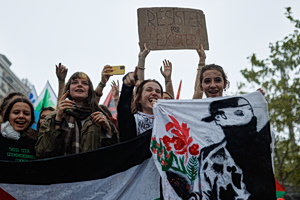
Hundreds of thousands of young people in the streets of Paris are turning symphonic music into an act of social reivindication. They embrace, jump up and down, sing. A celebration of unrestrained joy and elation. Vandalism and desperate violence are retreating. The need for joy free of guilt is coming to the forefront: “Not to be alone anymore, and alone only in our anger and furious despair. To experience a collective emotion that does not have the existence of an enemy as its sole prerequisite.”
Collective mobilizations know anger, indignation, denunciation, even hatred all too well. They know much less about how to feel alive through the anticipation of claiming a different life.
Étienne Jarrier gives it everything he has. He is nothing but a pulsating flame, using symphonic harmony in the streets and squares to drive collective melancholy, anger and rage out of the crowd. Not to eliminate the struggle for change, but to transform blind destructiveness into a call for a different life. He is breathtaking because he himself is moved to the core. The word “HOPE” can be seen in large letters on his T-shirt.
A violent and fierce desire for life is put forward as a new way of connecting with reality. Jarrier’s music is not a substitute for politics. It obviously does not resolve issues of inequality, education or social discontent. But it brings to the forefront a forgotten dimension of politics: people need not only reasons to fight, but also a tangible experience of the world they are fighting for. His orchestra bypasses the voice of anger and destruction that endlessly repeats, “I can’t take this world anymore. Let this world perish.” And perhaps the most important thing is not that a 25-year-old conductor managed to move a crowd. It is that the crowd is still capable of being moved by the prospect of a future.
The phrase “Young people have no ideals” is repeated endlessly and with reckless ease. But do those who make this accusation ever ask whether our era offers young people the spaces and means through which their ideals can find a voice? Trapped in the loneliness of constant digital connectivity, other spaces and other ways of being are conspicuously absent.
In moments of social suffering, joy seems almost suspicious. Joy is not always a denial of pain. It can be a refusal to surrender our entire lives to pain. In France, a 25-year-old young man is attempting a risky journey into space: to establish the right to joy as a driving force in the pursuit of a different life.
Fotini Tsalikoglou is a professor of psychology and author.