 Μake us preferred on Google
Greece’s ruling New Democracy party is looking for a new generation of supporters, launching an initiative to attract younger people and identify potential future political figures from beyond its traditional party ranks.
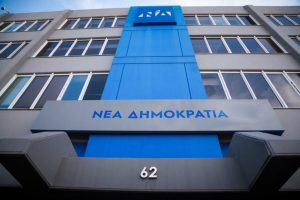
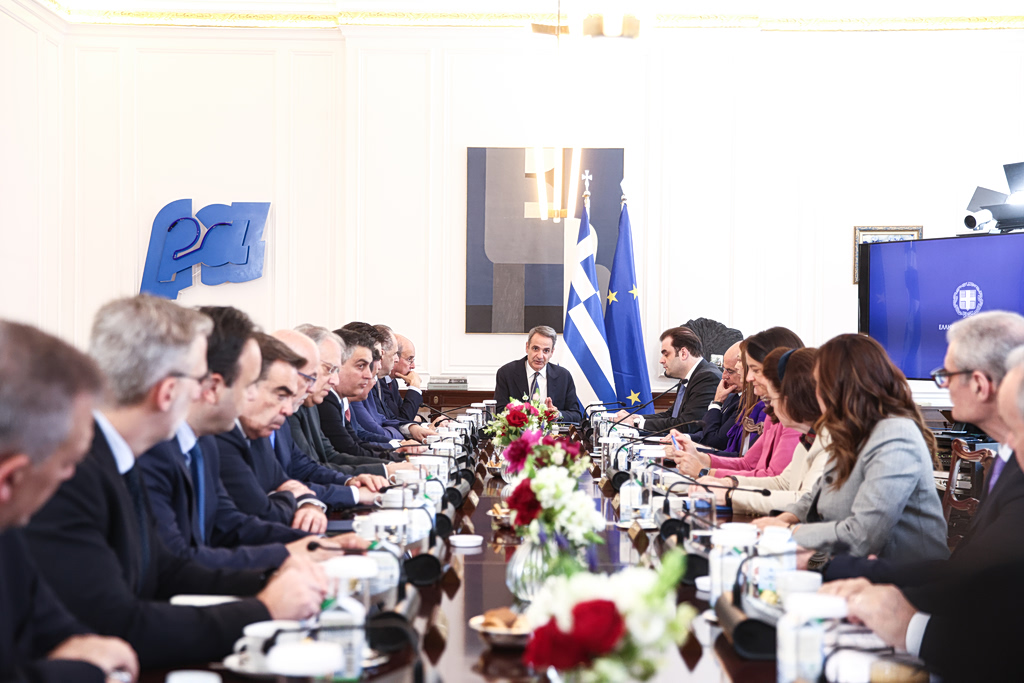
On Saturday, the party’s headquarters in Piraeus filled with young participants who took the stage, exchanged arguments and tested their debating skills in front of government ministers, lawmakers and senior party officials.
The event, called the “Debate Playoffs,” was an initiative by Deputy Minister of Transport Konstantinos Kyranakis, designed as a political competition to identify fresh faces, new supporters and potentially the party’s future representatives.
The effort comes as New Democracy’s electoral base continues to skew toward older voters, while younger age groups remain less receptive to the ruling party, according to opinion polls. The initiative is part of a broader attempt to expand its appeal beyond its traditional audience, attract people with no previous involvement in party politics and identify individuals capable of defending government policies before a generation that has proved difficult to persuade.
The party is also considering making the competition an annual event.
New Democracy’s support remains concentrated among older voters
Recent polling figures help explain why New Democracy has stepped up its efforts to reach younger voters.
In a recent survey by Palmos Analysis, the ruling party recorded its strongest support among people over 55, reaching as high as 45%. Among voters aged 17 to 24, however, its support stood at just 13%. It recorded similarly low levels among those aged 35 to 44, while support recovered slightly to approximately 18%-19% among the 25-to-34 age group.
The figures point to a significant generational gap, with older voters continuing to underpin the party’s electoral support while younger groups remain harder to reach.
Younger voters are also among the most demanding and difficult electoral audiences to engage, with more fluid political preferences and often weaker, or nonexistent, party affiliations.
For the government, however, the challenge is also rooted in everyday economic pressures. High rents, salaries that run out before the end of the month, the housing crisis and difficulties achieving financial independence are hardly effective advertisements for its policies.
While New Democracy highlights Greece’s investment-grade status, economic growth and broader economic performance, younger people struggling to afford housing or make ends meet want to see when those achievements will translate into improvements in their own finances.
A political debating arena at party headquarters
Against this backdrop, New Democracy organized the “Debate Playoffs” together with ONNED, the party’s youth organization, inviting people aged 18 to 35, regardless of political affiliation, to compete in knockout-style debates.
Topics ranged from local government and Greece’s investment-grade status to constitutional reform, energy costs and the country’s deterrence capabilities.
Participants exchanged arguments and demonstrated their public-speaking skills before a panel of New Democracy figures, including Alexandra Sdoukou, Thanos Plevris, Angelos Syrigos, European Parliament member Eleonora Meleti, Akis Skertsos, Makis Voridis and George Voulgarakis.
Former Foreign Minister Dora Bakoyannis joined the final stage of the competition and called on participants to support New Democracy.
Other party and government figures who attended included government spokesman Pavlos Marinakis, Stelios Kontadakis, Thanasis Nezis, Giannis Smyrlis and ONNED President Orfeas Georgiou.
The debates were coordinated by the party’s newly appointed deputy press representatives, Porfylenia Kanellopoulou, Odysseas Nasibian and Christos Lagadianos.
The winner was Spyros Kontos, a young criminologist who studied at Tilburg University and the University of Cambridge.
Kyranakis’s plan to bring new faces into the party
“We are opening our doors, opening our party to young people,” Kyranakis said, emphasizing the need to combine the experience of senior party members with renewal as New Democracy seeks to win the next elections.
Through the initiative, the party aims to attract young people from different professional and social backgrounds, give them a platform in political discussions and identify potential candidates for party positions and even future electoral lists.
Above all, it is looking for people who can communicate with their peers and bring New Democracy closer to an audience that largely remains disengaged from the party.
Kyranakis also stressed the importance of communicating government policies more effectively.
“Government work is good, but if you cannot defend it and cannot be convincing and dynamic in communicating it to your fellow citizens, it is as if it does not exist,” he said.
His remarks also carried a message for the party itself: New Democracy needs a new generation of members with a strong public presence and the ability to put forward convincing arguments in political debates.
Androulakis, Tsipras and Samaras also target younger voters
New Democracy is not alone in seeking to attract younger voters.
PASOK leader Nikos Androulakis is seeking to strengthen his party’s presence among younger age groups through initiatives addressing housing, employment and social inequalities, alongside efforts to rebuild its youth organization.
Former Prime Minister Alexis Tsipras is also seeking support from the same demographic, aiming to surround his political project with new faces and figures capable of reaching different audiences.
Former Prime Minister Antonis Samaras has also turned to younger voters, using TikTok to speak with a university student about low wages, high rents and political disillusionment.
“Every generation builds the homeland it dreams of,” Samaras said.
The competition for younger voters has therefore become a shared priority across Greece’s political landscape. While political figures seek to capture the attention of a new generation, younger people are looking beyond campaign messages and promises for tangible solutions to the problems affecting their everyday lives.