 Μake us preferred on Google
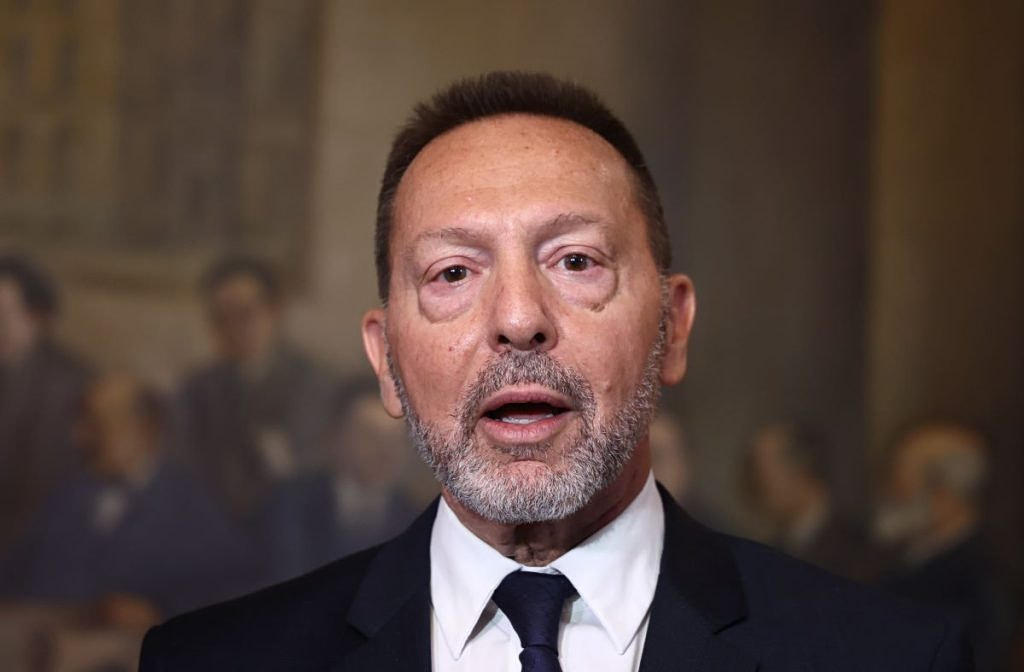
 Greece’s economy is still expanding faster than the rest of the eurozone, but a fresh jump in energy prices is set to push inflation further up this year, the governor of the Bank of Greece has told the country’s lenders.
Governor Yannis Stournaras set out his projections for the global, European and Greek economies at the annual general assembly of the Hellenic Bank Association, the body that represents Greece’s banks, and laid out the main risks he sees ahead.
Energy shock pushes Greek inflation higher
Inflation had slowed to 2.9% by December 2025, and the central bank had expected it to keep easing through 2026. However, the war between Iran and the United States, the closure of the Strait of Hormuz and the steep rise in fuel prices that followed upended these more optimistic projections. The Bank of Greece now expects headline inflation to average 3.8% in 2026, up from 2.9% in 2025, before slowing to 2.6% in 2027 and 2.3% in 2028 as energy and food pressures gradually ease.
The governor warned that higher energy costs will not stay contained. Stournaras stated that he expects them to feed into the prices of services and industrial goods, while food inflation is likely to remain high because energy works its way into every stage of production and supply.
A riskier global backdrop
Stournaras described 2026 as the start of a new period of heightened uncertainty and rising geoeconomic risk for the world economy, after several years of unpredictable shocks. He pointed to escalating tensions in the Middle East and to the closure of the Strait of Hormuz, the narrow shipping lane that carries much of the world’s oil and gas, which he said had disrupted global energy flows and driven prices sharply higher.
Trade is adding to the pressure. Stournaras cited the high tariffs still in place in the United States, the growing use of non-tariff barriers and the continued reshaping of global supply chains as forces squeezing world commerce and deepening uncertainty. Together with the impact of artificial intelligence on the labor market, he said, these are slowing global growth while keeping inflation elevated.
The eurozone is not immune. Growth across the currency bloc is expected to stay weak, with higher energy prices weighing on spending and investment, and inflation, though falling, is still running above the European Central Bank’s target.
Why Greece is still ahead
Greece continues to grow faster than the eurozone average despite that backdrop, Stournaras said, with investment the main engine of growth. Public finances remain strong, helped by high primary surpluses, the budget balance before interest payments, and public debt keeps falling as a share of gross domestic product, a marked shift for a country that spent much of the past decade at the center of the eurozone debt crisis.
Greek banks in their strongest shape in years
Greece’s banking sector is in particularly good health, according to the governor. He pointed to strong profitability, solid capital and liquidity, a sharp fall in non-performing loans, meaning loans that borrowers have stopped repaying, and rising credit to businesses and households. That progress has been rewarded with a run of upgrades from the international ratings agencies, and the country’s four systemic banks now hold a BBB+ rating, one notch below the A category.
Net interest income, the money banks make on loans after paying for deposits, was supported mainly by continued credit growth, including higher lending alongside funds from the European Union’s Recovery and Resilience Facility, the bloc’s post-pandemic investment program. The margin banks earn on that lending stayed broadly unchanged.
Lending to households strengthened further, driven by stronger consumer credit and a further pickup in mortgages. Stournaras tied that to rising house prices, an improving labor market and firmer household spending.
The structural weaknesses still holding Greece back
Greece still carries a heavy set of structural problems, the governor stressed, despite the progress of recent years. He listed nine. The domestic economy is held back by low productivity, demographic pressures, skills shortages in the workforce, the slow spread of innovation and the difficulty many Greeks face in finding affordable housing. Weighing on the wider picture are weaknesses in public administration and the justice system, public debt that remains high, a persistent current account deficit and the negative international investment position that comes with it, meaning Greece owes more to the rest of the world than it owns abroad, and inflation that is still above the eurozone average.
A push for the digital euro
Europe needs to move faster on modernizing its financial infrastructure, Stournaras argued. He called for progress on the digital euro, the digital form of the currency the European Central Bank is developing, wider use of blockchain and distributed ledger technology, closer links between European payment systems and the use of artificial intelligence in central banks’ own operations.
The international environment, he warned, is only becoming more demanding. Geopolitical tension, energy uncertainty, the fragmentation of global trade, rapid technological change and the economic fallout from climate change are all creating fresh challenges across Europe.
Source: OT.gr