 Μake us preferred on Google
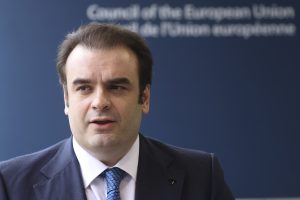
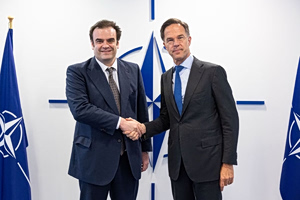
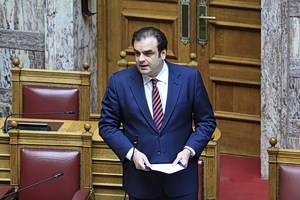
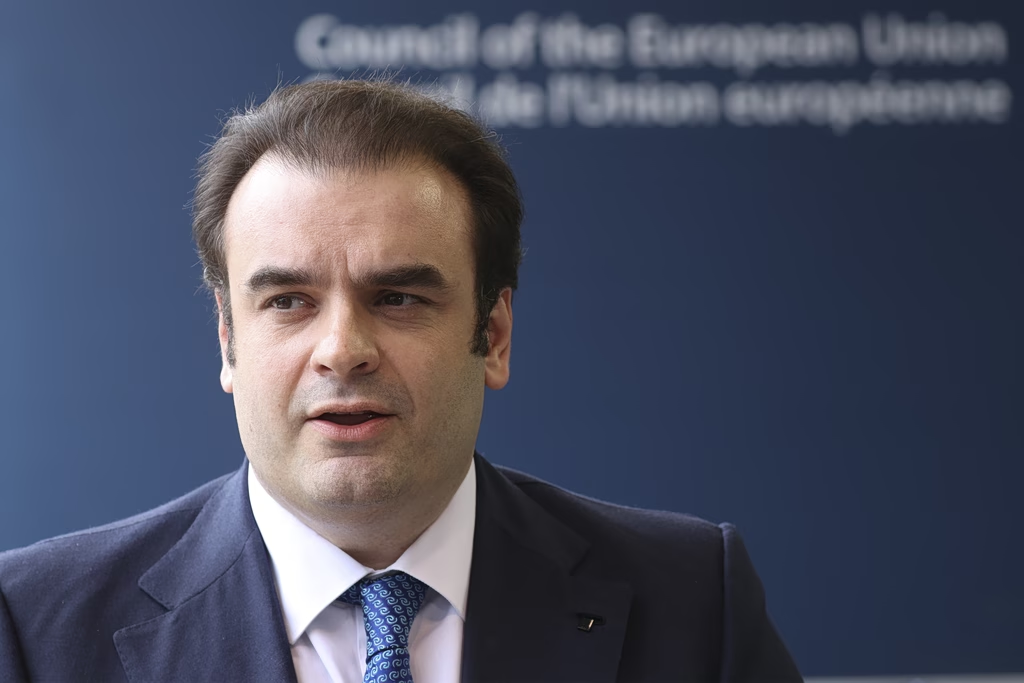
 Kyriakos Pierrakakis, Greece’s minister of national economy and finance and the current president of the Eurogroup, the body that brings together finance ministers of the countries using the euro, urged the European Union to move faster and think more boldly on technology, energy and finance, arguing that the bloc has broadly agreed on what it needs to do but keeps stumbling on how quickly to do it.
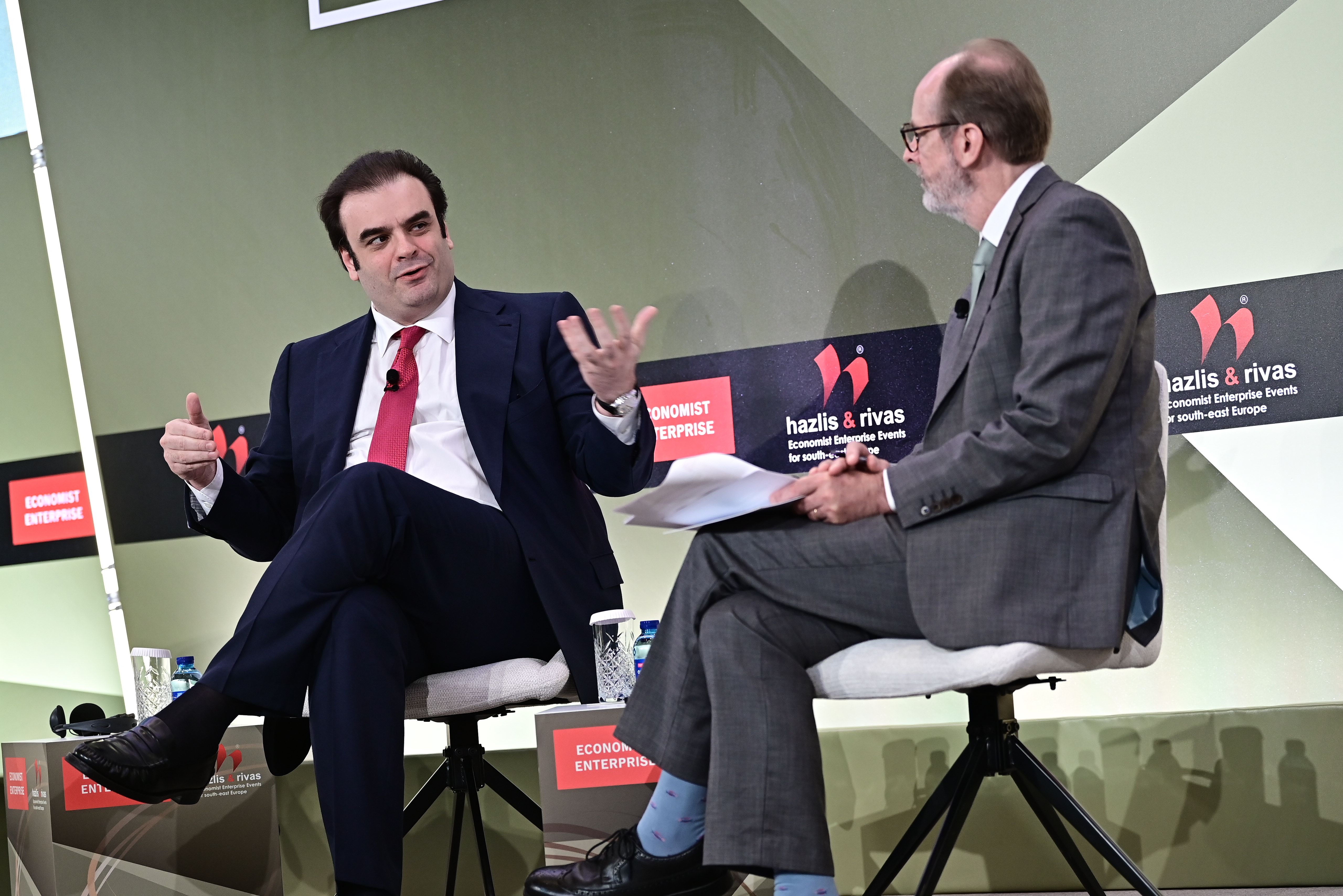
Speaking at the Economist’s 30th annual Government Roundtable in Athens, held under the banner “Progress in an Age of Upheaval,” Pierrakakis laid out a set of connected priorities: a common European strategy, more ambitious goals, a clear technology doctrine, the digital euro, a savings union and an energy union.
He framed the moment as one of broad consensus but slow execution. The landmark reports drawn up by Enrico Letta and Mario Draghi, two influential reviews of the single market and European competitiveness, had, he said, produced a shared sense of direction. What remained unsettled was pace. “We all agreed on the deliverables,” he said. “The question is until when, how fast and in what best way.” He pointed to movement already under way on market integration and a supervision package, matters he said had been taken up at both Ecofin, the EU’s council of economy and finance ministers, and Eurogroup level.
One of his more concrete proposals was a joint European auction of 5G and 6G mobile spectrum. Rather than leaving each country to sell airwaves on its own, Pierrakakis suggested a more centralized system that could raise and pool money for technology development across the bloc, giving Europe, he argued, both more resources and a more competitive footing.
Much of his intervention centered on artificial intelligence, which he described as an area of immediate strategic pressure. He cast it two ways at once, as a race for speed and as something closer to an arms race, and warned that Europe’s response could not be improvised or piecemeal. “Our systems are old,” he said, calling for deep technological modernization backed by very large investments. He disclosed that the French AI company Mistral, which he called a European champion, had been invited to join a Eurogroup discussion the following day, a sign, he suggested, that AI has moved from a purely technological question into the core of Europe’s economic and institutional strategy.
On the digital euro, the European Central Bank’s planned electronic version of the single currency, he offered a firm timeline. “The digital euro will be a reality by 2029,” he said, while cautioning that there was “some movement” but that Europe needed “much more on many fronts.”
Pierrakakis struck an optimistic note about Europe’s capacity to advance despite outside pressure. The issue, he argued, was not binary. “It is not black and white,” he said. “It is a question of how much progress we can make and how much ground we can cover.” Political will, he added, was “certainly” there.
On energy, he called for faster and more decisive common action, citing an International Monetary Fund report that, he said, found the impact of the crisis had been 12% lower than it would have been had Europe not intervened. He noted that energy investments were being folded into the escape clause, the provision that gives governments extra room to spend outside the EU’s normal budget limits.
He returned repeatedly to a tension between what Europe had put off for years and what it must now design for the future. Greece before 2019, the year the current government took office, had a backlog of things left undone, he said, and clearing that backlog offered an easy win, what he called “the dividend of the obvious.” But that, he stressed, was not enough. Europe still had to answer the challenges of tomorrow, pressing ahead on the Capital Markets Union, the banking union and the energy union while also settling on a clear technology doctrine.
His prescription for European technology leaned on scale. Europe needed to nurture pan-European champions rather than rely only on national ones, he said, and to build “large ecosystems” capable of supporting growth and innovation across the continent. He sketched three options as he saw them. Europe could lead, by picking the sectors where it already has front-runners and pushing them further. It could build, by choosing areas where it lacks an edge but can still develop one. Or it could regulate intelligently. “If we believe we can make European versions of everything, we are wrong,” he said, adding that the third route was “a very smart regulatory framework.” The task, in his telling, was knowing where Europe can lead, where it can build and where it must exert influence through rules.
Financing innovation at home was central to his argument. Europe needed to put its own house in order, he said, chiefly by developing a savings union so that investment, from a startup upward, could be funded on the continent rather than lost abroad. All of Europe’s financing mechanisms had to be in place, he argued, so that ambitions could be realized within the bloc rather than driving business plans and capital elsewhere.
He closed on sovereignty and resilience, calling for a more mature definition of Europe’s place in the world. “You have to be able to define what sovereignty means,” he said, and to build a European strategy around it. In a world of interdependence and constant flux, he added, “the question is how strong you are when you sit at the table.” Resilience, in his view, meant not isolation but stronger capabilities and shrewd partnerships. “You need very smart, intelligent synergies,” he said.