
 Μake us preferred on Google
 A wave of nationalist fervor in Iran is creating a difficult atmosphere for the country’s diplomats, making it harder to agree to U.S. terms to permanently end the fighting and secure much needed relief from sanctions.
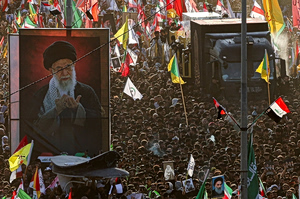
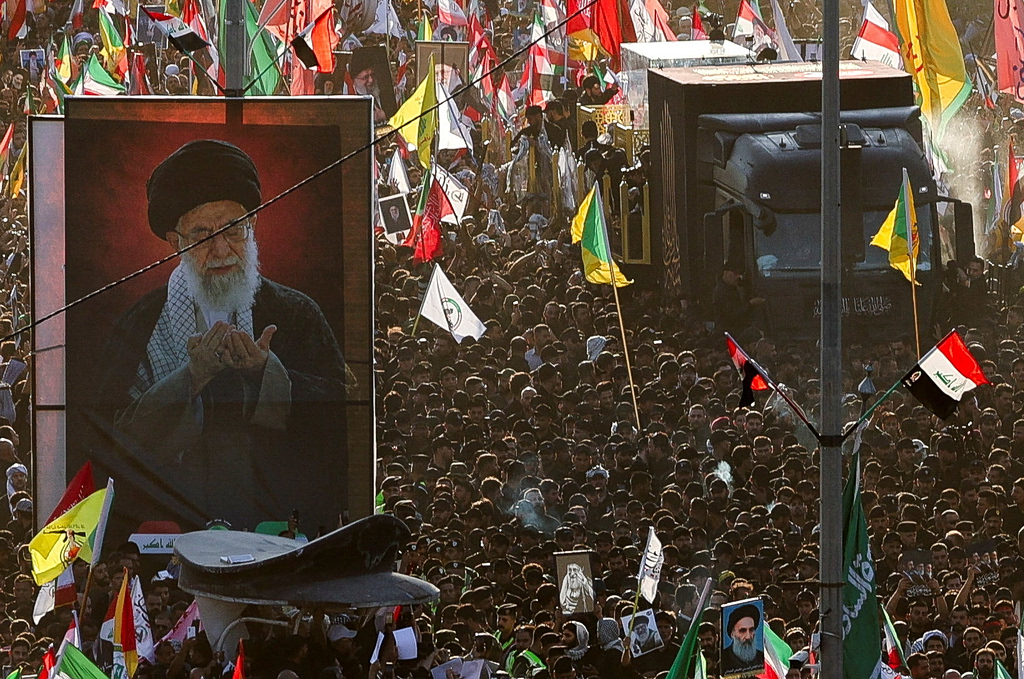
The regime, rocked by protests early this year and still deeply unpopular with much of the Iranian public, fanned patriotic sentiment to rally support during the heaviest days of the war and amplified it during the recent funeral of its slain Supreme Leader Ali Khamenei . Now, hard-line lawmakers, broadcasters and other vocal factions are leveraging those emotions to box in Tehran’s negotiators and limit their capacity to cut deals with the U.S.
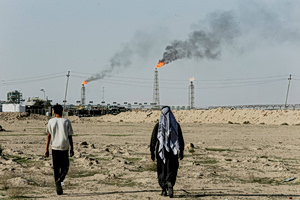
The dynamic is contributing to America’s inability to open the Strait of Hormuz, the most immediate goal of the preliminary deal to wind down the war that President Trump signed nearly a month ago and one nationalist critics say sells out Iran’s interests.
Iran agreed to open the strait to traffic within 30 days. Instead, it has repeatedly fired on ships to enforce hard-liners’ claim that Tehran controls the waterway. Deepening the impasse, Trump on Monday announced the reimposition of the U.S. blockade of Iranian ports , hoping to pressure the regime to reopen the strait, and the U.S. launched its third consecutive night of strikes against Iran.
Attempts over the weekend by the U.S. and mediator Qatar to restart talks and push forward the interim deal were dashed when the Islamic Revolutionary Guard Corps resumed the attacks and declared the Strait of Hormuz closed.
On Saturday, Mahmoud Nabavian, an Iranian lawmaker and former member of the negotiating team, said the demand to negotiate the future administration of Hormuz was an “obvious and glaring weakness” of the deal. The Revolutionary Guard will “fulfill the right of the Iranian nation over the Strait of Hormuz and exercise exclusive control over the Strait of Hormuz, come what may,” he said.
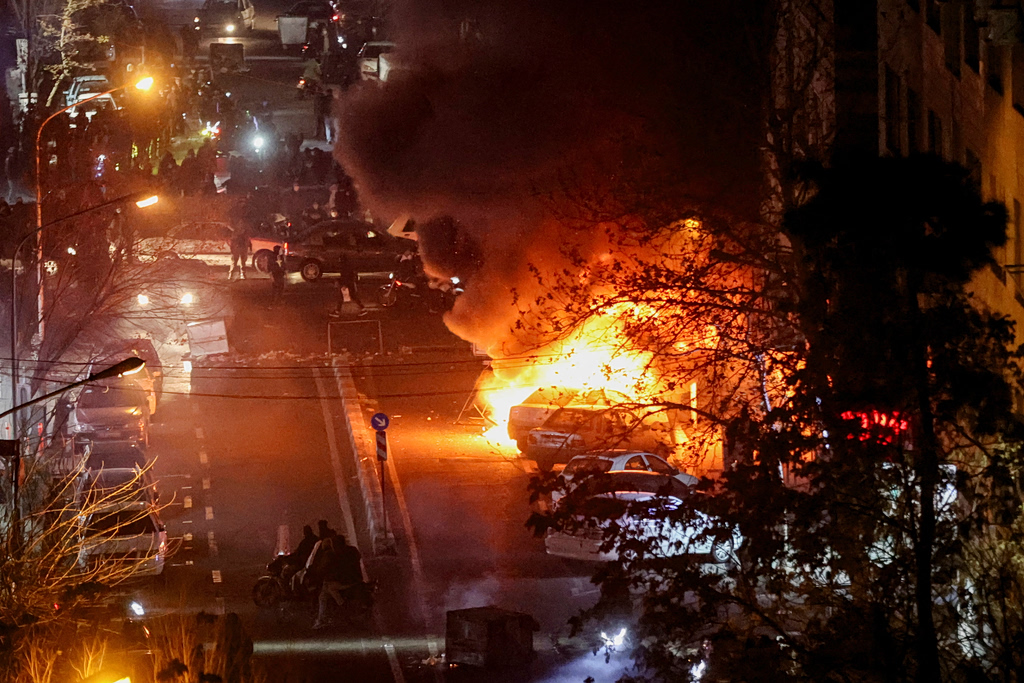
Cars burn in a street during a protest over the collapse of the currency’s value, in Tehran, Iran, January 8, 2026. Stringer/WANA (West Asia News Agency) via REUTERS ATTENTION EDITORS – THIS PICTURE WAS PROVIDED BY A THIRD PARTY
Analysts say the Revolutionary Guard is encouraging such sentiments to hang on to the waterway and retain the upper hand at home.
“They feel that as long as they can rule Hormuz, they will be calling the shots both with the U.S. and internally,” said Mustapha Pakzad, who advises foreign companies on Iranian geopolitics. “The IRGC hopes fears of foreign attack…will induce some people to put their chips on their number. Nationalism is a convenient temporary sentiment to cling to.”
The U.S. and mediators say any attempt by Iranian diplomats to find an understanding on the administration of the strait are being sabotaged by hard-liners. Iranian diplomats have told mediators they would like to find a compromise but their hands are tied.
They are under pressure in the streets as well. In regime-managed funeral ceremonies for Khamenei’s burial last week, massive crowds unfurled giant banners that read “kill Trump.” President Masoud Pezeshkian, a moderate, was greeted by chants of “Death to the normalizers” and “Death to the traitors.”
Foreign Minister Abbas Araghchi was stalked by a crowd that carried red flags, a symbol of revenge, and called him dishonorable as he was pelted with an unknown object. A government spokeswoman later denounced a group for chanting divisive slogans targeting the president and the country’s negotiating team.
Days earlier, state broadcaster IRIB, which has long been managed by hard-liners, abruptly cut off lead negotiator and parliament speaker Mohammad Bagher Ghalibaf as he tried to make the point that an earlier hard-line president of Iran had also held talks with the U.S.
Khamenei’s funeral has also set off a round of calls to avenge his death—not just via military action against the U.S. and Israel, but by hunting down the individuals responsible. An Israeli airstrike killed Khamenei and members of his family in the opening salvo of the war.
On Monday, Abbas Moghtadaei, vice chairman of the parliament’s national security commission, said Iran has the right and the capabilities to go after individuals and organizations who ordered or planned the attacks.
Hamshahri, a paper published by the hard-line municipal government of the capital, Tehran, ran wanted poster-style images of targets including Trump, Secretary of State Marco Rubio, Defense Secretary Pete Hegseth, Israeli Prime Minister Benjamin Netanyahu and several European leaders.
Mojtaba Khamenei, son of the slain supreme leader, who took over the role after his father was killed but wasn’t at his funeral, has joined the calls for retribution.
“We have a list of criminals who assassinated our leader and people in the past two wars,” he said Saturday on social media. “The death of these criminals and murderers will not be a natural death in bed.”
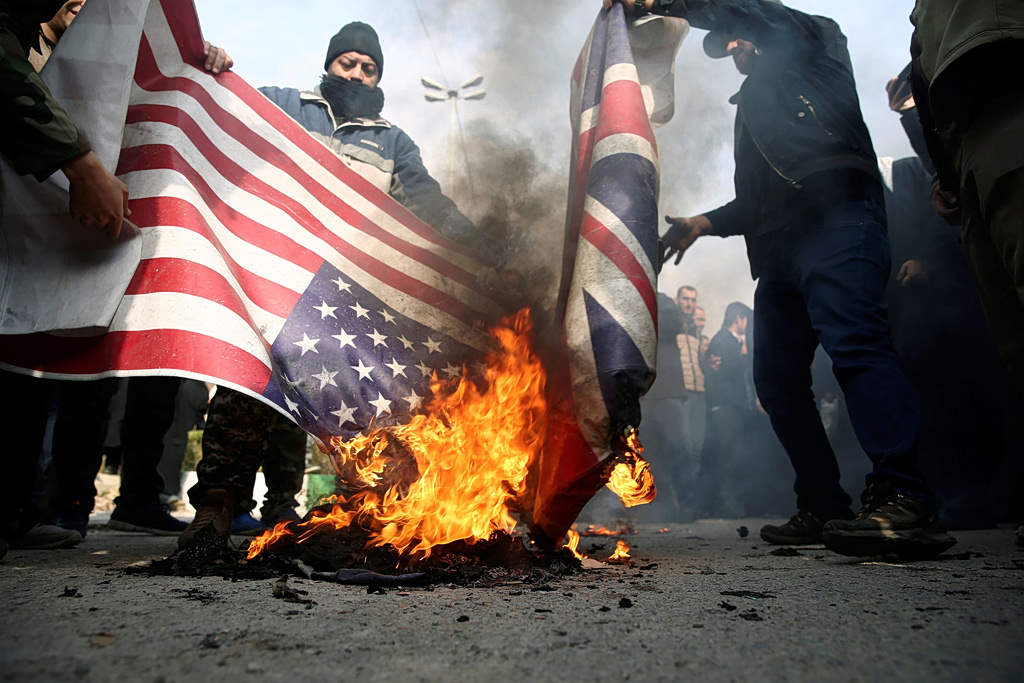
Demonstrators burn the U.S. and British flags during a protest against the assassination of the Iranian Major-General Qassem Soleimani, head of the elite Quds Force, and Iraqi militia commander Abu Mahdi al-Muhandis who were killed in an air strike in Baghdad airport, in Tehran, Iran January 3, 2020. WANA (West Asia News Agency)/Nazanin Tabatabaee via REUTERS ATTENTION EDITORS – THIS IMAGE HAS BEEN SUPPLIED BY A THIRD PARTY.
The Revolutionary Guard and its allies have been helped by Mojtaba Khamenei’s public absence and by his ambivalent stance on negotiations. The new supreme leader has said he didn’t favor talks with the U.S. but allowed them to go ahead as long as Pezeshkian, the president, took responsibility for their outcome.
“Mojtaba signaled to Iranian diplomats that they could give it a try but it won’t go anywhere,” said Behnam Ben Taleblu, a senior director of the Iran program at the Foundation for Defense of Democracies. “It’s boxing in negotiators with statements that suggest that the path to survival goes through escalation rather than engagement.”
Analysts say the propaganda effort seeks to broaden the regime’s support base beyond religious conservatives by de-emphasizing strict moral codes to tap in to resurgent patriotism among parts of the population angered by U.S. and Israeli attacks during the war. It often features women in roles that wouldn’t have been permitted by clerics in previous times.
In footage posted mid-June, state media showed a Revolutionary Guard member teaching women wearing heavy lipstick how to handle AK-47 assault rifles. In late May, the Iranian Defense Ministry’s news agency, DEFA, featured a female officer in full camouflage at a meeting of military advisers who had gathered to discuss expanding the conflict beyond the Middle East.
A 40-year-old female teacher, who had joined the anti-hijab protests in 2022 and subsequently stopped wearing the veil, said she recently participated in a pro-regime rally in Tehran.
“I saw many girls whose clothing would previously have been reprimanded by the government—unveiled, wearing blouses and pants, with manicured nails,” she said. They were waving the Iranian flag. The women were joined by male university students sporting tattoos and T-shirts, Western attire frowned upon by the regime. They chanted, “We are the soldiers of Seyyed Mojtaba,” using an honorific title, she said.
Last week, a 34-year-old Tehran-based startup entrepreneur who had long opposed the regime posted a picture of himself proudly posing in uniform after joining the military.
He was beaten so badly by security forces during the 2022 protests he couldn’t move for days. He was tear gassed during the January protests and waited hopefully for the war, thinking the regime was about to be toppled.
But he changed his mind after his uncle’s house in Tehran was destroyed in the early days of the war and after scrambling to reach his ex-girlfriend who worked at a civilian ministry near a targeted location. She survived.
“America had made an excuse to support human rights,” he said. Then, “they said that a civilization was going to be destroyed, not a regime.”
The regime came into the conflict in a weak position. Protests sparked in December by the pressures of a deepening economic crisis spiraled into calls to topple the system. Polls consistently showed no more than 20% of Iranians supported clerical rule.
Dissatisfaction with the regime still runs deep. For now, it is benefiting from an awakening of nationalist sentiment that makes the idea of compromising with the U.S. difficult.
“The war has produced the opposite of what Israel and the United States likely intended,” said Sina Toossi, an Iran-focused fellow at the Center for International Policy, a Washington think tank. “Instead of triggering collapse or mass defection, it has strengthened a more nationalist framing of the system and temporarily broadened its social base.”
Write to Benoit Faucon at benoit.faucon@wsj.com