
 Μake us preferred on Google
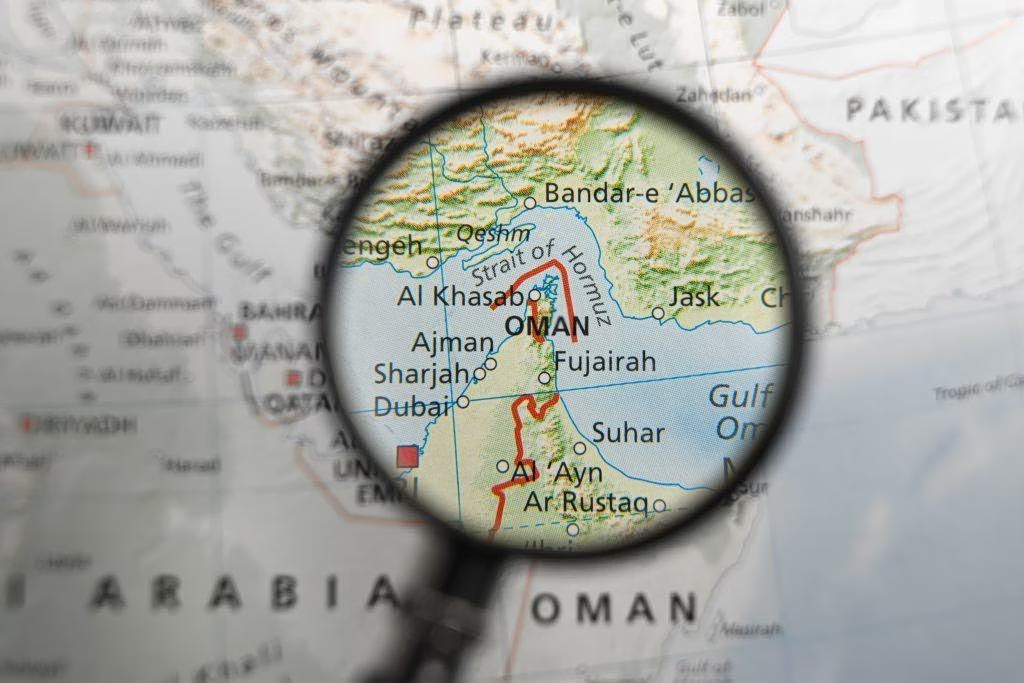
 The closure of the Strait of Hormuz is having an immediate and significant impact on the Greek economy, highlighting the country’s dependence on energy imports from the Gulf region.
According to a recent study, around 25% of Greece’s fuel imports originate from Gulf countries, making the stability of this key maritime route critical for the domestic energy market. Any prolonged disruption is expected to drive up fuel costs, affecting households, businesses and transportation across the country.
Rising costs and broader risks
The economic impact goes beyond energy prices. A sustained blockage of the strait could trigger wider disruptions in global supply chains, increasing costs across multiple sectors. Greece is considered more vulnerable than many other European countries due to its higher reliance on Gulf energy imports.
Energy products — including crude oil, natural gas and refined fuels — accounted for roughly €19 billion in annual imports between 2023 and 2025, representing about a quarter of total goods imports. Meanwhile, energy exports reached approximately €13 billion annually, or about one-quarter of total exports.
Strategic chokepoint for global trade
The importance of the Strait of Hormuz extends far beyond Greece. Around one-fifth of global energy products and one-third of fertilizers pass through the corridor, making it one of the world’s most critical trade routes.
Disruptions also affect fertilizer markets, with indirect consequences for Greece through rising international prices, even though the country sources most of its fertilizer imports from outside the Gulf region.
Shipping sector under pressure
As one of the world’s leading maritime nations, Greece is also exposed through its shipping industry. Increased insurance costs, operational risks and shifts in global trade routes are placing additional strain on the sector.
Europe comparison and supply flexibility
Greece stands out within the European Union for its reliance on Gulf energy imports, with 25.4% of its fuel imports coming from the region — significantly higher than the EU average of 6.1%.
However, there are signs of resilience. Greek refineries reportedly maintain oil reserves sufficient for at least two months, with the potential to extend supply for up to six months. Industry sources also indicate that alternative suppliers — including countries such as Egypt, Libya and those in the North Sea — could replace up to 100% of certain disrupted imports.