
 Μake us preferred on Google
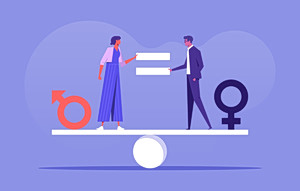
 Pay will depend on the work performed and the value of the employee, not on their gender. This is the principle behind the bill on “strengthening the implementation of equal pay between men and women,” which was approved yesterday by the Greek Prime Minister’s cabinet and is expected to be put to public consultation in the coming days.
In practical terms, the bill prohibits any pay difference between men and women.
The bill provides rights for employees, transparency obligations for businesses and internal audit procedures to identify unjustified pay differences. In practical terms, it prohibits any pay difference between men and women for work of equal value, establishes the employer’s obligation to ensure equal-pay conditions without discrimination, and gives employees the right to claim compensation if they prove they are paid less because of gender.
According to official data, the pay gap in the European Union stood at 11.1% in 2024, while in Greece it was 13.4%. In most countries, the gap widens in older age groups. In Greece, the only age group in which women are paid more than men is under 25.
The Sectors With the Largest Gaps
The largest gender pay gaps appear in the following sectors: information and communication, at 25.3%; financial and insurance services, 19%; real estate activities, 18.7%; manufacturing and industry, 17.4%; scientific and technical activities, 11.8%; construction, 9.7%; and energy, 8.7%.
Equal pay includes bonuses, allowances, overtime, benefits in kind and occupational pensions.
The bill introduces transparency rules aimed at ensuring that employees receive equal pay for equal work regardless of gender. Equal pay includes bonuses, allowances, overtime, benefits in kind and occupational pensions.
The rules apply both to the recruitment process and during the employment relationship.
Pay Transparency
With regard to pay transparency, a company seeking employees will have to clarify from the outset — meaning in the job posting — the salary range it offers. A candidate attending an interview should know the pay attached to that specific position.
Job postings addressed to only one gender will be prohibited.
The job announcement must not exclude any gender from applying for the position. Postings addressed to only one gender will be prohibited. All job postings must be gender-neutral.
Employees will have the right to request information on pay data for positions similar to their own. Companies will also be required to publish pay data.
The Ombudsman and the Labor Inspectorate
If a pay gap of more than 5% is identified between men and women for equal work, without a clear justification, the Ombudsman initially and then the Labor Inspectorate will issue recommendations and impose penalties.
If an employee believes there is discrimination, they have the right to go to court, request salary data and be represented by the Ombudsman or a trade union organization.
The transparency within companies introduced by the bill includes the basic principle that, where a collective labor agreement is in force and being applied, it is considered that there are no unjustified pay discriminations during the discussion of a labor dispute at the Labor Inspectorate.
Pay Structures in Companies
Employers remain obliged to adjust job categories so that the value of the work is properly reflected. The Labor Inspectorate fully retains the right to carry out inspections and impose fines where violations are found.
In addition, collective labor agreements may be used as the basis for creating pay structures within companies.
Fair Pay for the Same Work
According to Labor Minister Niki Kerameus, the bill ensures greater salary transparency, better information before and after hiring, checks for unfair pay differences, mandatory correction of problems when inequalities are identified, stronger employee protection, with the burden of proof placed on the company, fair pay for the same work and stronger rights, as well as equal treatment regardless of gender.
The bill ensures greater salary transparency and better information before and after hiring.
Finally, it should be noted that the same bill also includes nurses, nursing assistants, ambulance drivers and assistants, and rescuers working in hospitals, National Health System health centers and EKAB in the heavy and hazardous occupations category.
Source: OT