
 Μake us preferred on Google
France is pressing Germany to define how it would use long-range missiles in the event of a conflict with Russia, warning that failing to do so risks accidentally dragging Europe into a nuclear war.
Paris is holding talks with German officials in a bid to align Berlin’s doctrine on the use of weapons capable of launching what is known as “deep precision strikes” (DPS) with France’s nuclear strategy, according to six people familiar with the discussions.
One French official warned that it would be possible to attack a Russian target with a conventional weapon but “get a nuclear response”. He added: “If the Russians don’t get the signal right you could get to the nuclear threshold without realising.”
The French concerns come as Germany — along with a group of other countries including the UK, Poland and the Nordic and Baltic states — is significantly bolstering its arsenal of far-reaching weapons in a bid to strengthen European deterrence against Moscow.
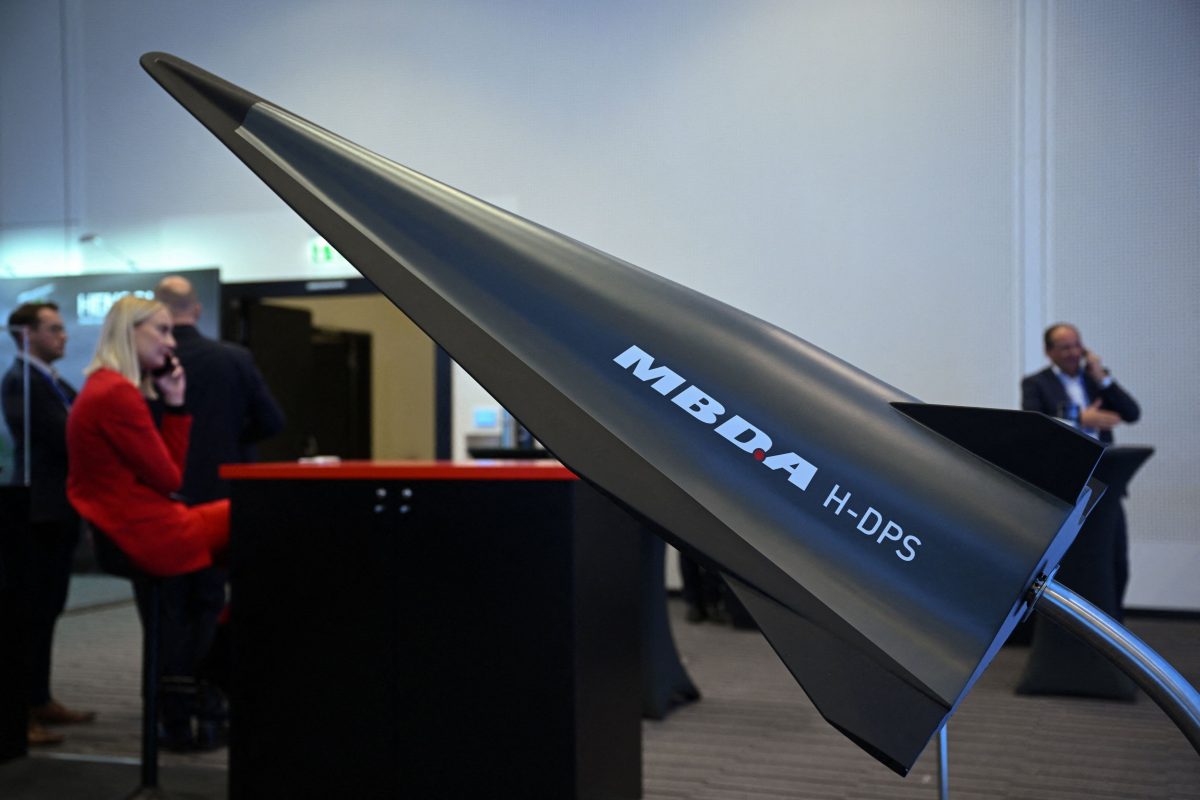
Berlin is acquiring and developing a raft of ground-launched missiles with ranges from 500km to more than 2,000km that would enable its armed forces to hit targets deep inside Russia.
It forms part of Germany’s efforts to lead a European rearmament drive in response to Russia’s full-scale invasion of Ukraine and wavering US commitments to the continent’s security under President Donald Trump.
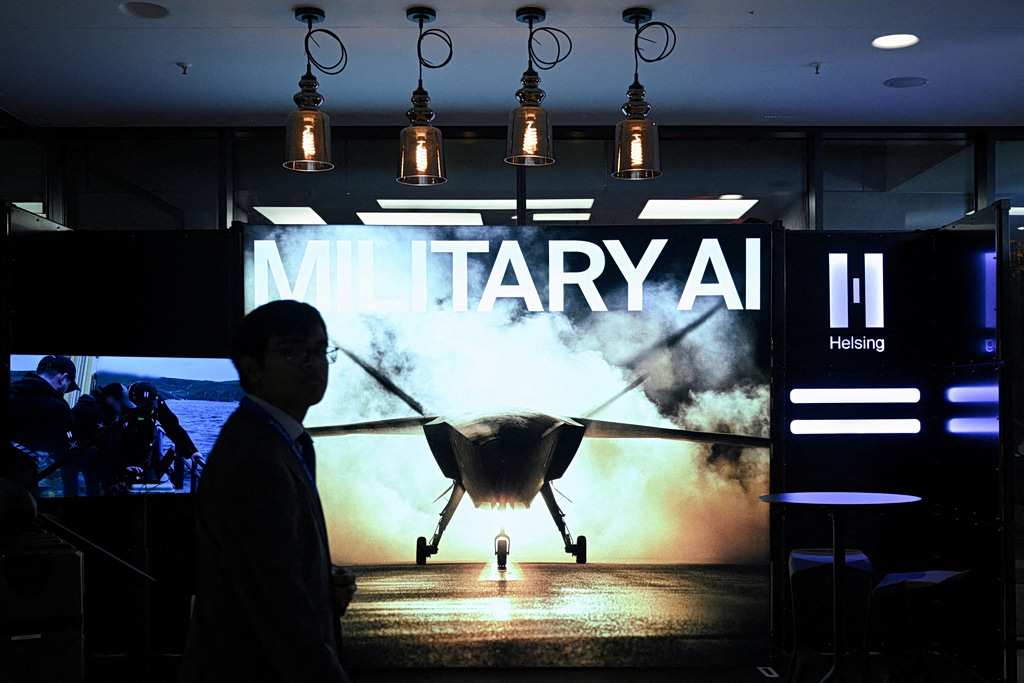
FILE PHOTO: A delegate walks past a display showing an autonomous uncrewed combat aerial vehicle by Helsing at the Berlin Security Conference, a congress on European Security and Defence in Berlin, Germany, November 3, 2026. REUTERS/Annegret Hilse/File Photo
But the push to acquire long-range weapons has raised questions about when and how they would be used and what kind of response that would draw from the Kremlin.
France is holding talks about its nuclear doctrine with several European countries after President Emmanuel Macron said in March he would open the debate on how the French nuclear programme could protect them. But Paris is focusing particularly on Germany given its large defence budget — worth €780bn in the five years to the end of 2030 — and ambitious rearmament plans.
French officials are anxious that Macron’s concept of “forward deterrence” means Moscow would hold Paris accountable for strikes conducted by partners.
“If you invite someone into your house, you are responsible if they set it ablaze,” said one official with knowledge of the discussions.
As a nuclear-armed state, one of the officials said, France had developed a “nuclear grammar and vocabulary”, describing this as the “unspoken” rules of engagement. “There are habits we developed over time. The Germans do not have it,” he said.
“It would be much better to have a clear and pretty public doctrine so that the Russians never get a signal wrong or misunderstand.”
A senior German official said that Berlin “could not agree more” that European capitals needed “a joint doctrine and a joint understanding about the escalation ladder”. He said it was Germany that had kicked off the discussion about the need to bolster conventional deterrents against Moscow three years ago.
“It’s not something that the French are asking for and we are resisting,” he added. “Acquiring these DPS capabilities necessarily had to be accompanied by a joint understanding of how to deploy them. It was clear from the outset.”
The German official said that formal talks had been held up by France’s own internal debate about the future of its nuclear strategy, but were now picking up momentum. One possible outcome was a statement by Germany, France and Britain that sought to define their joint approach, he said, while cautioning that it was still some way off.
A senior British official also played down the French fears. “Germany’s strategic culture is evolving quickly and we absolutely believe we should embrace that, not cling to past stereotypes,” he said.
The UK, the only other nuclear power among European members of Nato, is having similar discussions with Germany as part of the two nations’ plans to jointly develop weapons with a range of more than 2,000km under a bilateral defence agreement signed in 2024. The two countries are also discussing whether France could join the programme, the British official said.
He warned there was sometimes “confusion” about the term deep precision strike. The main aim was to degrade the enemy’s “warfighting potential” by hitting sites such as command-and-control centres, logistics hubs, ammunition depots or weapons factories, but not government buildings or nuclear facilities.
“All of us are conscious of the need not to provoke escalation to nuclear level,” the British official said.
The growing debate over long-range weapons exposes the tensions arising from Germany’s decision to assume a lead role in European defence and security in a break with its cautious stance in the decades after the second world war. It also illustrates the consequences of the US retreat from the continent, and the risk that it opens up new tensions between European states.
German political and military leaders are eager to present their plans for a raft of new capabilities — such as satellite-based reconnaissance and intelligence — as European assets rather than solely German ones.
Ingo Gerhartz, the German general who heads the Nato command responsible for the defence of central Europe and its eastern flank, said that should also apply to deep precision strikes.
“A lot of the front-line nations are capable now of delivering a deep precision strike,” Gerhartz told the Berlin Security Conference last week. But he warned that such decisions had to be always taken in consultation with other Nato allies, “because whatever a single nation is doing towards Russia, they always will attribute it [to the] whole [of] Nato”.
Gerhartz said that DPS was a capability that “we have to nest in the whole policy of the Alliance”.
Franz-Stefan Gady, a Vienna-based military analyst, said it was crucial for Berlin to set “targeting priorities, escalation management and authorisation” to ensure that they carry sufficient weight as a deterrent, as well as reduce the risk of misunderstandings.
“My main concern is with Germany’s political leadership. I don’t think they really understand how the Bundeswehr envisions fighting the Russians, or how crucial it is to hit targets deep inside Russia if the Bundeswehr’s and Nato’s blueprint for defeating the Russian military is to be put into practice,” he said. “That needs to be debated in much more detail — perhaps not openly, but certainly among political and military leaders.”
A spokesperson for Germany’s ministry of defence said: “We are developing Deep Precision Strike capabilities jointly with Great Britain and are exploring the possibility of including France.”
The Élysée did not respond to a request for comment.
Additional reporting by Leila Abboud in Paris
Copyright The Financial Times Limited 2026
© 2026 The Financial Times Ltd. All rights reserved. Please do not copy and paste FT articles and redistribute by email or post to the web.