 Μake us preferred on Google
Volodymyr Zelenskyy says the US has raised the possibility of Ukraine withdrawing from the Donbas in exchange for Nato membership, as Washington explores terms for ending Russia’s full-scale invasion.
The president told reporters on Friday evening that American negotiators Jared Kushner and Steve Witkoff had asked Ukraine, for the first time, whether Kyiv would concede the part of the eastern region still under its control to Moscow if Ukraine were admitted to the military alliance.
Ukraine has pushed for membership of the alliance and its mutual defence clause since before the war, but has previously been blocked by a US-German-led bloc worried about the risk of conflict with Russia. Postwar security guarantees for Kyiv are now a crucial element of any possible peace agreement with Russia.
“If the American side confirms precisely this to us, together with other Nato partners, then I will ask our Ukrainian society what it thinks: do we accept it or not?” Zelenskyy said. He added that he had no right to make such a decision unilaterally.
If Nato made a serious proposal, “I, as president, will engage in an open dialogue with the public and say: ‘Look, this is where we stand, this is how all our partners have come together, and this is how they see things moving forward.’”
Kyiv, he added, would not recognise the occupied territories within Ukraine’s internationally recognised borders, including the Donbas, as Russian.
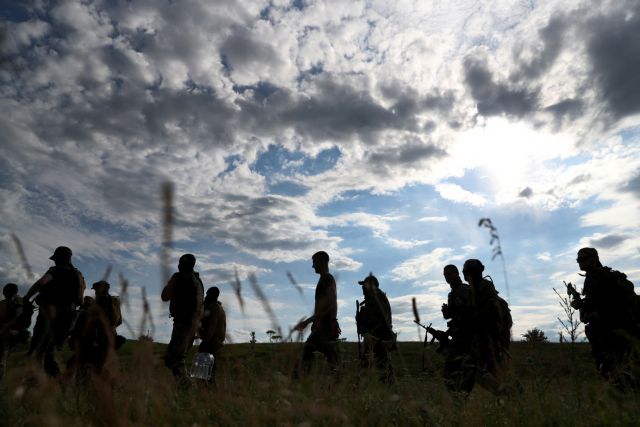
Ukraine still controls about 20 per cent of the Donbas, which Russia has failed to capture since its first incursion in 2014. Russian forces have sustained tens of thousands of casualties this year in their attempts to seize the “fortress belt” of cities remaining under Kyiv’s control.
The White House, the US embassy in Kyiv and Nato did not immediately respond to requests for comment.
Russia has insisted that Ukraine should not be part of Nato and has demanded dismantlement of Europe’s post-cold war security architecture.
Zelenskyy’s comments could suggest a significant shift in discussions between Kyiv and Washington. Negotiators have been trying to revive talks involving Russia after pausing discussions in February after the war with Iran erupted.
The first trilateral talks since then between the warring sides and the US took place in Abu Dhabi this week.
European officials joined discussions only with the Americans and Ukrainians. Russia has refused to accept them at the negotiating table, but Zelenskyy said European governments should participate directly in the next round of talks.
On Friday, EU leaders agreed that a coalition of officials from France, Germany, Italy, Poland and the UK, plus the EU and Nato, would represent Europe at the technical-level talks.
Moscow said this week that Europe should pick someone whom Vladimir Putin would approve of to represent it in the talks if it wished to participate. European officials said there was little prospect of leader-level negotiations soon, but that if they took place, there would be further discussions on who would represent the continent.
European capitals support Zelenskyy’s bid to restart discussions over Nato membership, two officials briefed on the Abu Dhabi talks told the FT, as part of a “maximalist” strategy to counter Moscow’s demands.
Western countries have also discussed an arrangement short of full Nato membership but with multilateral agreements mimicking the alliance’s “Article 5” mutual defence clause.
Zelenskyy said Kyiv was discussing a broader security package with its partners, including guarantees from Nato and the EU, long-term military support for a strong Ukrainian army and an internationally backed reconstruction plan.
The president said Ukraine still needed substantially greater air defence and energy assistance ahead of winter, when Russia is expected to intensify its attacks on critical infrastructure.
Denmark has pledged a €645mn support package that includes 20mm ammunition for F-16s, which is needed to shoot down jet-powered drones, as well as €200mn for drone production, he said.
Zelenskyy also criticised the speed limits imposed on the Starshield satellite systems used by the military for middle-range strikes against Russian targets in occupied territory. He said the restrictions, which have been in place for several days, have limited speeds to 161kph (100mph) and were also hampering efforts to intercept Russian jet-powered drones.
Kyiv believes the restrictions on Starshield — the Starlink service funded by the Pentagon and designed for military use by SpaceX — have “political implications” and is demanding their removal. Zelenskyy said the limits appeared to only affect Russian-occupied areas of Ukraine.
“If you impose restrictions there, you are already partially recognising the temporarily occupied territories as not ours,” he added.
Senior Ukrainian officials told the FT this week they believed the speed restrictions were imposed to put pressure on Kyiv during the latest peace talks with Russia and strengthen Moscow’s position.
SpaceX said in an email that Zelenskyy’s claim of restrictions was “false. There has been no change.”