
 Μake us preferred on Google
For three days in September 2022, Switzerland had a brief window to solve one of the most intractable financial problems created by Russia’s full-scale invasion of Ukraine.
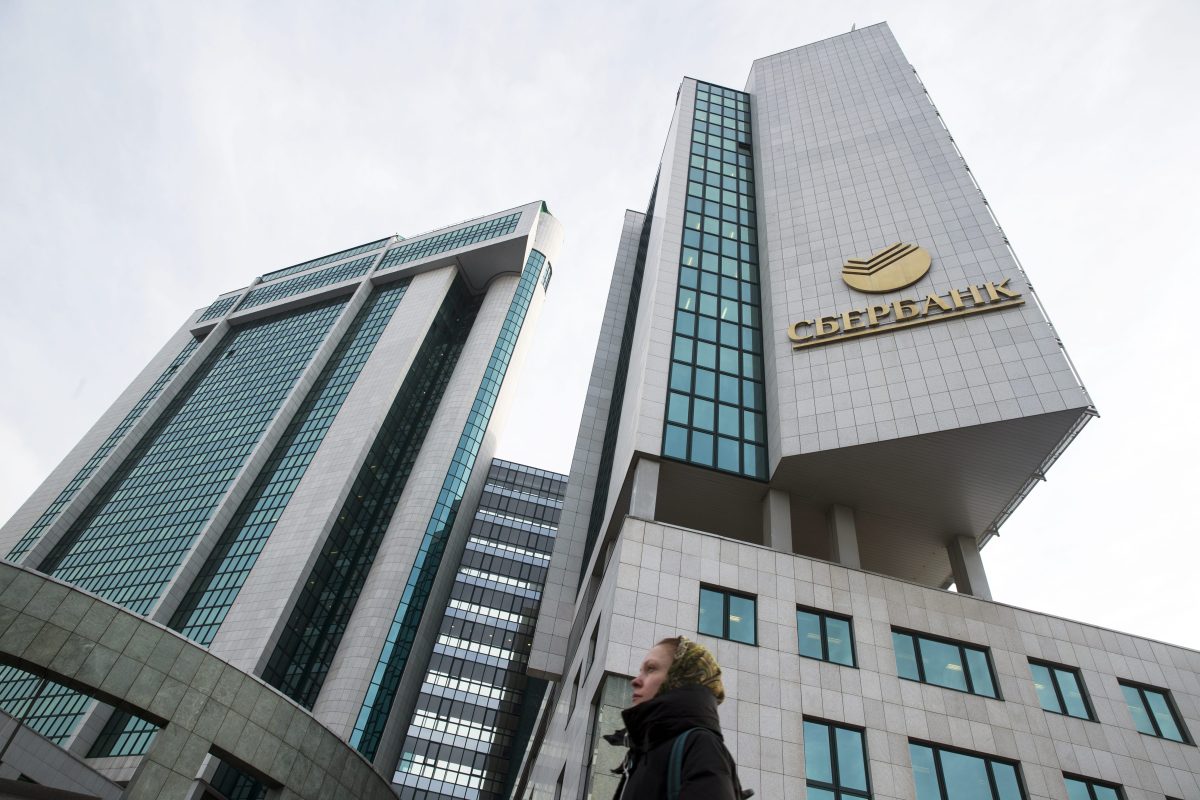
At 10 on a Friday morning, Swiss regulator Finma temporarily lifted restrictions imposed six months earlier on the local subsidiary of Sberbank, Russia’s largest bank.
The Zurich-based lender, which had hundreds of millions of francs in assets and counted some of the world’s largest commodity traders among its clients, had become a dilemma for authorities after Bern and other western capitals adopted sanctions against Moscow.
Liquidating the bank threatened to turn into years of legal and administrative wrangling. Instead, Finma cleared the way for an extraordinary rescue. By the time the window closed, Sberbank Switzerland had been sold to two western businessmen and renamed TradeXBank, allowing it to operate again.
The buyers were an unlikely pair: Stephen Lynch, a Wharton-educated American investor who had spent decades cutting deals in Russia, and Abdallah Chatila, a flamboyant Lebanese-born Swiss jeweller turned property entrepreneur.
The sale, cleared by the US Treasury and Seco, the Swiss sanctions agency, was controversial, given it meant paying Kremlin-controlled Sberbank roughly SFr130mn (£118mn) while Russian bombs rained down on Ukraine. But it appeared to offer a neat solution for Swiss authorities. The bank survived, jobs were preserved and Finma promised to monitor it closely. Christian Lüscher, a former Swiss parliamentarian appointed as chair of TradeX, called the Swiss deal “absolutely brilliant”.
Four years later, what once resembled a rescue became an extraordinary saga of unpaid debts, feuding owners and legal battles stretching across several countries. Lynch and Chatila became locked in a bitter dispute when the ink on the original deal was barely dry. Until a last-minute settlement, the bank was facing the possibility of being wound up.
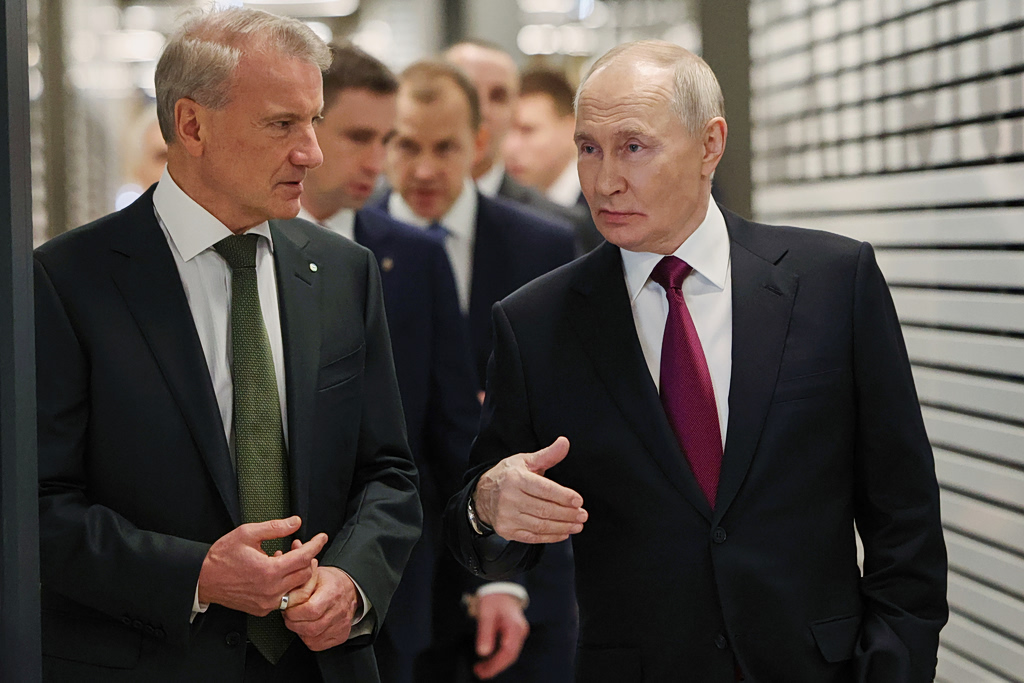
Russian President Vladimir Putin, right, speaks to Sberbank CEO German Gref as he visits an exhibition of the AI Journey 2025, an international conference on artificial intelligence and machine learning, at the Sberbank City business complex in Moscow, Russia, on Wednesday, Nov. 19, 2025. (Vyacheslav Prokofyev, Sputnik, Kremlin Pool Photo via AP)
The tale of Sberbank Switzerland, drawn from interviews with multiple players involved in the deal, is a case study in what happened when western governments imposed sweeping sanctions on Russia and suddenly faced the problem of finding new owners for billions of dollars of Russian assets. Often, the only buyers willing to step in came from far outside the traditional corporate world. Regulators greenlit unconventional deals with opaque financing and stored up problems for later, critics say.
The affair also comes at an uncomfortable time for Switzerland’s financial establishment. The collapse of Credit Suisse in 2023 exposed serious failures in banking supervision, while repeated money-laundering scandals and banking downfalls have tarnished the country’s reputation as a safe haven for global wealth.
Finma, already under fire for failing to act decisively before Credit Suisse’s demise, now finds itself accused of standing by as another troubled bank became entangled in debt disputes.
“Mistakes were made from the beginning when Finma did not ask proper questions about how and by whom this deal for Sberbank was being funded,” says Monika Roth, a Swiss academic and lawyer in banking compliance, adding it was “astonishing” the TradeX saga had been allowed to drag on for so many years.
“The regulator has the ability to act in this situation and to solve such problems. This sounds like something that could happen in Haiti, not Switzerland.”
The two men who bought Sberbank Switzerland could not have been more different.
Lynch, a hard-nosed American investor, had been doing Russian deals since the 1990s. The meticulous redhead liked to work alone with a small group of advisers and had long relied on his eye for detail and stomach for risk.
In 2007 he was involved in the purchase of Yukos Finance, the foreign arm of Mikhail Khodorkovsky’s dismantled oil empire. More recently, he has tried to buy Nord Stream 2, the sanctioned Russian gas pipeline to Germany, presenting himself to Washington as a specialist in “de-Russifying” Russian assets and citing Sberbank Switzerland as an example of how it could be done.
Alerted to the opportunity at Sberbank by a business school classmate, Lynch began pursuing a deal within weeks of Russia’s invasion. He worked with American lawyers to secure permission from the US Treasury’s Office of Foreign Assets Control to negotiate with the sanctioned Russian group and began preparing a takeover with JC Flowers, a US private equity firm.
Since the final years of the first Trump administration, Washington had wanted the US to exert more control over the global flow of commodities but lacked Europe’s powerful trading houses. Lynch’s pitch was that American ownership of a major commodity trade finance bank in Switzerland would be a way to begin bridging that gap.
While other investors saw the Swiss arm of Russia’s largest bank as reputationally toxic, the American investor saw an attractive prize. Sberbank had acquired its Swiss operation in 2011 as part of an international expansion and by 2022 it had nearly SFr500mn in equity and roughly 70 clients, mainly trading oil, metals and agricultural products. Most importantly, it was available at a huge discount.
Having won approval from US sanctions authorities to negotiate the purchase, Lynch managed a swift deal. But shortly before it was due to be signed in June 2022, JC Flowers pulled out after a disagreement over terms, leaving him in need of a new source of funds. JC Flowers did not respond to requests for comment.
Stocky and exuberant, Chatila could scarcely have been more distinct from the reserved, steely Lynch. Founder of m3 Groupe, a sprawling Geneva-based conglomerate, his business interests ranged from diamonds and property to restaurants and Covid masks. In 2019, he had spent more than half a million euros buying Nazi memorabilia, including a rare copy of Mein Kampf, then donating it to a Jewish organisation to keep it out of the hands of neo-Nazis.
The pair met for the first time in Zurich in late spring of 2022. Lynch told him he would need about SFr200mn to complete the transaction. Chatila assured the American that it would not be a problem, presenting a proof-of-funds letter from London-headquartered wealth manager Floreat. The document, seen by the FT, stated that the Geneva businessman had “liquid funds available in excess of SFr400mn for immediate use for any purpose”.
Chatila was thrilled by the opportunity to enter the rarefied world of Swiss banking, despite the regulatory responsibilities that would come with it. Entering banking, he said at the time, “was no more novel than opening a mask factory”.
With little time to close the deal, Lynch looked past Chatila’s unorthodox profile. The Geneva businessman met two important criteria: he was Swiss, which would satisfy Finma’s preference for a local buyer, and he appeared to have the money.
Under their agreement, Lynch transferred his right to buy the bank to Chatila’s m3 Groupe in return for SFr36mn and a 10 per cent equity stake. Lynch also negotiated a put option requiring Chatila to buy back that stake if he chose to sell.
Within days of signing the agreement, however, Lynch learnt that Chatila was trying to raise money through an m3 bond offering an eye-watering annual interest rate of 15 per cent. Lynch had understood from the Floreat letter that Chatila already had the funds available. Floreat, which has since ceased operations, said it wrote the letter at m3’s request. The correspondence was provided “to the best of Floreat’s knowledge and belief” and “did not constitute a guarantee”, it said.
Chatila maintains he accurately outlined his financial position. He says that he had access to SFr400mn in credit, but had underestimated banks’ reluctance to finance the purchase of a sanctioned Russian-owned lender. Lynch insisted they inform Finma, and the two men went cap in hand to the regulator, which approved the financing strategy.
For Finma, the deal was still a valuable way out of the Sberbank problem, but it was wary of the risks. It imposed a strict “ringfence”, requiring the bank to operate independently of Chatila’s m3 empire and restricting dealings between the two.
For example, it required a majority of directors to be independent of m3 and an independent chair. Under ordinary Swiss banking rules, only one-third of directors are required to be independent, with no general requirement for an independent chair.
“It was incredible that Finma allowed it to proceed at that point,” says one person who formerly worked at TradeX.
With the deadline approaching, Chatila began selling m3 bonds in tranches, each carrying an annual interest of 15 per cent. The debt issuance drew in wealthy individuals, offshore companies and financial intermediaries.
Lynch was not directly involved in the fundraising but his financial and legal advisers helped compile know-your-customer files on the bondholders, which were also sent to Finma, according to people familiar with the process.
By September, Chatila had raised SFr125mn from eight investors, enough to complete the acquisition.
Lynch had orchestrated the rescue, Chatila had become a Swiss banker and TradeX had successfully been “de-Russified”. But the honeymoon did not last long.
Just weeks after the acquisition, Chatila missed an October 2022 deadline to pay Lynch the SFr36mn he owed him. Further agreements bought him more time, and he eventually paid in instalments. But the delays strained their relationship.
Meanwhile, the expensive borrowing used to buy the bank was creating problems of its own. Chatila, whose assets were tied up in illiquid property, needed more cash. In November, his m3 group issued another SFr15mn in bonds, adding to the SFr125mn already raised to finance the acquisition.
The original bondholders had lent money to m3, rather than bought shares in TradeX. But as Chatila’s debts mounted, he increasingly used his stake in the bank to raise money, pledging shares as collateral for loans or promising them to other investors. The arrangements raised the prospect that some of his creditors could eventually become owners of the very bank Finma had sought to “ringfence” from his wider business interests.
By July 2023, the relationship between the two buyers had deteriorated so badly that Chatila wrote to Lynch challenging their financial agreements, arguing that he had entered into some of them under duress.
But for an increasingly frustrated Lynch, who remained a TradeX board director, the issue was not just money. He was spending more and more time trying to safeguard Finma’s ringfence.
One example involved a proposal to name as director a person who had helped finance the purchase of TradeX. Both Lynch and Finma questioned the potential conflict of interest, documents seen by the FT show.
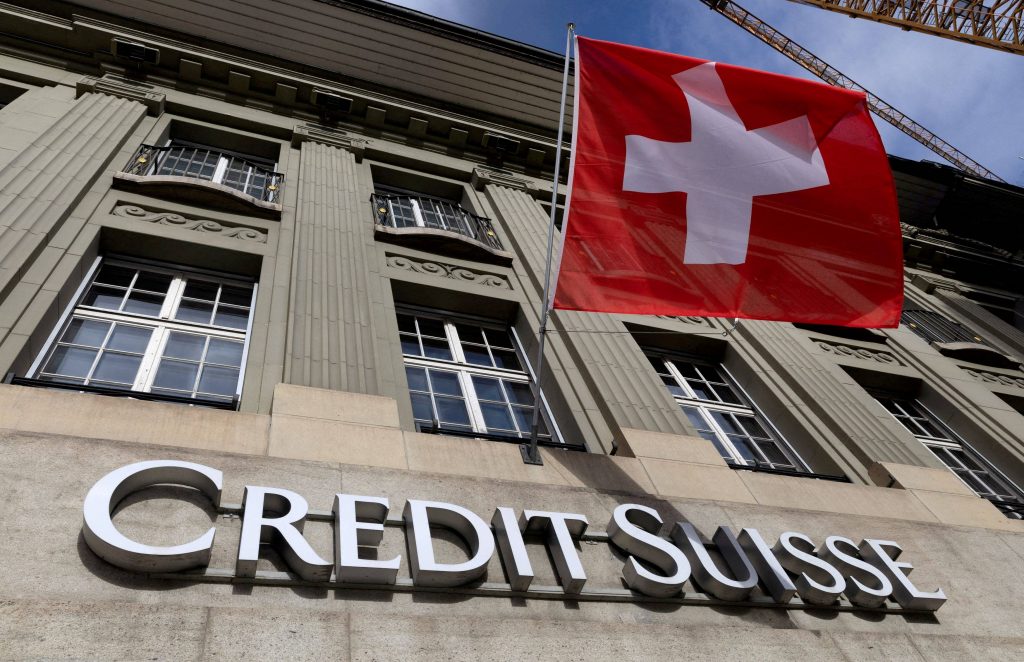
Switzerland’s national flag flies above a logo of Swiss bank Credit Suisse in front of a branch office in Bern, Switzerland November 29, 2022. REUTERS/Arnd Wiegmann//File Photo
The bank confirmed to the regulator that the proposed director had invested in bonds used to buy TradeX. He sold his holding on August 10 2023, the day before the confirmation, and was later appointed as a director.
Correspondence reviewed by the FT shows Finma raised questions about proposed board appointments, including potential conflicts of interest. “In future, we expect the bank itself to have a selection and evaluation process for reviewing prospective board candidates,” the regulator wrote in August 2023.
For Chatila, the episode may have reflected the complexity of navigating the stringent governance requirements of a regulated Swiss bank, after managing a real estate business.
Yet Lynch, fed up with what he saw as attempted interference in the running of the bank, decided he wanted out. In September 2023, he exercised his contractual right to force m3 to buy his 10 per cent stake for SFr54mn, with interest of 15 per cent if payment was delayed. When m3 failed to pay, the dispute moved to arbitration in Geneva.
Lynch won in July 2025. But Chatila still had not paid, so Lynch obtained court orders freezing some of m3’s TradeX shares to recover his money.
Critics of Lynch pointed out that he had put up little of the money used to buy the bank, yet was now pursuing claims worth almost SFr90mn — a potentially lucrative return on the original deal. His increasingly persistent pursuit of those claims exasperated some caught up in the dispute, who referred to him by a derogatory nickname.
The bitterness of the feud left a more permanent mark on Chatila. He had a tattoo put on his forearm reading: “A little finger in the ass never hurts, don’t take yourself seriously.”
Lynch was far from the only person pursuing Chatila for money. His m3 group had also failed to repay the SFr140mn borrowed to buy the bank when it fell due in 2024, and had paid only part of the interest owed.
The worsening disputes over repayment exposed another troubling aspect of the rescue — one that posed awkward questions for Swiss authorities. The whole point of the deal had been to get Sberbank Switzerland out of Russian hands. Yet some of the bonds had been sold to investors with longstanding ties to Russian business, according to documents reviewed by the FT.
Among them was One Solution Trading, a Dubai-based steel trader with business dealings with Russian steel group Novostal-M, which bought SFr10mn of bonds.
Its owner, Hector Garcia Velazco, was married until 2025 to the daughter of Ivan Demchenko, a Russian parliamentarian under international sanctions and whose son runs Novostal. A lawyer for Garcia Velazco said he purchased One Solution in 2021 from its founder “who is neither Demchenko nor a member of his family”.
Another SFr20mn in bonds was held by Ugol Properties, a Cyprus-based company whose sole registered shareholder was a nominee firm owned by Christodoulos Vassiliades, a Cypriot lawyer sanctioned by the UK in 2023 for providing services to Russian oligarchs. His sanctions designation also cited his directorship of a Cypriot subsidiary of Sberbank. A lawyer for Ugol said the nominee arrangement was a routine corporate service and that Vassiliades had never held a beneficial interest in the company.
Then there was Will Abbott, a British financier who had spent years running Russian equities businesses at Bank of America Merrill Lynch and Renaissance Capital in Moscow. Abbott managed Mekita Investment — a Cyprus-based vehicle owned by two Russian businessmen who had founded one of Russia’s largest rail freight companies — at the time it lent m3 SFr5mn in late 2022. This has since been repaid. In addition, Abbott’s own London-based fund 4 Eyes Capital provided a further SFr29.5mn loan in 2023, which was then secured against a substantial stake in TradeX after Chatila failed to keep up repayments.
Much of the network of financiers was first uncovered by Geneva investigative publication Heidi.news, which was barred from naming several bondholders after they took legal action on privacy grounds. It has since won almost all the initial court rulings, although appeals are ongoing.
In a statement, m3 said: “We are not privy to the private affairs of each of our investors. We were, however, vigilant in ensuring that all funds were transferred from Swiss banks to our Swiss accounts and full [compliance checks] were provided.”
Tourists take pictures in front of the headquarters of Swiss bank Credit Suisse at the Paradeplatz square in Zurich March 10, 2015. Credit Suisse said it had hired Prudential head Tidjane Thiam as the first African to lead a global investment bank, with the job of reviving a company reeling from U.S. penalties and under increasing regulatory scrutiny. Credit Suisse Chairman Urs Rohner said long-standing boss Brady Dougan was stepping down as chief executive of the Swiss bank at the end of June and would be replaced by Thiam, a former Ivory Coast government minister who has led the global insurance group since 2009. REUTERS/Arnd Wiegmann
Other m3 bondholders had no ties to Russia but had their own beef with Chatila. Among them was Brahma Finance, a British Virgin Islands investment vehicle that had put in SFr20mn. When m3 failed to repay the bonds in 2024, most investors agreed to accept lower interest and more time. Brahma refused, challenging the restructuring in Geneva and separately pursuing Chatila under personal guarantees. The dispute is ongoing and Brahma declined to comment.
Another battle reached the English courts, where UK-listed Investec is seeking repayment of a SFr20mn loan used to buy bonds financing the acquisition. The borrower — Chatila’s business associate — remarkably argued that the loan could not be enforced because the transaction breached UK sanctions against Russia. Investec rejects the allegation and is pursuing repayment.
Chatila turned to a series of legal challenges, contesting agreements and appealing rulings. Several bondholders contacted by the FT said most of the financiers simply wanted their money back, rather than becoming shareholders in TradeX. They argued that the prolonged battle between Chatila and Lynch had frustrated efforts to resolve the bank’s ownership problems.
In June last year, Chatila persuaded remaining bondholders to accept a cut in their interest rate and more time to repay. The new terms were approved by a Geneva court, but the relief proved shortlived. Last month, m3 sought another extension, this time asking bondholders to postpone repayment of both the bonds and outstanding interest until September 2028.
The disputes have also spilled over into the ownership of TradeX itself. Chatila agreed to hand over 23 per cent of the bank to Traderline, a Zug-based property company run by another of his associates, in exchange for real estate and cash.
Finma approved the deal in September 2025, but Lynch had obtained court orders freezing the shares as he pursued his own claims against Chatila. Traderline intends to appeal, the company’s lawyer said in a statement.
TradeX remains entangled in what one person owed money describes as an “unmitigated mess”.
The affair has unfolded at a particularly uncomfortable moment for Swiss banking, with the country’s reputation for financial probity already damaged after the collapse of Credit Suisse and the competence of Finma under greater scrutiny.
Switzerland’s regulator had correctly recognised the risks of the acquisition from the outset. Yet it allowed Chatila to buy the bank with expensive borrowed money, raising the possibility that his financial problems could eventually affect the lender.
Its strict “ringfence” was intended to protect TradeX from m3 and its creditors, limiting dealings between the bank and its controlling shareholder and requiring its board to operate independently.
However, by 2025, Chatila had pledged more than 40 per cent of TradeX’s share capital to m3 creditors as collateral against loans, according to a document reviewed by the FT.
TradeX maintains that the financial claims surrounding its shares should not be confused with ownership. Pledging shares does not by itself make a creditor a shareholder, it says, adding that it has no Russian shareholders.
For now, the bank, with a credit portfolio of about SFr440mn as of the summer, is operating. But it has barely grown since the 2022 deal and has undergone significant upheaval in its management, including the departure of its original chief executive and chair as well as changes to its board.
Liquidation had become a growing risk. Finma warned in October that the bank’s shareholder problems needed to be resolved or it could face liquidation, according to two people familiar with the correspondence.
In a last twist, Lynch and Chatila finally settled their differences this week. In what Lynch described as a move to “stabilise the bank”, the American investor agreed to drop his outstanding claims against Chatila in return for increasing his own stake in TradeX. The agreement also removes the restrictions Lynch had placed on other TradeX shares, clearing Chatila’s previously blocked share sales to proceed.
In a statement, Lynch said he hoped the deal would bring an end to a period of “acute uncertainty” for TradeX. “With this settlement, the bank is well positioned to achieve its full potential in the provision of commodity trade finance,” he said.
For Chatila, the deal marks another reduction in his holding in the bank. He continues to face financial pressures across his wider m3 group. In a statement, the businessman said his objective was “to sell our stake in the bank in order to refocus all of our activities on real estate”.
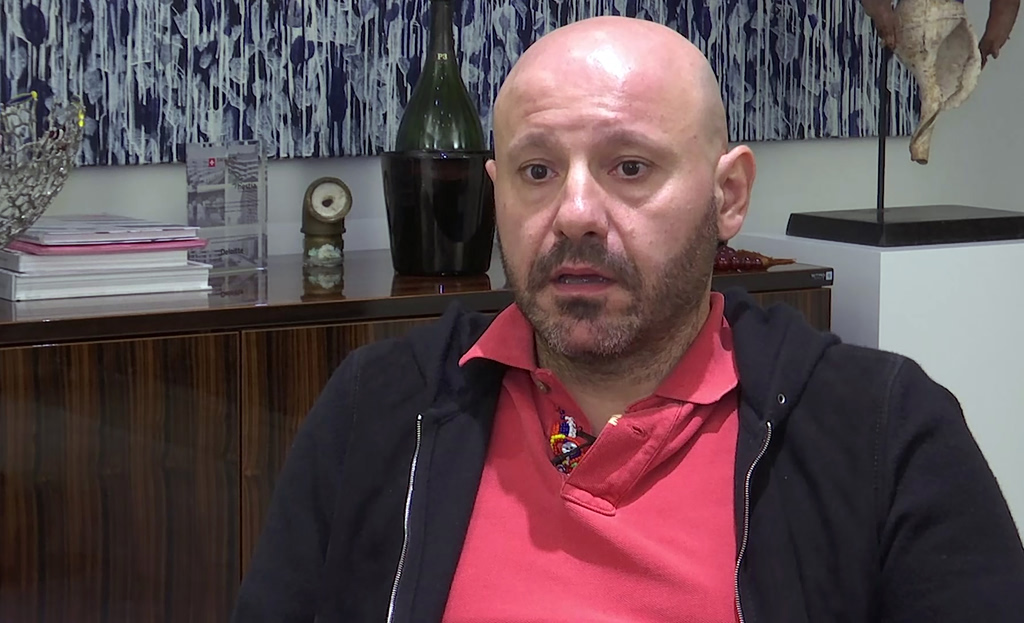
As Chatila’s debts mounted, he increasingly used his stake in the bank to raise money, pledging shares as collateral for loans or promising them to other investors. (AP Photo)
The settlement may have eased the immediate uncertainty over TradeX’s ownership, but it has done little to settle questions about Finma’s oversight of the bank. The affair has revived familiar criticism of the regulator’s reluctance to intervene decisively.
Swiss authorities were under intense pressure to find a solution after Bern unexpectedly adopted EU sanctions against Russia, notes Mark Pieth, a former University of Basel professor and expert on financial crime.
“Finma and officials at Seco were desperate to get rid of the Sberbank problem,” he says.
The authorities were guilty of the characteristically Swiss habit of durchwursteln, Pieth says — muddling through, or finding a pragmatic solution to an immediate problem without fully confronting the risks. “Now one problem has been replaced by a different, maybe bigger problem.”
Finma declined to comment on its supervision of TradeX, citing the confidentiality of its supervisory activities. It says that when a bank changes ownership, its role is to assess whether regulatory requirements are met, including whether prospective shareholders are reputable and whether their influence could jeopardise the bank’s sound management. The regulator added that it takes far-reaching measures when significant problems arise at institutions it supervises.
One bondholder, who has spent years chasing repayment, expresses shock at how the dispute has been handled by Swiss authorities and the courts.
He draws parallels with the treatment of Credit Suisse’s AT1 bondholders, many of them foreign investors, whose investments were wiped out by Finma during the bank’s state-orchestrated rescue by UBS in 2023, even as shareholders received compensation.
“The credibility of the Swiss banking system, the Swiss courts and how they conduct themselves is in question. These things just add fuel to the fire,” the bondholder says.
“I would never do a deal in Switzerland again, and I would caution anybody else against doing it.”
Link To FT.com: https://www.ft.com/content/8d5aaf6c-e8b6-47ac-a111-a5827fce2175
Copyright The Financial Times Limited 2026
© 2026 The Financial Times Ltd. All rights reserved. Please do not copy and paste FT articles and redistribute by email or post to the web.