 Μake us preferred on Google
On November 29, 2026, Spanish voters head to the polls in an election that brings a broader European question to the fore: who can transform social discontent into a coherent and viable political project? The confrontation between the Socialist Workers’ Party (PSOE), the right-wing People’s Party (PP), and the far-right Vox is not merely about a change in government. It reflects a deeper competition over the political representation of social demands and the shaping of public consensus.
The Spanish case is particularly significant, as it combines positive macroeconomic indicators with stark social contradictions. Economic growth and improvements in certain employment metrics have failed to eliminate the insecurity experienced by significant segments of the population. The gap between overall economic performance and the daily lived experience of citizens constitutes one of the central battlegrounds of contemporary political conflict.
The material basis: housing, precarity, and social insecurity
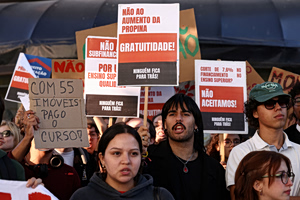
The most striking example of this contradiction is the housing crisis. The European Commission points out that Spain’s stock of social housing accounts for a mere 1.5%–1.7% of the total housing stock, compared to approximately 6%–7% across the European Union.
Furthermore, according to data cited in Spanish legislation from September 2026, 26.8% of households renting homes at market rates in 2025 spent more than 40% of their income on rent. Although this figure has decreased significantly from the 39.4% recorded in 2022, it remains substantially higher than the corresponding European average.
The housing crisis is not merely a matter of individual financial management. It restricts social mobility, hinders young people from achieving independence, and exacerbates inequalities between different social groups. Despite the enactment of the Housing Law in 2023, the implementation of rent-control measures has been uneven across the autonomous communities highlighting the challenges of establishing a unified housing policy within a market characterized by deep-seated structural weaknesses.
The critical policy issue is that economic growth does not automatically translate into social security. When citizens do not see an improvement in their basic living conditions, trust in the effectiveness of institutions and political forces is put to the test.
How Vox attempts to articulate this discontent
Economic insecurity, however, does not automatically lead to the far-right. It constitutes a terrain of political contestation, within which various forces attempt to interpret social problems and propose corresponding solutions.
Vox, under the leadership of Santiago Abascal, seeks to connect different forms of discontent through a nationalist and conservative political framework. Regarding the issue of housing, for example, it combines proposals for the deregulation of construction activity, tax cuts, and opposition to rent controls with the promotion of a “national priority” principle for access to housing.
At the same time, it links housing pressure and the strain on public services to immigration, while leveraging issues such as the illegal occupation of properties to frame social insecurity within a broader discourse on security and the protection of private property. Similarly, its critique of European environmental policy seeks to link “green” regulations to the economic hardships faced by farmers and workers in the regions.
The political significance of this strategy lies not merely in its specific proposals, but in its attempt to weave disparate social demands into a unified narrative. It seeks to integrate the grievances of small-scale property owners, the insecurity of regional workers, and the uncertainty felt by young people who find themselves unable to access housing into a shared political interpretation.
The crisis of representation and the concept of hegemony
In this regard, the thought of Antonio Gramsci provides an essential analytical tool.
Hegemony is not limited to electoral dominance or the attainment of governmental power. It presupposes a political force’s capacity to forge social alliances, bridge diverse interests, and shape a vision of social reality that gains broader acceptance.
The rise of the far-right can, therefore, be viewed as part of a wider struggle over how to interpret the social crisis. Vox is not simply attempting to attract disaffected voters. It attempts to define the way in which they perceive the problems they face, those responsible for them, and potential political solutions.
This process is linked to the crisis of political representation described by Peter Mair in his work Ruling the Void. The weakening of ties between political parties and social groups, combined with an increasing emphasis on technocratic management, has, in many instances, limited the capacity of traditional political forces to articulate collective demands.
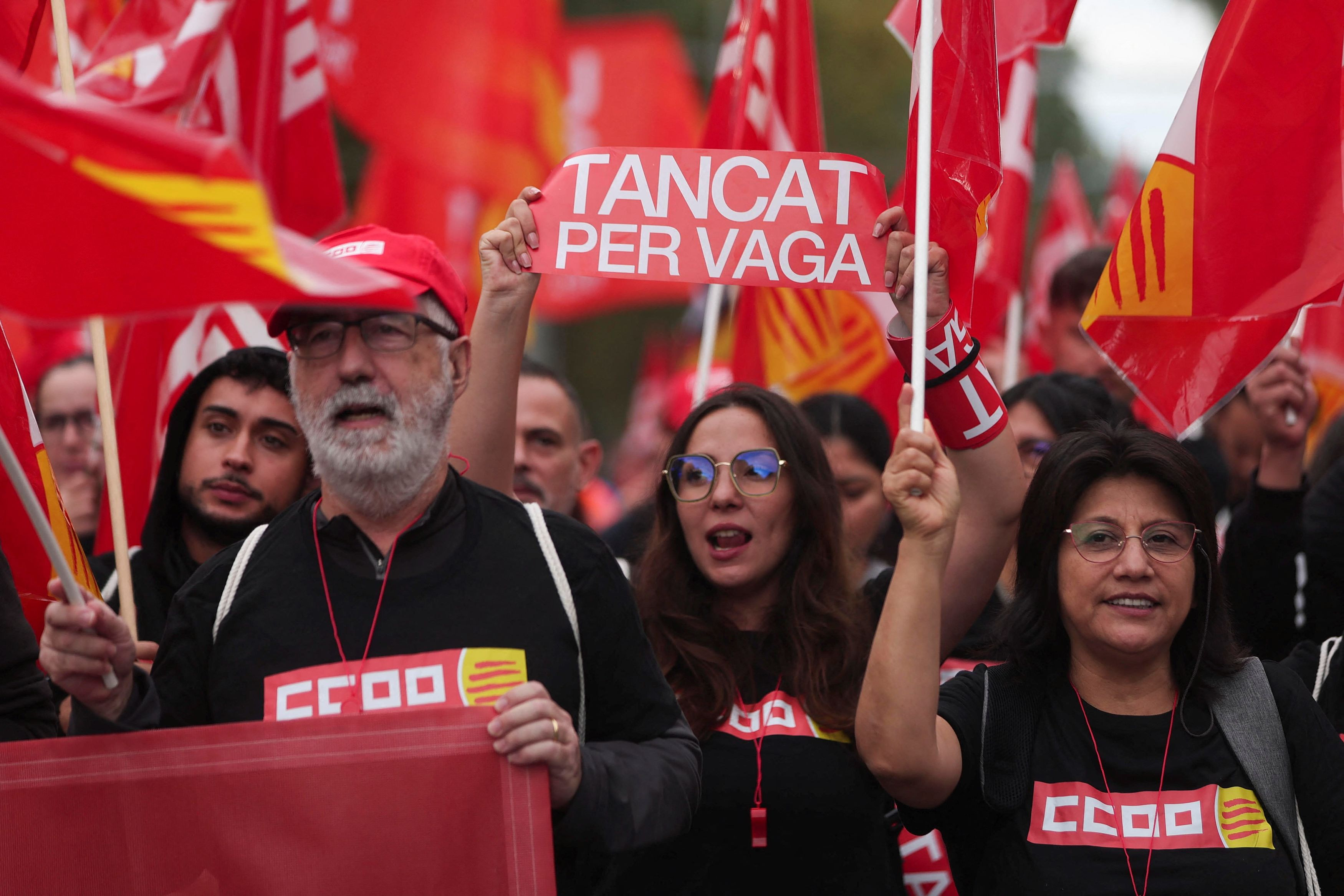
For progressive forces, the challenge goes beyond merely countering the far-right in the electoral arena. It lies in restoring their social grounding-maintaining substantive links with trade unions, neighborhood collectives, and social movements-while also formulating a concrete program that addresses the real needs of citizens.
The need for a democratic alternative
Containing the far-right cannot rely solely on highlighting the danger it poses. It requires a democratic alternative with a clear social substance.
First, interventions are needed that address the material root causes of insecurity-ranging from the expansion of social housing and the protection of labor rights to the improvement of public services. Second, there is a need to forge new social alliances capable of linking the experiences of the precarious urban youth with those of workers and smaller productive strata in the regions. Third, it is necessary to revitalize democratic participation through collective organizations and institutions that allow citizens to meaningfully influence political decisions.
The Spanish election will not, on its own, determine the political trajectory of all of Europe. It can, however, highlight the contradictions and dilemmas that shape political contestation in
Europe. The deeper question remains open: who will succeed in transforming social discontent into a coherent political project? For progressive forces, the answer lies not only in defending democracy against its adversaries, but also in their ability to reconnect it with the material needs and aspirations of society.
Angelos Kollaras is an undergraduate student of Political Science and History at Panteion University of Social and Political Sciences in Athens, Greece.