 Μake us preferred on Google
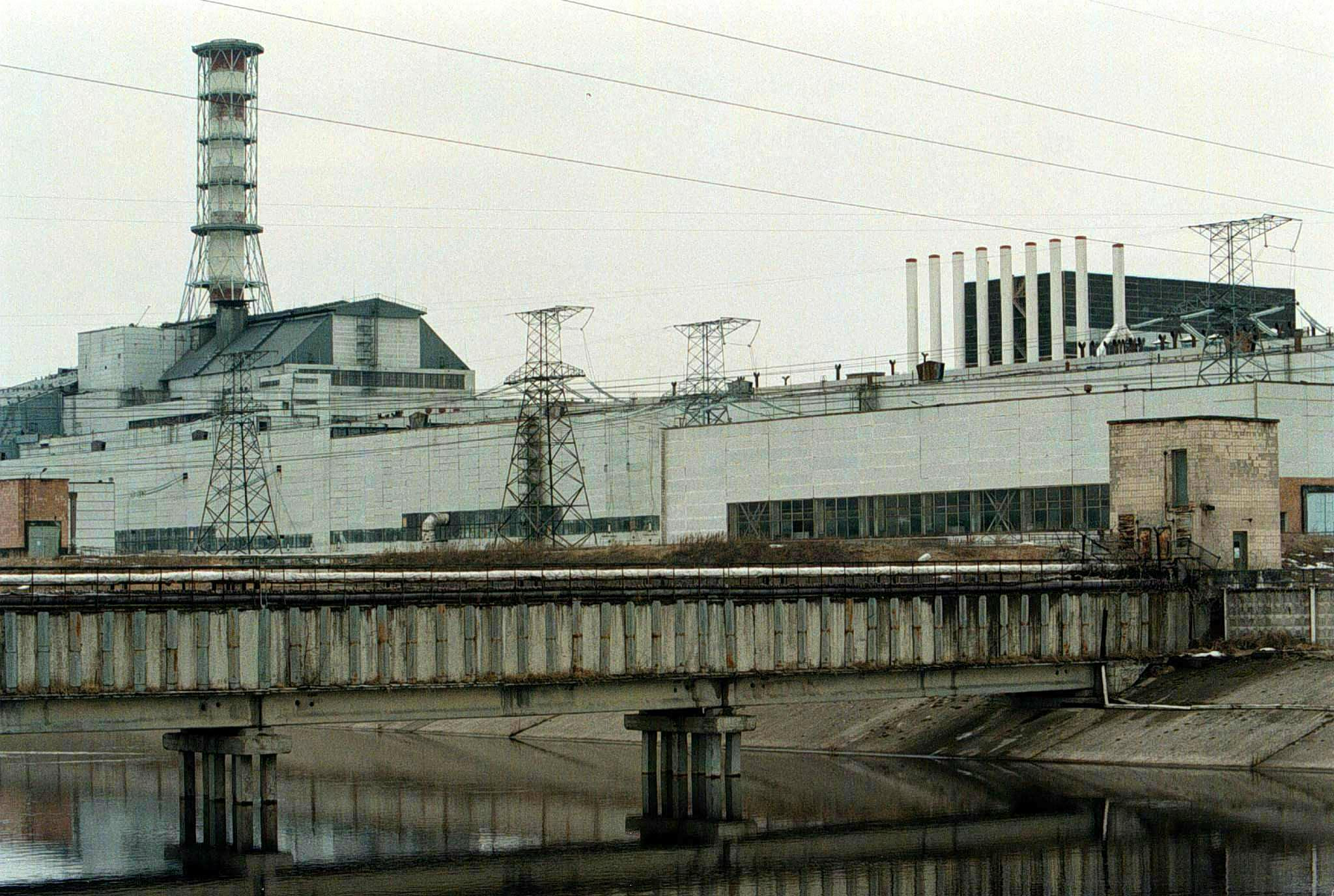
 In April 1986, a late-night safety test at reactor number four of the Chernobyl nuclear energy station in the, then, USSR, spiraled into one of the worst industrial catastrophes in history. The explosion and subsequent fire released radioactive material across much of Europe, displacing communities and leaving a legacy that still shapes public trust in large-scale technological systems. Forty years on, the significance of Chernobyl lies not only in what happened, but in why it happened.
It is often described as a failure of engineering. That is only partly true. The reactor design had known flaws, but these alone do not explain the sequence of decisions that led to the disaster. What Chernobyl ultimately revealed was a deeper vulnerability: the inability of governance structures to manage complex systems under pressure.
The test conducted that night was meant to assess whether the reactor could safely power down while maintaining sufficient energy output. It was, in principle, a routine safety exercise. In practice, it unfolded under conditions that had already drifted far from protocol. The broader regional Soviet energy grid was under strain. There was pressure to maintain output. The test was delayed, then resumed at an hour when staffing and oversight were reduced. Safety systems were disabled to keep the experiment running. Operators, working within a rigid hierarchy, made decisions shaped as much by institutional expectations as by technical judgment. None of these factors alone caused the disaster. Together, they created an environment in which failure became not just possible, but likely.
This is the enduring lesson of Chernobyl: complex systems do not fail only because of technical defects. They fail when institutional incentives, information flows, and decision-making structures become misaligned with the realities those systems are meant to manage.
That lesson resonates today in a very different domain. The rapid expansion of artificial intelligence has introduced new forms of infrastructure, new governance challenges and needs. Modern AI systems, particularly those operating at scale, require substantial computational resources. Data centers now rank among the most energy-intensive forms of infrastructure. In some regions, they are becoming anchor consumers of electricity, shaping grid investment and long-term planning decisions. This shift is occurring quickly, often outpacing the development of coherent policy frameworks.
The risk is not that AI systems resemble nuclear reactors in their failure modes. They do not. The risk is more subtle: that the systems supporting AI are being developed and operated within governance structures that struggle to keep pace with their scale and complexity.
Chernobyl illustrates how such mismatches emerge. In the Soviet case, incentives were defined by production targets and political expectations. Information moved unevenly through hierarchical channels. Local operators were expected to reconcile competing demands without full visibility into system-wide risks. Under these conditions, adherence to procedure could give way to improvisation, and caution could be overridden by necessity.
Today’s AI ecosystem operates under different conditions, but similar tensions can be observed. The incentives driving development emphasize speed, capability, and deployment. Competitive pressures, both commercial and geopolitical, encourage rapid scaling. Meanwhile, the governance of supporting infrastructure, including energy systems, often remains fragmented across jurisdictions and institutions. This creates a familiar challenge: how to ensure that safety, resilience, and long-term stability are not subordinated to short-term objectives.
One dimension of this challenge lies in transparency. At Chernobyl, critical information about reactor behavior was not widely shared, limiting the ability of operators to make informed decisions. In contemporary AI systems, opacity takes a different form. The complexity of machine learning models, combined with proprietary constraints, can make it difficult to assess how systems will behave under stress or at scale. When such systems are embedded in critical infrastructure, the stakes of uncertainty increase.
Another dimension lies in accountability. The Chernobyl disaster exposed a system in which responsibility was diffuse and often obscured. Decisions were shaped by institutional context, but accountability was assigned after the fact. In the governance of AI, similar questions are emerging. When systems fail, or when infrastructure is strained, it is not always clear where responsibility lies; whether with developers, operators, regulators, or the broader policy environment.
Energy policy adds a further layer of complexity. The growth of AI has renewed questions about how electricity is generated, distributed, and prioritized. Should certain uses of computational power be treated as strategic resources? How should grids balance industrial demand with public needs? What mechanisms ensure that rapid expansion does not outstrip system resilience? These are not purely technical questions. They are questions of governance, requiring coordination across public and private actors, as well as across national boundaries.
A brief counterfactual helps clarify the stakes. If AI had existed in 1986’s USSR, could it have prevented the events at Chernobyl? It is plausible that more sophisticated monitoring or predictive modeling might have identified dangerous conditions earlier. Decision-support systems could have offered clearer guidance to operators navigating an increasingly unstable situation.
Yet such possibilities depend on more than technical capability. They require institutional environments in which data is trusted, and systems are permitted to influence decision-making. In the Soviet context, where centralized authority and political considerations often constrained the flow of information, even advanced tools might have struggled to alter outcomes. Technological capacity is only as effective as the governance structures within which it operates.
This insight remains relevant. There is growing interest in using AI to manage complex systems, including energy grids and industrial processes. These applications hold real promise. They can enhance efficiency, improve forecasting, and support more informed decision-making. But they also introduce new dependencies and new forms of risk, particularly when deployed at scale without corresponding advances in oversight and coordination.
The challenge for policymakers is not to slow technological progress, but to shape the conditions under which it unfolds. This requires a shift in emphasis. Governance cannot be treated as a secondary layer applied after systems are built. It must be integrated from the outset, with attention to incentives, transparency, and accountability.
Adaptive regulatory frameworks are one part of the answer. Static rules are unlikely to keep pace with rapidly evolving technologies. Instead, governance must be capable of learning, adjusting, and responding to new information. Institutional capacity is equally important. Effective oversight depends not only on formal authority, but on expertise, resources, and the ability to engage with technical complexity.
Perhaps most importantly, energy and technology policy must be considered together. The expansion of AI is grounded in physical infrastructure, with real implications for resource allocation and long-term planning. Treating these domains in isolation risks overlooking the systemic interactions that can give rise to instability.
Chernobyl does not offer a simple blueprint for the present. The world has changed, and so have its technologies. But it does provide a clear reminder of how complex systems behave when governance falls short. Failures rarely stem from a single error. They emerge from the accumulation of small misalignments, compounded under pressure.
Forty years on, the most important question is not whether we have learned the technical lessons of Chernobyl. It is whether we have absorbed its institutional ones.
*Ioannis Sidiropoulos, Legal Consultant, LL.M, MA, PhD (c) AI Governance and Sovereignty