 Μake us preferred on Google
 By the middle of the week, Boston had become the kind of city where a man in a kilt could walk into a bar, ask for an Irn-Bru, and be treated less like a visitor than a public event.
The city’s beer halls were not exactly dry, but several reportedly entered a “state of emergency” when the Scots drank through supplies and were left facing the indignity of Bud Light. Pubs that thought they understood volume discovered, as many nations have before them, that there is normal drinking and then there is the Tartan Army abroad.
For the uninitiated, the Tartan Army is not an army, though Boston may now dispute that. It is the name given to Scotland’s travelling national football supporters- a loose, loud and usually good-humored force of kilts, flags, bagpipes, songs, optimism and heroic levels of thirst. They follow Scotland with the discipline of believers and the emotional resilience of people who have spent decades being told not to get their hopes up.
Somewhere between the football chants, the street dancing and the cheerful occupation of every corner that might plausibly sell lager, Boston discovered that Scotland had not merely returned to the World Cup. Scotland had arrived.
Then came the haggis diplomacy.
Massachusetts, swept into the delirium, appeared to become the first U.S. state to “legalize haggis” after Governor Maura Healey joined the fun around a campaign to “Make Haggis Legal Again.” It was a gloriously American moment: legislative theater, ethnic pride, food regulation and sporting hysteria wrapped, at least in theory, in a sheep’s stomach.
View this post on Instagram
The only problem, naturally, is that the real obstacle to traditional haggis is federal. Since 1971, U.S. rules have barred sheep lung in food, meaning Massachusetts may have legalized the idea of haggis more than haggis itself. But no one seemed eager to let technicalities ruin the party.
At Boston Stadium in Foxborough, Scotland opened its first World Cup campaign since 1998 with a 1-0 win over Haiti. John McGinn’s first-half goal gave the Scots a winning start and sent thousands of travelling fans into a kind of contagious joy that spread like wildfire.
The second match, against Morocco on June 19, brought a sharper sporting edge. Morocco arrived with the confidence of a team that had reached the 2022 World Cup semi-finals. Scotland, meanwhile, had the chance to move closer to something it had never done before: reach the knockout stage of a World Cup.
View this post on Instagram
Instead, Morocco won 1-0, leaving Scotland’s hopes alive but complicated before a final group match against Brazil in Miami Gardens on June 24.
Yet the story of the World Cup and the Tartan Army in Boston was never only about football.
This World Cup has arrived under a cloud of complaints. Ticket prices have been attacked as excessive. FIFA’s dynamic pricing and hospitality packages have made the tournament feel, to critics, less like a global festival than a premium-content marketplace. Visa controversies added another sour note. FIFA President Gianni Infantino’s advice that critics should “chill” over concerns around visas and pricing did little to soften the impression that modern football’s governing class often confuses access with optics.
Even Foxborough seemed to capture the mood. Gillette Stadium was temporarily renamed Boston Stadium for the World Cup, while reports described FIFA going to extraordinary lengths to cover non-tournament sponsor branding. Even the seats had to be made commercially obedient.
That is the great contradiction of the modern World Cup. It still sells itself as togetherness, and it still borrows the language of unity, nations and joy. But around the edges, the tournament increasingly feels fenced off by price, branding, bureaucracy and politics. For months, many Bostonians feared they would bear the brunt of traffic and inconvenience without being offered much in return.
Then the Scots’ Tartan Army showed up and reminded everyone what the World Cup is supposed to feel like.
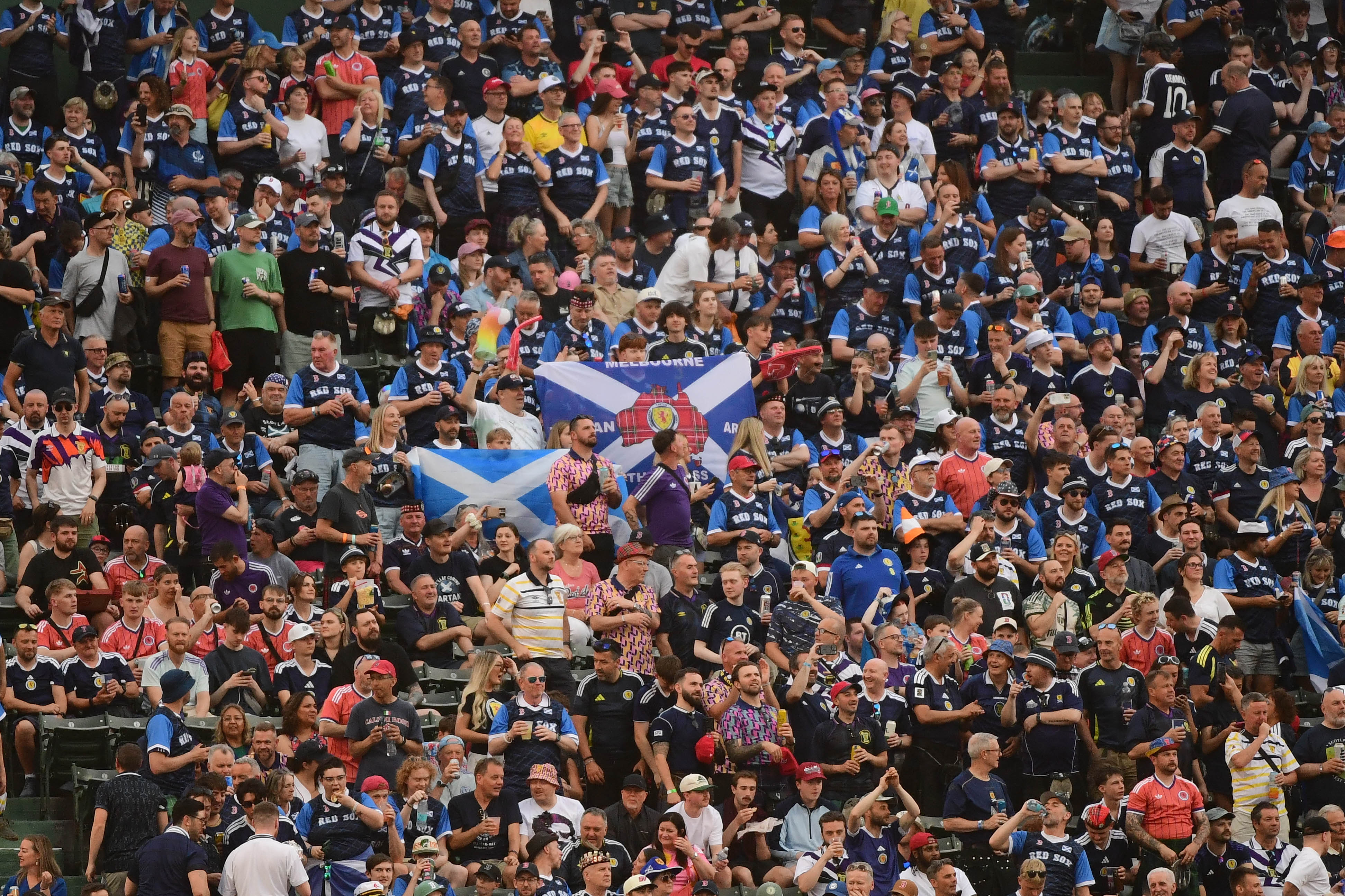
The Tartan Army filled streets, pubs, trains and plazas with slightly chaotic warmth, turning Boston into what local reports called a “mini-Scotland.” Locals headed into the city not necessarily for the games, but simply to be near the spectacle.
That may be the most important part of the story. Bostonians were not merely tolerating the visitors- they were joining them. Some locals went to watch. Some went to drink. Some went to take photos with men in kilts. Some went because, in an age when global sport is increasingly packaged for those who can afford it, the streets still offered something priceless for free: a positive atmosphere.
The Tartan Army also brought something more substantial than songs. Scotland fans donated an estimated $30,000 to charities, with $10,000 going to Hasbro Children’s Hospital’s pediatric oncology program in Providence during their New England stay, part of a wider tradition of turning away trips into occasions for local giving. The Tartan Army has long cultivated a reputation not only for volume, but for generosity and goodwill. The cosmopolitan approach in our increasingly isolationist world has left locals pleasantly surprised.
It would be easy to romanticize this too much. Football crowds are not peace treaties. And a city full of drunk, singing and bagpipe playing visitors is still a city full of drunk, singing and bagpipe visitors. The World Cup’s problems do not disappear because someone puts a traffic cone on a statue or because a pub sells more beer than forecast. But sometimes, sports and culture can move institutions and politics in the right direction.
Boston and Glasgow are now moving toward a sister-city relationship, inspired in part by the surge of affection around Scotland’s visit. That is both funny and strangely moving, and maybe that is what people are responding to. Not only the kilts, the beer, the haggis jokes or the bagpipes appearing in random places, but the sight of strangers being happy together.
That should not feel radical, yet increasingly, it does.
After years of geopolitical conflict, sanctions, tariff wars and anti-migration politics, people are judged for their passports and governments long before anyone is given the chance to win others over by singing badly in a pub.
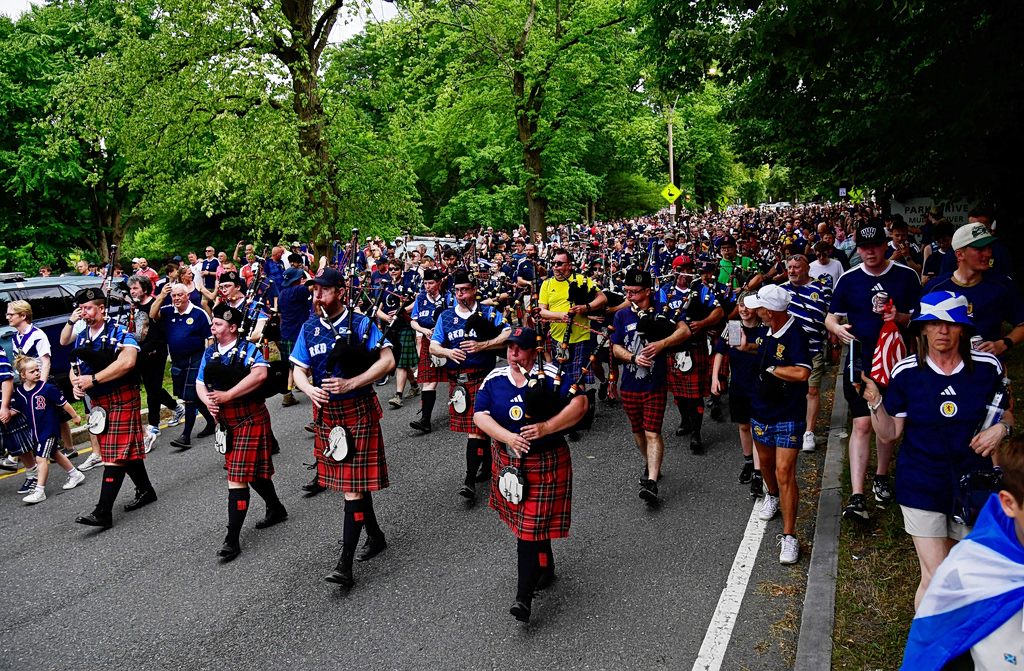
Soccer Football – FIFA World Cup 2026 – Scotland’s Tartan Army march to Boston’s Fenway Park baseball stadium – Boston, Massachusetts, U.S. – June 14, 2026 Scotland fans wearing kilts and playing the bagpipes during the march to Fenway Park IMAGN IMAGES via Reuters/Bob Dechiara
Sports cannot undo the massive geopolitical shifts underway. But sometimes, almost accidentally, it can interrupt it.
Greeks know the old promise of sports better than most. Not that competition ends conflict, or that flags stop mattering, or that everyone leaves as friends. The promise is more modest and more human: that for a short time, people can gather under rules other than politics, compete, congratulate the victor, and have fun together.
The Tartan Army did not come to Boston as diplomats. But they left behind some of the things diplomacy is supposed to leave behind: goodwill, conversation and a sense of shared humanity.
For a few days, outside of the stadium, the streets of Boston became a meeting place. A beer-soaked, bagpipe-haunted, haggis-confused cone-adorned meeting place, yes, but also a living argument for why the World Cup and other global sporting events still matter.
Against the corporate machinery, and political fatigue, the Tartan Army took over.
And Boston, lucky Boston, doesn’t want them to ever leave.