Omer Celik, spokesman for Turkey’s ruling Justice and Development Party (AKP), adopted a sharply confrontational tone toward Greece and the European Union following a meeting of the party’s Central Executive Board, chaired by President Recep Tayyip Erdogan.
Celik repeated Ankara’s unsubstantiated claims that Greece is making life more difficult for the Muslim minority in Western Thrace, citing a recent decision by Greece’s Ministry of Education and Religious Affairs to suspend the operation of 47 primary, nursery and minority schools for the 2026-27 academic year.
The Greek Education Ministry has rejected Turkey’s allegations, stressing that the decision does not target the minority and is directly linked to the broader demographic decline affecting the region.
In his remarks, Celik also claimed that obstacles were being placed in the way of enrolling students in minority schools. He referred to comments by Greek Prime Minister Kyriakos Mitsotakis on the need to de-escalate tensions, arguing that Greek authorities have, at times, taken decisions that “make their lives more difficult.”
Celik said the latest decision had reduced the number of minority primary schools to 76 and alleged that efforts were being made to prevent new enrolments.
At the same time, Celik called for dialogue between Athens and Ankara, saying that geopolitical alliances may shift but that Turkey and Greece would remain neighbours. He argued that the two countries should seek solutions through diplomacy and avoid creating faits accomplis on the ground.
“Great powers exist today and may not exist tomorrow,” he emphasized, adding that “balances change, circumstances change, but at the end of the day, we will continue to share the Aegean, the Sea of Islands, with Greece.”
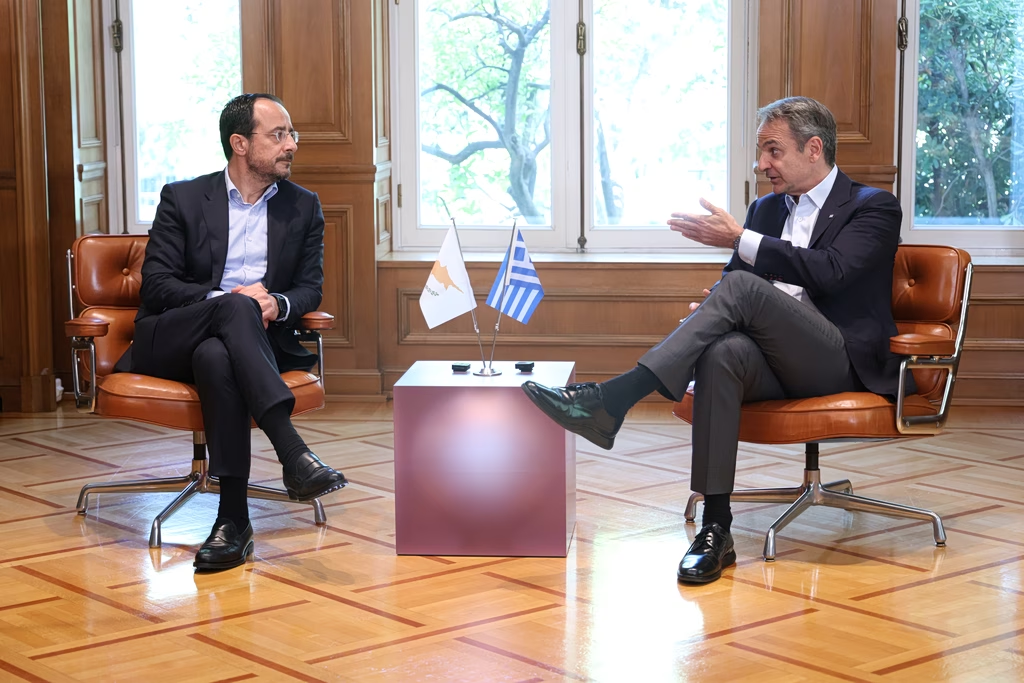
Celik also turned his criticism toward the European Union over the appointment of a special envoy for the Cyprus issue, arguing that the EU should not be involved in the Cyprus negotiations while accusing the bloc of having abandoned its neutrality following the Republic of Cyprus’ accession to the EU.
He reiterated Ankara’s position that the European Union bears responsibility for the current situation on the island and questioned whether the appointment of a special envoy would contribute to resolving the long-standing Cyprus dispute.