 Μake us preferred on Google
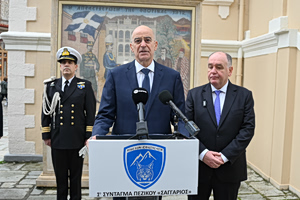
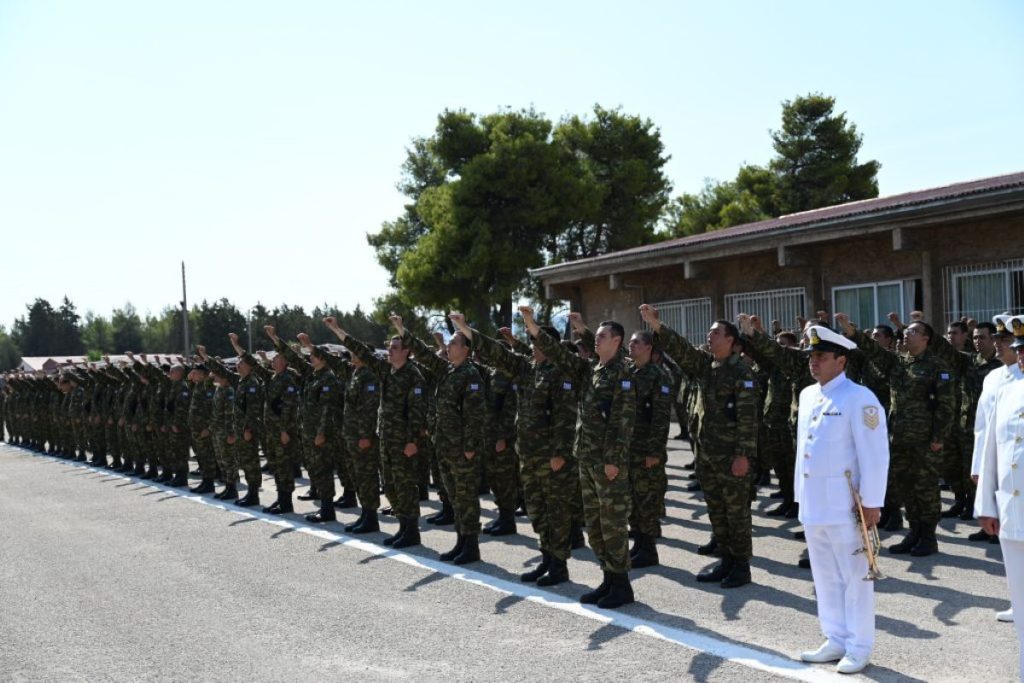
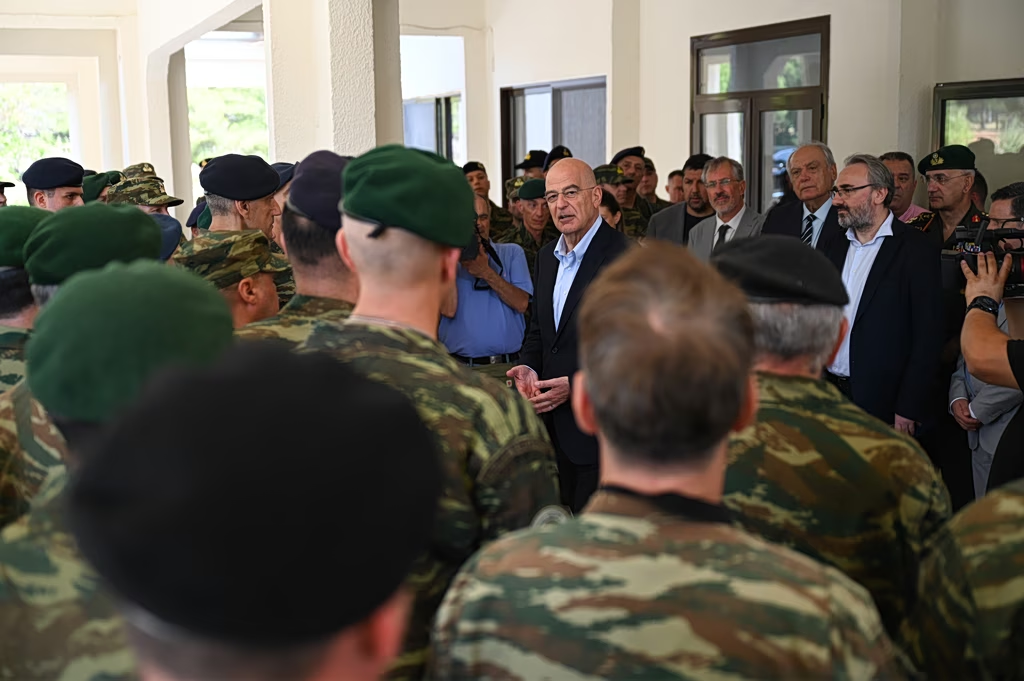
 Greece’s Ministry of National Defense is moving forward with a sweeping restructuring of the country’s defense model, with Defense Minister Nikos Dendias announcing the launch of the first Reserve Retraining Center in Avlona, north of Athens.
The minister described the new structure as a fundamental shift in how military reservists are operationally utilized, placing it at the core of the government’s “Agenda 2030” defense modernization strategy.
Accompanied by Chief of the Hellenic National Defense General Staff General Dimitrios Choupis and Chief of the Hellenic Army General Staff Lieutenant General Georgios Kostidis, Dendias stressed that 21st-century defense requires trained and immediately available reservists who will serve as the link between the Armed Forces and Greek society.
The Vision of a “Citizens’ Army” and Modern Threats
Speaking at the “Major Georgios Melidis” camp, the Defense Minister placed special emphasis on reviving the concept of a “Citizens’ Army,” connecting it to Greece’s millennia-old military tradition.
He explained that the need for a strong and modern reserve force becomes evident through simple numerical comparisons, arguing that Greece faces a threat ten times larger than itself. According to Dendias, the reserve force is precisely the mechanism that allows the country to offset that imbalance and create numerical equivalence against potential threats.
The strategic objective outlined by the minister is the creation of a corps of 150,000 active volunteer reservists.
Dendias also made clear that the battlefield has changed completely, pointing to the introduction of drones, anti-drone systems, and battlefield first-aid training. He challenged age-related stereotypes, noting that a 55-year-old individual could prove to be an exceptional drone operator, potentially even more effective than someone in their mid-thirties.
Digitalization and Infrastructure Upgrades by End of 2026
As part of this new era, Dendias highlighted several digital tools that have already been put into operation.
Invitations and call-up notices for reservists are now issued exclusively through Greece’s government digital platform, gov.gr, ending the previous practice of document delivery through the police.
In addition, an electronic library has been created, giving reserve officers access to military regulations and training materials using their Taxisnet credentials, the digital identification system used for public services and tax administration in Greece.
Following the ceremony, the minister toured the facilities, observed drone training exercises, and visited the simulator room.
He also announced that the model will be expanded to all military recruit training centers across the country through funding provided by a private donation from Greece’s Public Power Corporation (PPC). The goal is to complete a full upgrade of their infrastructure by the end of 2026.
Concluding his remarks, Nikos Dendias called on participating reservists to provide an honest assessment of the initiative, urging them to identify any shortcomings so they can be corrected. He also encouraged them to act as ambassadors for the program and persuade other citizens to take part.