
 Μake us preferred on Google
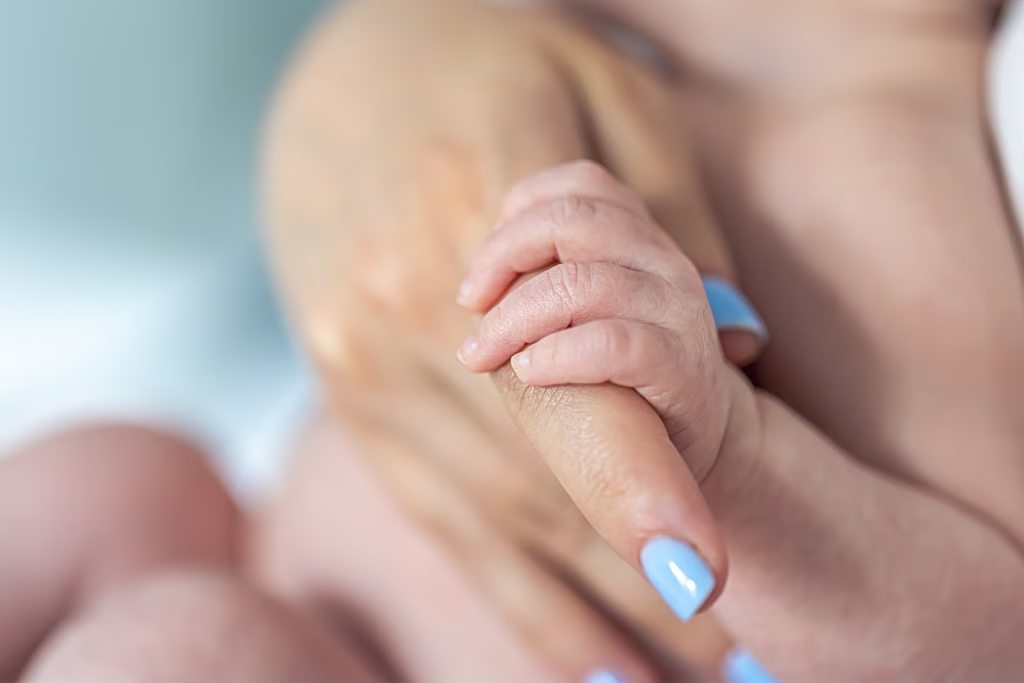
 Greece is preparing a package of eight measures aimed at supporting families and addressing the country’s demographic decline, with the government placing particular emphasis on increasing child and birth benefits and reducing the financial burden of raising children.
Prime Minister Kyriakos Mitsotakis is expected to outline the government’s demographic initiatives at the opening of the Thessaloniki International Fair, focusing on financial support for families, tax relief, housing policies and additional assistance for families with three or more children.
The measures are intended to provide greater financial support to young parents and larger families while creating incentives for young couples to have more children.
Higher benefits and support for families
One of the central measures under consideration is an increase and expansion of birth and child benefits. The government is also considering tax relief for families with children and measures to reduce the cost of raising them, including support for childcare centers, schools and health care.
Additional assistance would be directed specifically toward families with three or more children.
Housing support for young families
Housing affordability is identified as one of the major obstacles to starting a family.
The proposed measures include low-interest housing loans for young parents, social housing programs, rent subsidies for families with children and the use of vacant homes.
The aim is to make buying or renting a home more accessible to young families.
Making work and family life easier
The government is also considering measures to help couples balance employment and family responsibilities.
These include expanding flexible work arrangements for parents, strengthening protections for maternity and paternity, encouraging greater participation by fathers in child care and extending parental leave.
Professional insecurity is identified as one factor that can lead couples to postpone having children.
Support for fertility treatment
Another part of the package focuses on infertility and access to fertility services.
The proposed measures include broader coverage for assisted reproduction treatments, easier access to fertility services, greater public awareness among young people about fertility preservation and stronger public health services in this field.
Bringing young Greeks back from abroad
The government’s demographic strategy also addresses the departure of young workers from Greece, known as the “brain drain.”
The proposals include improving wages and working conditions, creating incentives for Greeks living abroad to return and developing high-skilled, quality jobs.
The goal is to help reverse the loss of young workers and support the country’s population base.
Incentives for families in the regions
Several parts of Greece are facing significant population decline and depopulation, according to the proposals.
The government is considering incentives for young families to settle outside major urban centers, alongside efforts to create jobs in regional areas and improve access to health care, education and digital services.
Migration and population policy
Migration policy is also included in the demographic strategy.
The proposals call for the integration of legal immigrants into the economy, attracting workers to sectors facing labor shortages and developing integration policies for second-generation immigrants.
Changing perceptions about family life
The final area focuses on changing social attitudes toward starting a family.
The proposals seek to promote the value of family life without creating social pressure, while providing better information about both the challenges and possibilities involved in raising children.
The government also aims to introduce policies that make having a child a less financially risky decision for young couples.
Overall, the package combines direct financial assistance with housing, employment, fertility, regional development and migration policies. The government is expected to present its broader approach to the demographic issue at the Thessaloniki International Fair.