 Μake us preferred on Google
 Greece is heading into the Eurogroup seeking to keep open the possibility of additional support measures as energy costs rise, even as the European Commission signals that it does not want a new round of subsidies and tax cuts to undermine EU fiscal rules.
The issue is not a request for a broad suspension of fiscal rules, but an effort by Athens to prevent the discussion from being closed before next week’s European Council meeting.
Prime Minister Kyriakos Mitsotakis’ letter to European Commission President Ursula von der Leyen has not received a formal rejection, but messages from Brussels have significantly lowered Greek expectations.
The Commission recognizes the need to support vulnerable households and businesses most affected by higher energy costs. However, it is not prepared to allow a new cycle of subsidies and tax relief to breach fiscal limits.
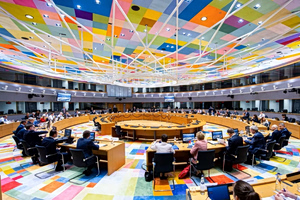
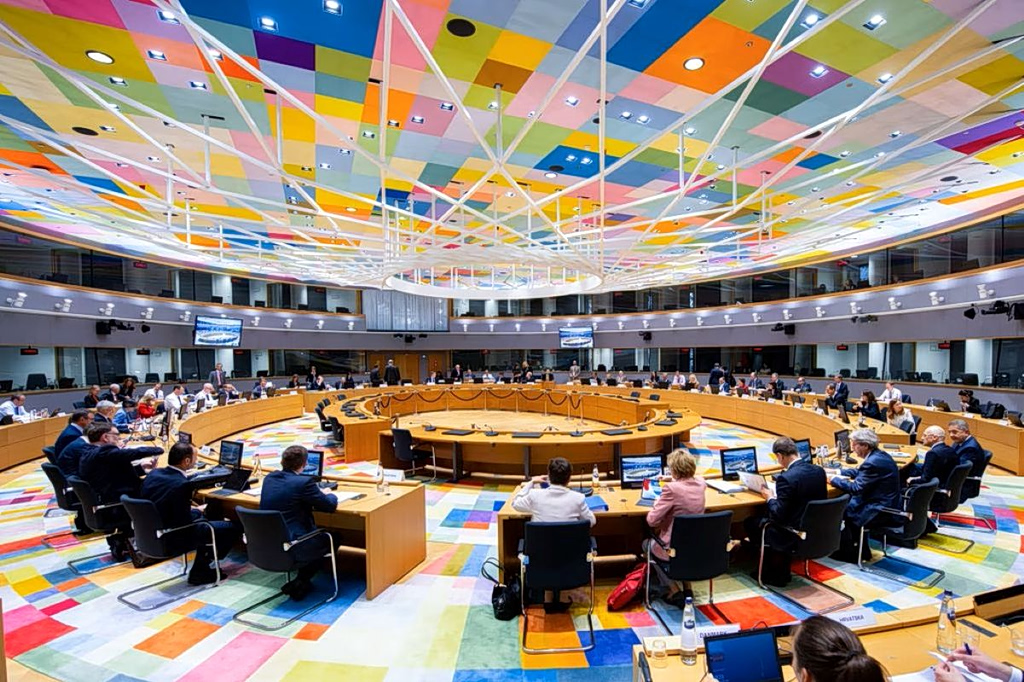
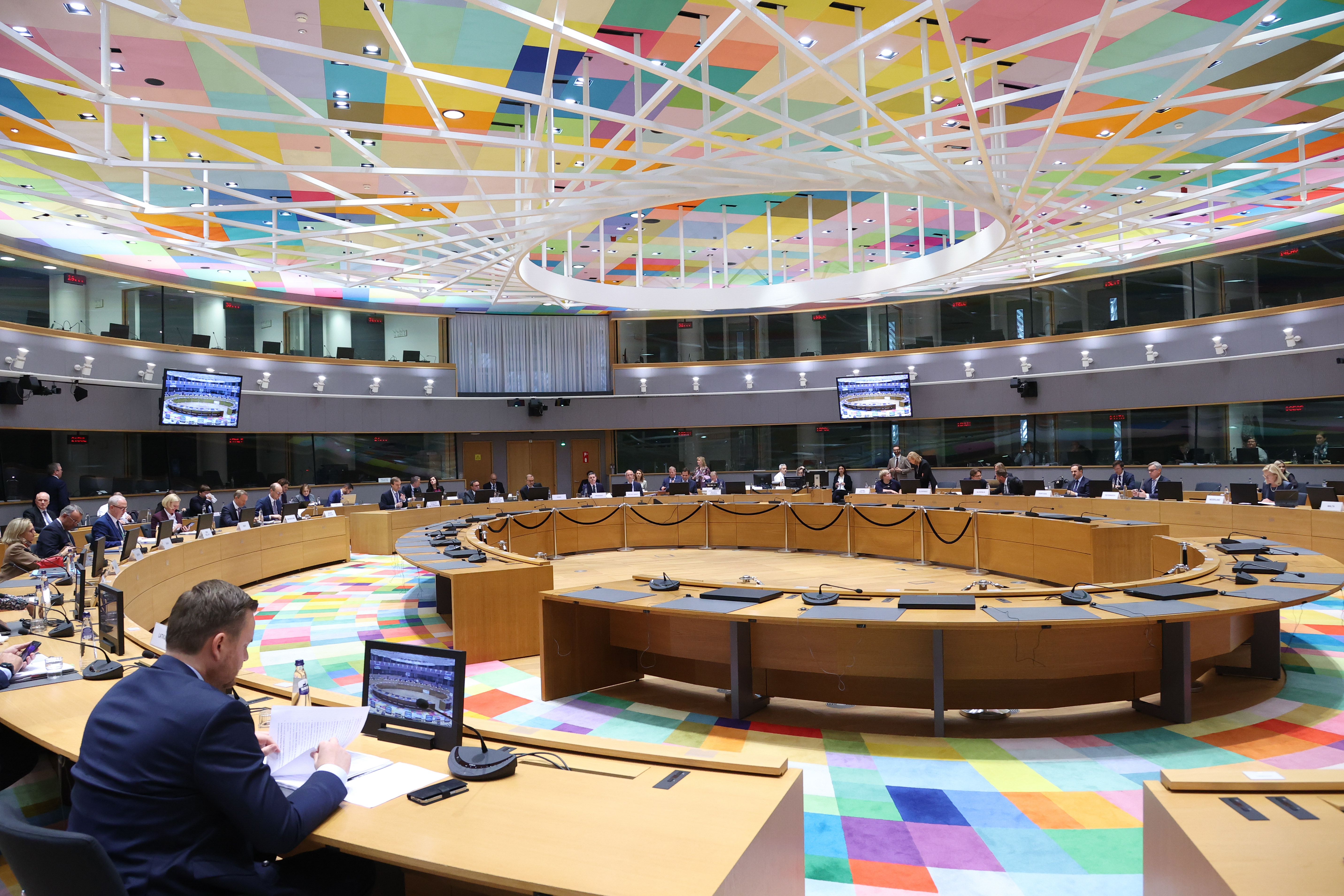
The Eurogroup meeting is not expected to produce a formal response to Mitsotakis’ letter. It will, however, provide the first comprehensive indication of where governments stand on the issue, including countries seeking additional fiscal room to respond to the energy crisis and those concerned that another exception could weaken the Stability and Growth Pact.
For Athens, the objective is to turn the issue from a Greek and Italian concern into a broader European request. If that does not happen at the Eurogroup, changing the direction of the debate at next week’s European Council will become more difficult.
Greece seeks a broader alliance
A key development came from Rome, where Italian Economy Minister Giancarlo Giorgetti said the European Union should take rising inflation into account when assessing deviations by member states from their fiscal targets.
The intervention gives political weight to Italian Prime Minister Giorgia Meloni’s position and brings Rome’s argument closer to Athens’ case. Greece argues that unexpected revenue generated by higher prices cannot be considered separately from the additional support needs created by the same crisis.
Cyprus has also entered the discussion, calling for additional fiscal space and a European response to higher energy costs.
This does not mean that Athens and Rome have already secured the critical support they need, but it indicates that pressure is beginning to extend beyond the two countries.
Behind the scenes, discussions are focusing on whether an intermediate formula can be found that would not amount to a general suspension of fiscal rules.
Possible elements include a ceiling on the amount of fiscal intervention, strict targeting toward lower-income households and specific productive sectors, a limited duration for the measures and their automatic expiration once energy prices fall below a predetermined level.
Even such a limited solution faces opposition. Germany, the Netherlands and other countries committed to fiscal discipline do not want to establish a precedent, while turmoil in French bond markets is strengthening arguments that governments must protect the credibility of their budgets.
Athens’ proposal on VAT revenue
The Greek proposal goes beyond a general request for looser fiscal rules.
Mitsotakis is seeking permission for governments to use part of the additional VAT revenue generated by an unexpected rise in the general price level to temporarily finance support measures, without the spending fully counting against national net expenditure targets.
The issue creates a fiscal paradox: inflation increases nominal VAT revenues and improves the budget balance, but does not automatically increase the ceiling on permitted spending.
A government may therefore have the additional revenue in its accounts, but to return part of it to the economy it must either cut other spending or secure greater European flexibility.
This is the argument the Greek side will seek to make at the Eurogroup. Athens says it is not seeking to finance permanent benefits through borrowing, but to use part of the extraordinary revenue generated by the energy-driven rise in prices.
The Commission, however, is concerned that recognizing inflation-related revenue as an independent source of fiscal space could become a permanent way around expenditure ceilings.
Commission opposes broad subsidies
Von der Leyen has spoken out against “horizontal benefits,” arguing that they increase energy demand, disproportionately benefit higher-income households and create excessive fiscal costs.
Her speech to the European Parliament was not a formal response to Athens, but its political message was clear.
The position is also reflected in the document that will form the basis of the Eurogroup discussion. Since the start of the latest energy crisis, 25 EU member states have introduced support measures costing a total of €17.9 billion, or about 0.1% of EU GDP.
More than two-thirds of that support went toward untargeted price interventions, an approach the Commission considers expensive, socially ineffective and inconsistent with efforts to reduce fossil-fuel consumption.
The Commission instead favors temporary, income-tested benefits, support for vulnerable businesses and investment in energy networks, storage and efficiency.
The official European position remains that any intervention should be targeted, timely and temporary while preserving incentives to reduce energy demand.
The concerns are not solely institutional. Rising bond yields and the fiscal confidence crisis in France are serving as a warning. The markets are increasingly penalizing countries where they question the government’s ability to control deficits, while the International Monetary Fund warned Wednesday about the combination of an energy shock and historically high public debt and called for credible fiscal adjustment.
Against this backdrop, the Commission does not want the new fiscal framework to appear to be filling with exceptions only two years after its reform.
Pierrakakis faces a dual role
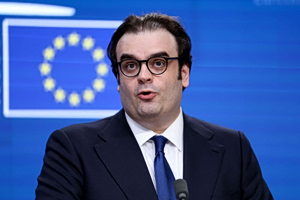
The upcoming meeting presents a particular political challenge for Kyriakos Pierrakakis. As president of the Eurogroup, he is responsible for organizing the discussion and seeking common ground among finance ministers.
As Greece’s minister of National Economy and Finance, however, he also knows that the balance of forces emerging from the meeting will help determine how much room the Greek government has to respond to a difficult energy situation during the winter.
The formal agenda includes the impact of the energy crisis on the economy, the effectiveness of public finances and coordination of fiscal policy.
Greece’s request is not expected to be submitted as a separate proposal for approval. It will nevertheless underpin the broader discussion over which support measures should be considered acceptable and who should bear their cost.
€400 million in additional room
According to sources in the Greek economic policy team, the government has an additional €200 million in fiscal room for the final quarter of 2026 and another €200 million for the first quarter of 2027.
Beyond those amounts, the budget currently contains no additional reserve for a prolonged energy disruption or another round of broad subsidies.
The flexibility already agreed for energy-security investments does not solve the immediate problem. The allowance of up to 0.3% of GDP annually and 0.6% cumulatively through 2028 can cover projects involving energy networks, storage and efficiency, but not reductions in fuel taxes, subsidies at the pump or generalized benefits.
The relevant European guidelines explicitly exclude reductions in taxes on fossil fuels and subsidies that do not create lasting energy resilience from the investment flexibility.
If the negotiations fail to open additional fiscal space, the government’s Plan B calls for tightly targeted support for lower-income households, colder regions and sectors such as agriculture, transportation and energy-intensive industry.
The government will also seek greater participation from refineries and energy companies, while any additional state intervention would have to be financed through the reallocation of existing spending