Greece’s Energy Minister Stavros Papastavrou has taken to the pages of Foreign Policy magazine to argue that the time has come to move decisively on the Vertical Corridor, positioning Greece as a central player in a deepening U.S.-European energy partnership.
In the piece, titled “The Transatlantic Energy Relationship Is Stronger Than Ever,” Papastavrou presents 2025 as “a decisive year in the evolution of the transatlantic energy relationship,” arguing that what began as an emergency response to Russia’s invasion of Ukraine has matured into a long-term strategic realignment between Europe and the United States.
But alignment alone, he argues, is no longer sufficient. The challenge now is “to move beyond conceptual alignment and ensure the practical delivery of infrastructure, markets, and investment that can sustain Europe’s energy security for decades to come.”
At the center of that effort is the Vertical Corridor, the planned pipeline network linking Greece to Bulgaria, Romania, Hungary, Slovakia, Moldova and Ukraine, which Papastavrou presents as both a strategic necessity and a test of Europe’s political will.
From emergency response to structural shift
Papastavrou frames Europe’s break from Russian gas as both “strategic and moral.” In 2021, Russia supplied roughly 40 percent of the EU’s gas imports; by 2024, that share had fallen to around 11 percent. With binding EU rules now adopted to phase out Russian LNG and pipeline gas entirely by 2027, the transition is entering its final phase.
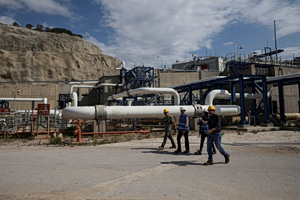
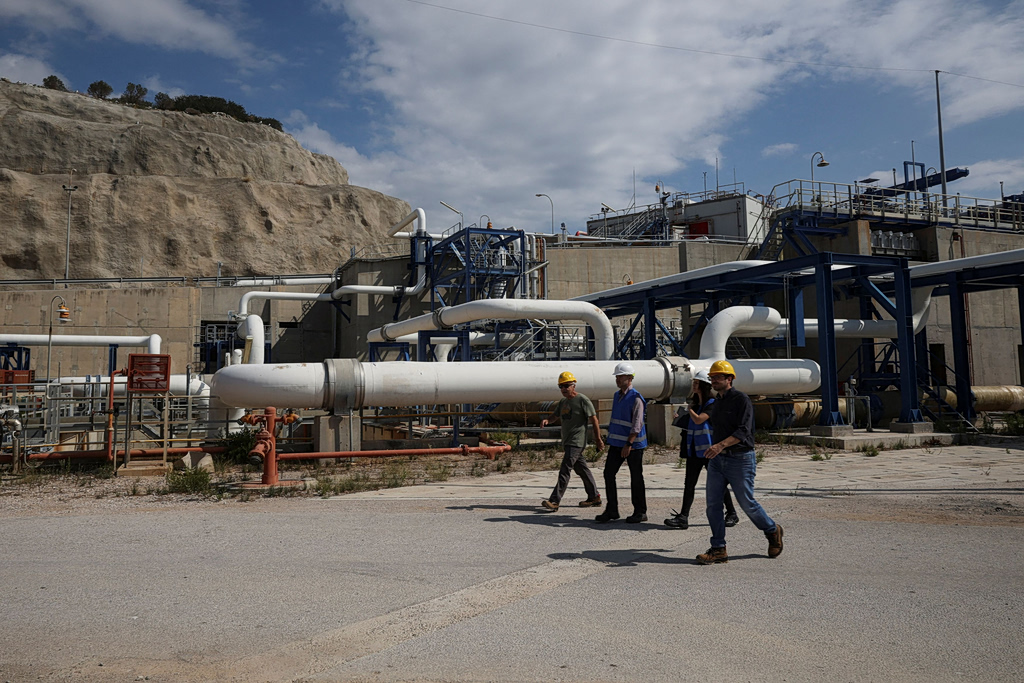
In that context, he claims that the United States has become central in filling the gap, while Greece, he writes, has emerged as “a critical entry point for U.S. LNG into Europe.” In 2025, more than 80% of Greece’s LNG imports came from the United States — nearly double the previous year. The Revithoussa LNG terminal near Athens and the floating regasification unit in Alexandroupoli are described as “major stabilizing assets” for Central and Southeastern Europe.
Yet even as volatility has eased, Papastavrou acknowledges that affordability remains a challenge.
Turning the corridor into a backbone
The minister identifies three areas where action is now required if the Vertical Corridor is to become operational rather than aspirational.
First, Europe must invest “decisively” in LNG infrastructure. “European governments and EU institutions must invest decisively in LNG infrastructure, including additional regasification capacity and storage,” he writes, adding that “these investments are needed and needed at pace.”
Second, regional partners must deepen participation in the corridor itself. He calls for expanded commercial memorandums of understanding, harmonized regulation, and accelerated technical upgrades. Permitting for cross-border interconnections must be streamlined, environmental and regulatory approvals shortened, and technical standards aligned “so that projects move from planning to construction without delay.”
When fully operational, Papastavrou writes, the Vertical Corridor will allow non-Russian gas to reach up to 100 million Europeans. For Ukraine, it is “not merely an energy project but a strategic lifeline.”
Third, he urges policymakers to institutionalize deeper U.S.-European energy integration. Cooperation on LNG trade, hydrogen value chains, grid resilience and regulatory alignment must be formalized to provide markets with the long-term signals needed to mobilize private capital.
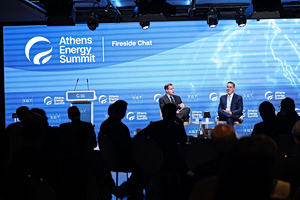
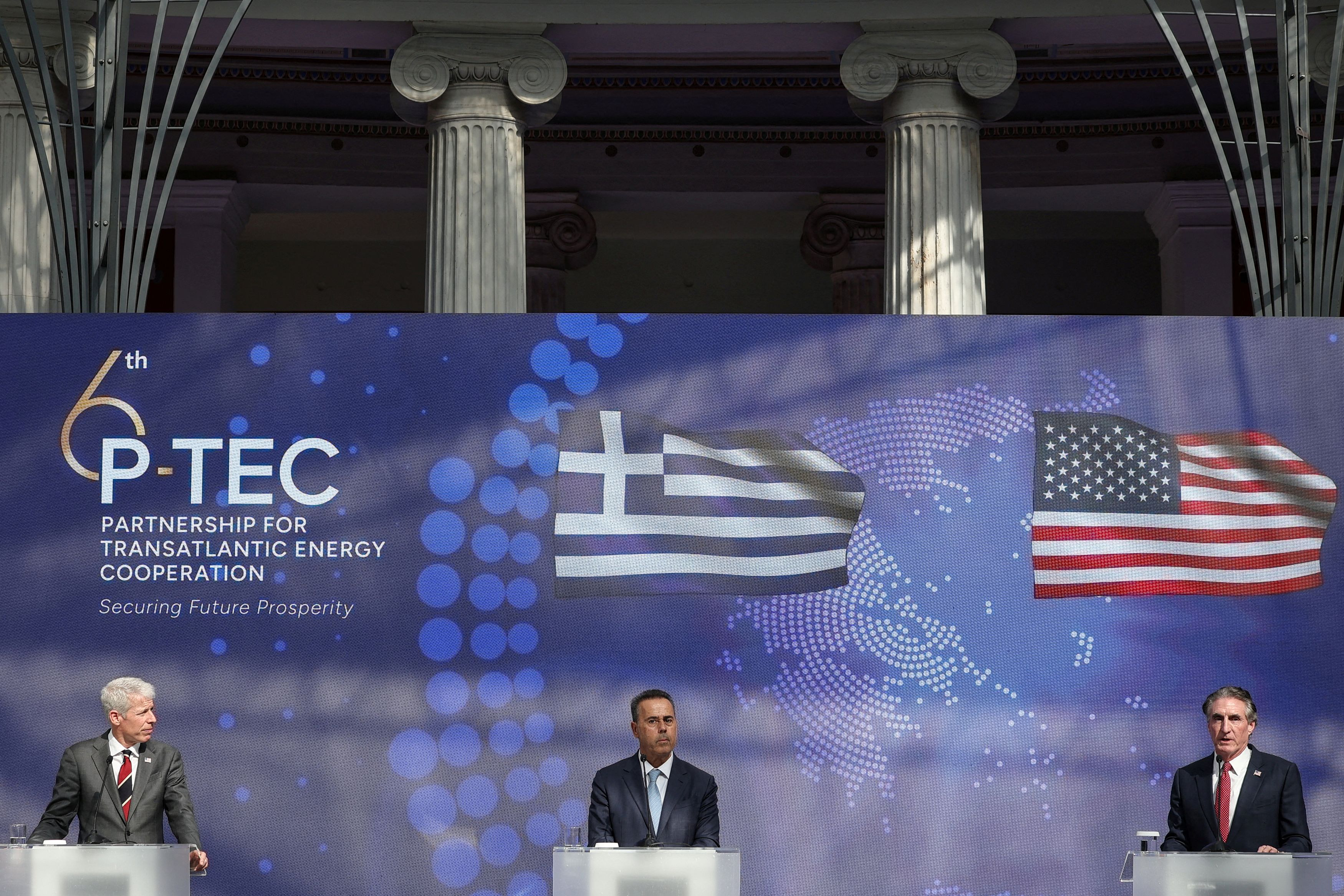
Energy, he argues, should be viewed “as a pillar of strategic security rather than a transactional commodity” — language that echoes a joint statement he issued last November with U.S. Energy Secretary Chris Wright at the Sixth Partnership for Transatlantic Energy Cooperation summit in Athens.
From alignment to delivery
The minister concludes with a broader reflection: political consensus must now translate into tangible results. “When nations align their priorities, invest in shared infrastructure, and place trust at the center of their cooperation, they can build resilience even in times of profound global instability,” he writes.
If 2025 marked the consolidation of a new transatlantic energy phase, Papastavrou argues, 2026 must be the year of implementation, “project by project, corridor by corridor.”