 Μake us preferred on Google
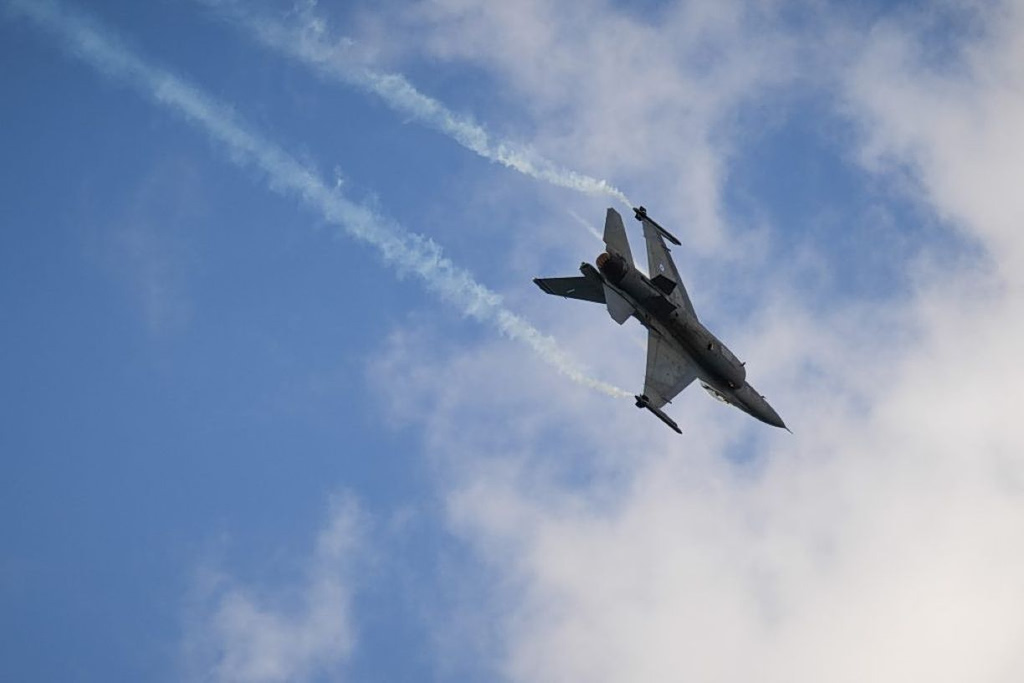
 Is the Hellenic Air Force ready to enter a new era as the F-16 Viper upgrades continue and the first F-35s approach? The answer is “it depends.” To a significant degree, yes. The ongoing program to upgrade F-16 Block 52+ and Block 50 aircraft to Viper standard — a decision recently confirmed by the Government Council of Foreign Affairs and Defense (KYSEA) — has already reached 51 aircrafts, which are being integrated into their respective squadrons: the 337th Wing in Larissa and the 340th and 343rd Wings at Souda Air Base in Crete.
In addition, the 24 French-made Rafales function as a force multiplier over the Aegean, equipped with Meteor beyond-visual-range (BVR) missiles, the advanced AESA-type RBE2 radar, the SPECTRA self-protection suite, and the passive OSF detection system. Greece is currently the only country with the ability to deploy BVR missiles across the Hellenic Air Force’s operational areas.
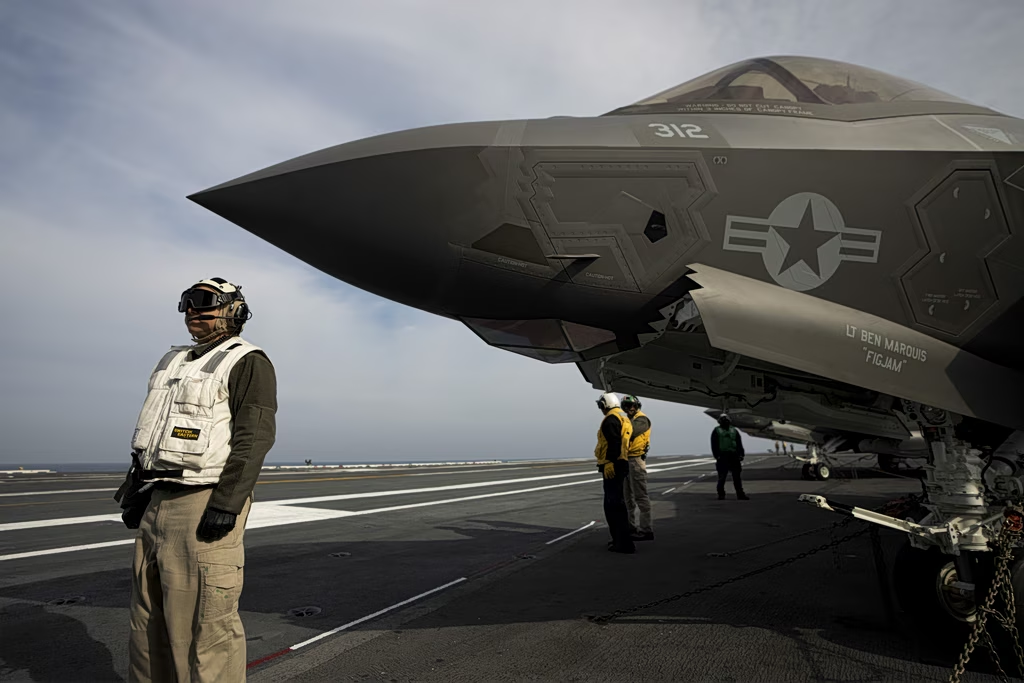
With the arrival of the first F-35s in Greece now drawing closer — possibly even ahead of schedule — the central question has become: what weapons will arm them?
A 48-Month Wait for Missiles
It is no secret that Greece will in all likelihood seek to acquire the AGM-158 JASSM precision cruise missile. The matter, however, is far from straightforward. According to a recent analysis by the US think tank CSIS, the United States had approximately 4,400 such missiles before the war with Iran, of which an estimated 1,100 were used during that conflict.
At the same time, reports indicate that the Netherlands — which has 57 F-35s on order — plans to submit a formal request to acquire the same missile. The initial American response, according to sources, was that there is currently a wait of “48 months from signing to delivery.” That means four years.
Beyond the JASSM, the Hellenic Air Force is also interested in acquiring the AIM-120D missile — the American counterpart to the Meteor — though the United States has not yet given approval during the preliminary, informal discussions that have taken place. The AIM-260 JATM, which is set to replace the AIM-120 in the future, is also being discussed in Hellenic Air Force circles. A source with knowledge of the negotiations stated that “the Hellenic Air Force always monitors technological developments with great interest.”
The Frigate Arsenal
At present, the Greek Armed Forces possess both air superiority capability and the ability to strike deep into hostile territory through the Aster 30 anti-aircraft missiles fitted to the Belharra frigates, which will also be installed on the Bergamini frigates to be acquired in the future.
By 2028, all four Belharra frigates are set to be fitted with MdCN long-range land-attack cruise missiles. Further down the line, as they are still under development, both the Belharra and Bergamini frigates are expected to carry ELSA missiles with a range of up to 2,000 kilometers.
In the air, the weapons systems currently available to the Hellenic Air Force that are considered effective in modern combat environments include — among others — the Meteor, Scalp EG, Iris-T, MICA-EM/IR, AIM-120C, AGM-154C JSOW, and GBU-31 JDAM, setting aside air defense systems such as the Patriot batteries.
The F-16V aircraft can now carry the recently acquired Rampage missile — up to four per aircraft — a stand-off supersonic air-to-ground weapon. The certification process for the Spice system, which converts standard gravity bombs into GPS-guided precision munitions allowing fighter jets to strike high-value targets from standoff distances without entering the range of enemy air defense systems, is expected to be completed in the near future.
It is evident that the Hellenic Air Force holds a clear advantage over Turkey, which remains subject to CAATSA sanctions stemming from its purchase of the S-400 system and cannot procure American aircraft, spare parts, or weapons systems without congressional approval.
Concerns Over Stockpiles
Against this backdrop, it is worth noting that President Donald Trump, anticipating a gradual drawdown of American stockpiles and with a potential future conflict with China or elsewhere in mind — alongside orders from foreign customers — convened the largest US defense manufacturers on January 7 and called for an accelerated production tempo. This occurred before the war against Iran began and before stockpiles started to decline further.
According to The Economist, the United States has informed European officials to expect significant delays in the delivery of American weapons systems, with shipments being redirected to replenish American stockpiles that have been noticeably depleted. The development has reportedly caused private frustration and serious concern among European diplomats.
Sources with knowledge of ongoing discussions told this newspaper that the Hellenic Air Force is not only pursuing weapons systems for the F-35 and F-16V, but is also potentially interested in drones capable of operating as loyal wingmen alongside manned fighters — also known as Collaborative Combat Aircraft (CCA) — featuring artificial intelligence and stealth capabilities similar to the XQ-58 Valkyrie UCAV.
The Issue of Interoperability
As a knowledgeable source noted, Greece is currently evaluating its operational requirements within the framework of its broader defense planning. Central to this is the requirement that all newly acquired weapons systems support Link 16 datalink capability, enabling seamless communication across all three branches of the armed forces: the Air Force, Army, and Navy.
The current assessment is that by the end of this year or by 2027 at the latest, the government will be compelled — in order not to lose valuable time — to submit a Letter of Intent (LOI) to the United States specifying in detail which weapons systems it wishes to acquire and in what quantities, if it hopes to receive them on schedule. Even that is far from guaranteed. The procurement process is lengthy and, depending on the specific system, it can take several years from the point of ordering to actual integration into the Greek arsenal.