 Μake us preferred on Google
 Known locally as the “Italian,” the invasive blue crab damages fishing nets but has also become a popular summer delicacy for residents of the Pineios River delta.
At the point where the Pineios River meets the Aegean Sea, in the river’s delta, an unusual visitor has become a familiar sight among fishing boats and nets. The blue crab, a species originally from the western Atlantic Ocean, has established itself in the area’s waters and has become part of everyday life for local communities.
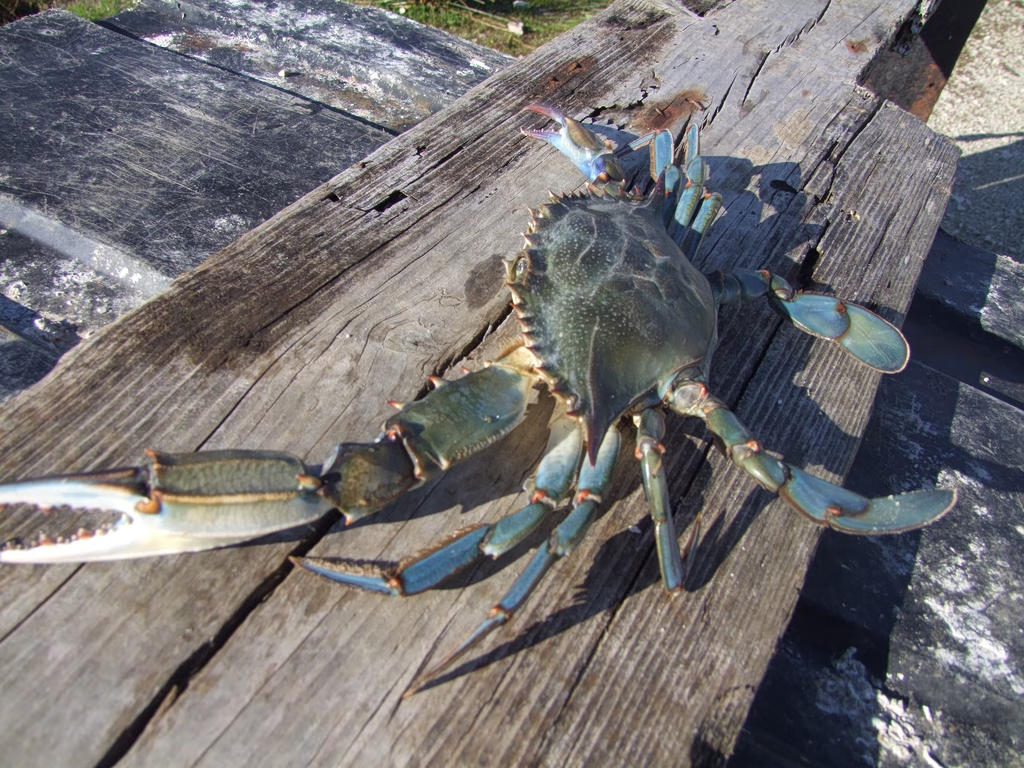
With its distinctive blue claws, powerful pincers and aggressive behavior, the blue crab is both a challenge and an opportunity for fishermen in the region. Locals refer to it as the “Italian,” while those who make their living from fishing see it as a troublesome presence that can also provide a tasty reward.
The species appears in large numbers from late spring throughout the summer months, often becoming entangled in fishing nets and causing damage to equipment. Its strong claws can tear nets and create additional difficulties for fishermen working in the Pineios delta and the nearby Aegean waters.
A foreign species that adapted to Greek waters
The blue crab, scientifically known as Callinectes sapidus, originates from coastal and estuary ecosystems along the western Atlantic. According to research on non-native species, it has successfully adapted to conditions in Greece.
Its ability to tolerate significant changes in water temperature and salinity has helped it spread in areas where river and sea waters mix, such as the Pineios delta. These conditions provide an ideal environment for the species to survive and reproduce.
The nickname “Italian” used by locals is linked to an old story claiming that the crab arrived in Greece through Italians during World War II. Scientists, however, consider it more likely that the species reached Europe through ships’ ballast water tanks.
Despite being a non-native species, the blue crab has become a familiar part of the landscape. For residents living and working near the Pineios River, its presence is no longer surprising.
A major nuisance for fishermen
Local fishermen have known the blue crab for decades, with numbers increasing significantly during the summer. However, its arrival is not always welcomed.
“Their claws are as strong as pliers and they can even injure fishermen,” one local fisherman said, explaining that the crabs frequently damage nets and complicate fishing activities.
The problem is especially noticeable during the warmer months, when large numbers of crabs appear in the delta and become caught in fishing equipment.
From invasive species to summer delicacy
Despite the challenges it creates, the blue crab also has another role in local life: it has become a valued food item.
Residents say the crab’s meat has a distinctive taste and is often served as a traditional appetizer, enjoyed alongside drinks and gatherings. Some local fishermen describe it as a delicacy that has found its place on summer tables.
The crabs can also be caught from the shore, with fishermen using simple methods such as bait to attract them. Some specimens in the area have reportedly reached weights of up to 500 grams.