 Μake us preferred on Google
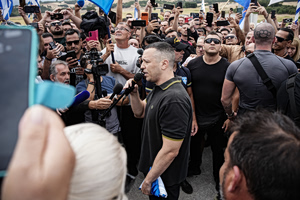
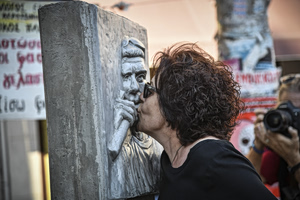
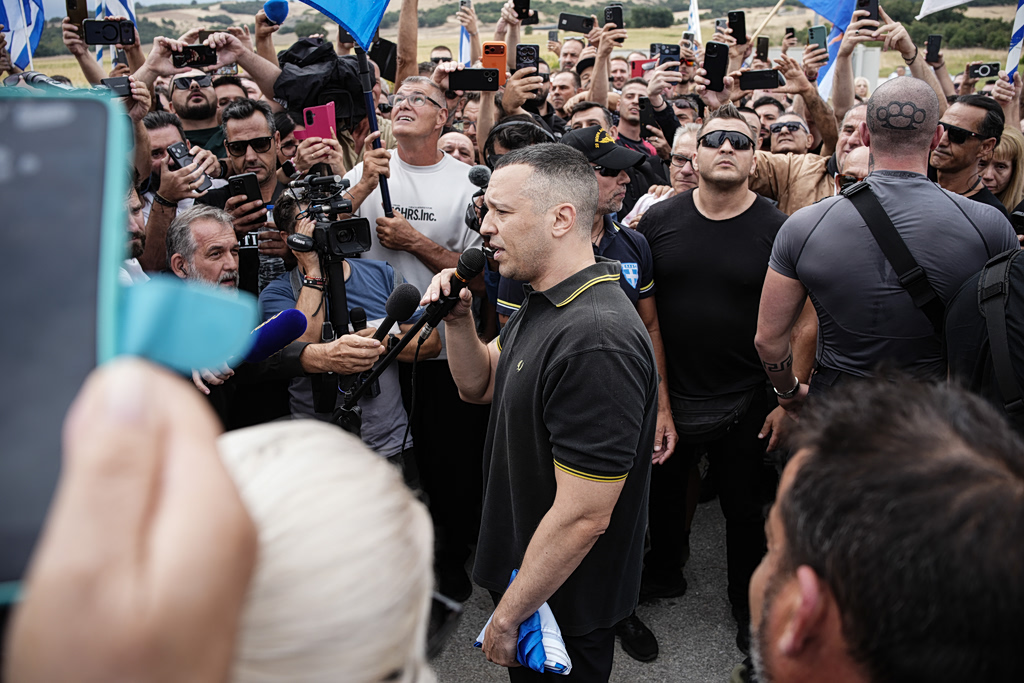
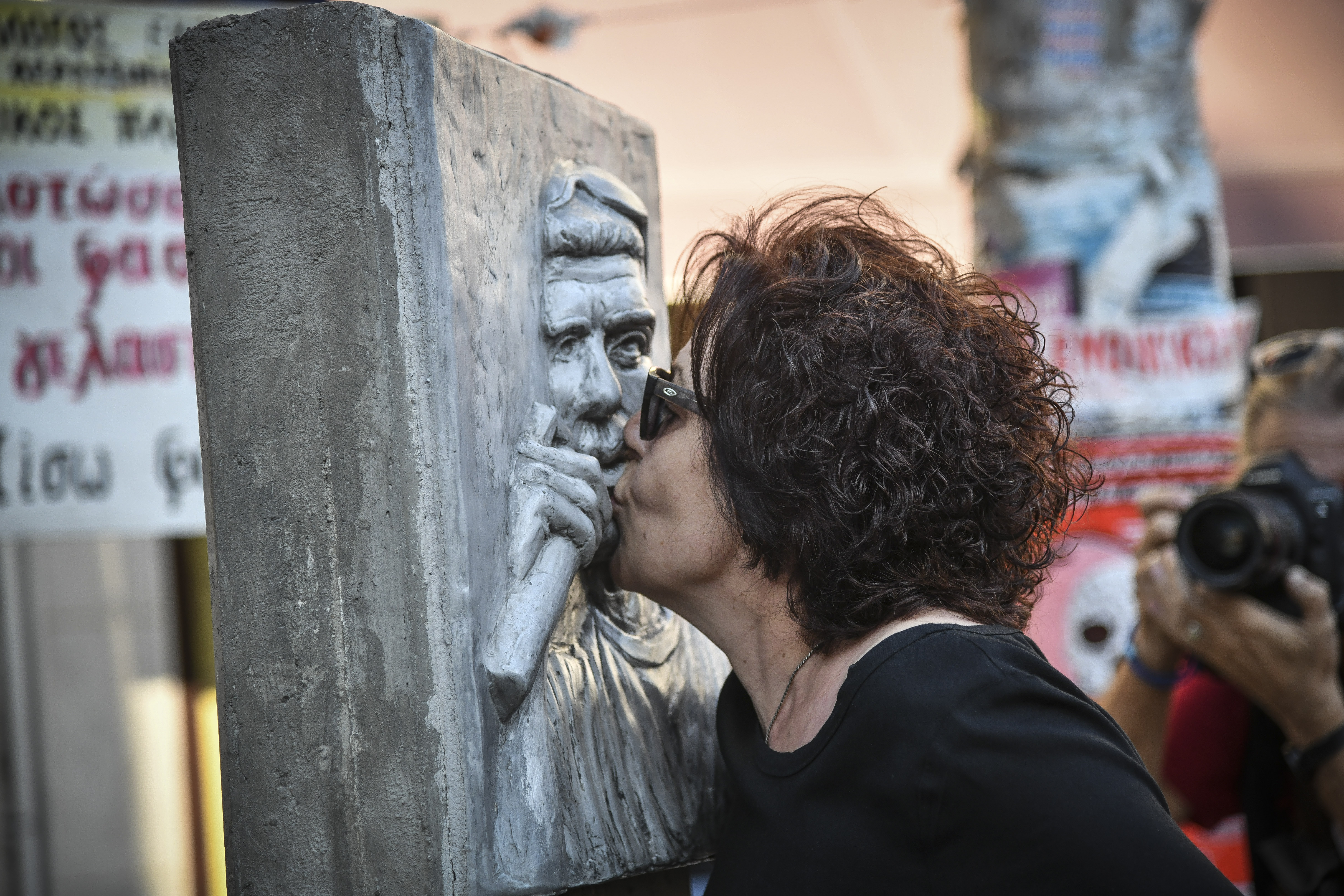
 Magda Fyssa, mother of slain rapper and antifascism activist Pavlos Fyssas, spoke about the release of Ilias Kasidiaris, the leader of the now defunct far-right Golden Dawn party during the annual events of “Anti-Fascist September,” an initiative established by her in memory of her son.
Fyssas murder on September 18, 2013 by a member of the neo-Nazi group, send shockwaves through the country at the time. It also set in motion a wide-ranging judicial investigation that led the convictions and jailing of most of its top leaders, mostly notably on the charge of forming and running a criminal organization.
“I am sure that Kasidiaris’ release is on your minds, just as it is on mine,” she said at the beginning of her speech, adding: “You will allow me, during these days, not to sully my mouth with those who have stained their hands with blood again and again. You will allow me, especially during these days, to speak only about my child.”
She continued: “The only thing I want to say in relation to this development is that we should ask ourselves how many people are waiting for the release of a fascist, knowing now what has happened? That is where my anger grows, but I am trying to keep my composure.
“We are here with the final court ruling that Golden Dawn was, is and will be, in whatever form they might choose to give it in the future, a criminal organization that terrorizes, hunts down, assaults and ultimately murders every person who insists on moving forward with their head held high, seeking a free life”.
Fyssas was stabbed to death on September 18, 2013, at the age of 34, in the working-class district of Keratsini, near the main port of Piraeus. His assailant, Giorgos Roupakias, was a mid-level member and local organizer of Golden Dawn, an extreme political grouping that rose to prominence during Greece’s economic crisis after 2010. The murder sparked widespread protests and led to a major law enforcement and judicial crackdown on Golden Dawn, culminating in the felony convictions against the party’s leadership in 2020. The case cemented Fyssas’ legacy as a contemporary “political martyr” of the Greek left.