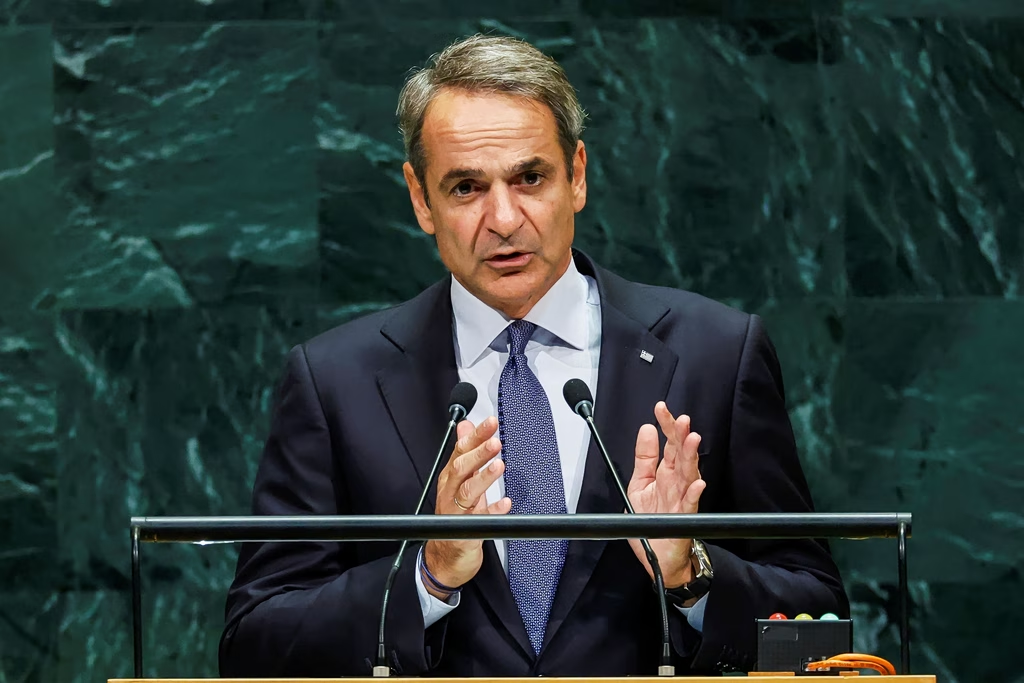
Greek-Turkish relations were one of the central themes of Kyriakos Mitsotakis’ address to the 81st UN General Assembly, as the Greek prime minister chose to keep the door to dialogue with Ankara open while maintaining Greece’s longstanding positions on international law, Turkey’s casus belli declaration and the sole dispute Athens officially recognizes with Turkey.
Mitsotakis’ remarks came just hours after a notably softer tone from Recep Tayyip Erdogan. Speaking in New York, the Turkish president said that Turkey “is not an enemy of Greece,” but its neighbor and NATO ally, with Athens interpreting the remarks as a shift from the tensions of the preceding period. A Greek government source said that the aim now is “to lower this tension, which we did not create.”
Against this backdrop, Mitsotakis also appeared to lower the temperature somewhat, at least in his wording, without changing Greece’s substantive positions. He recalled that over the past three years, Athens and Ankara have been working to improve relations, build trust and maintain open channels of communication to prevent tensions that could lead to crises. He nevertheless described Greek-Turkish relations as “sensitive,” saying they continue to carry the weight of history.
His choice of words regarding coexistence between the two countries was also notable. “We cannot change geography; it is our destiny to live next to one another,” the prime minister said, echoing the same general approach reflected in the government’s comments on Erdogan’s remarks earlier in the day.
The red lines
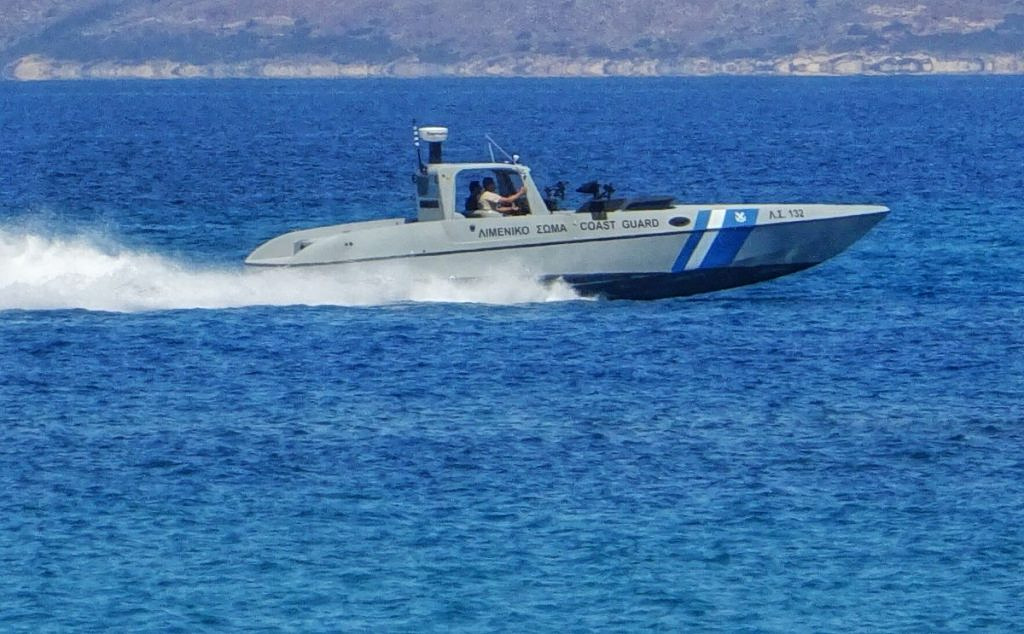
The lower-key tone, however, was not accompanied by any movement on Athens’ “red lines.” Mitsotakis reiterated that the UN Convention on the Law of the Sea provides the legal framework for resolving the sole longstanding dispute that Greece recognizes with Turkey: the delimitation of the continental shelf and exclusive economic zones (EEZs).
He also brought the issue of casus belli back to the forefront, stressing that dialogue is essential for peace and prosperity but cannot coexist with unilateral actions that challenge the international legal order. As he put it, there can be no meaningful progress when there are “threats of war in response to the exercise of lawful rights under international law,” warning that such practices not only fail to resolve disputes but risk undermining stability across the wider region.
The prime minister then linked his message to Turkey with the Cyprus issue, describing it as the region’s “open wound,” 52 years after the Turkish invasion and the continued occupation of part of Cyprus. He reiterated Athens’ support for the efforts of the UN secretary-general to restart substantive negotiations, with the ultimate goal, he said, of reunifying Cyprus without occupying forces and on the basis of UN Security Council resolutions.
What he said about geopolitical developments
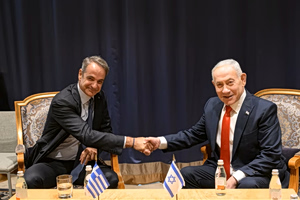
Beyond Greek-Turkish relations, Mitsotakis sought to present Greece as a force for stability in the wider region, using the phrase “we are bridge-builders, not troublemakers.” He referred to Greece’s strategic relations with Israel, Egypt and the Gulf states, as well as developments in Gaza, Lebanon, Syria and Libya.
On Gaza, he argued that the peace plan agreed last year must be implemented, making clear that Hamas cannot have a role in the future of the region, while reiterating Greece’s support for a two-state solution. At the same time, he expressed deep concern over developments in the West Bank and actions that, he said, are illegal under international law and undermine the viability of a future Palestinian state.
The prime minister also referred to the war in Ukraine, reiterating Greece’s support for Kyiv and calling for diplomacy to lead to a ceasefire and lasting peace, with Ukraine having a decisive say in its future and Europe present in the negotiations.
The Greek economy and artificial intelligence
In the second part of his speech, Mitsotakis presented the state of the Greek economy, arguing that growth is running above the European average, that public debt is declining and that Greece has restored investor confidence. He directly linked economic strength to a country’s ability to strengthen its defense, infrastructure and geopolitical position.
Finally, he placed particular emphasis on artificial intelligence, warning of the risks of uncontrolled development. He called for a strict regulatory framework and licensing of advanced models subject to specific requirements for safety, transparency and adherence to human values, going so far as to compare the need to regulate AI with the way the United States regulated nuclear technology in the last century.