 Μake us preferred on Google
 The EU is indeed an unprecedented political and economic experiment. The so-called European project, i.e., the economic and political integration of the European nations to the extent of becoming a European federation, has long been subject to debate and controversy among scholars, politicians, and policymakers. The critics notwithstanding, it is unimaginable today to think of standalone member states successfully navigating in the international arena in the absence of EU membership. Under the current geoeconomic conditions, this applies even to big players like Germany or France.
Despite the crucial role that the EU, as a supranational actor, plays in our daily lives and the pervasiveness of its legislative acts, still EU affairs are not given the necessary attention in public discourse, nor do they constitute a matter of concern for laypeople, both in Greece and elsewhere across the EU. This is perhaps even more pronounced when it comes to complex structures of the EU decision-making process, such as the rotating Presidency of the Council of the EU, where ignorance or lack of understanding may give rise to indifference or even disregard.
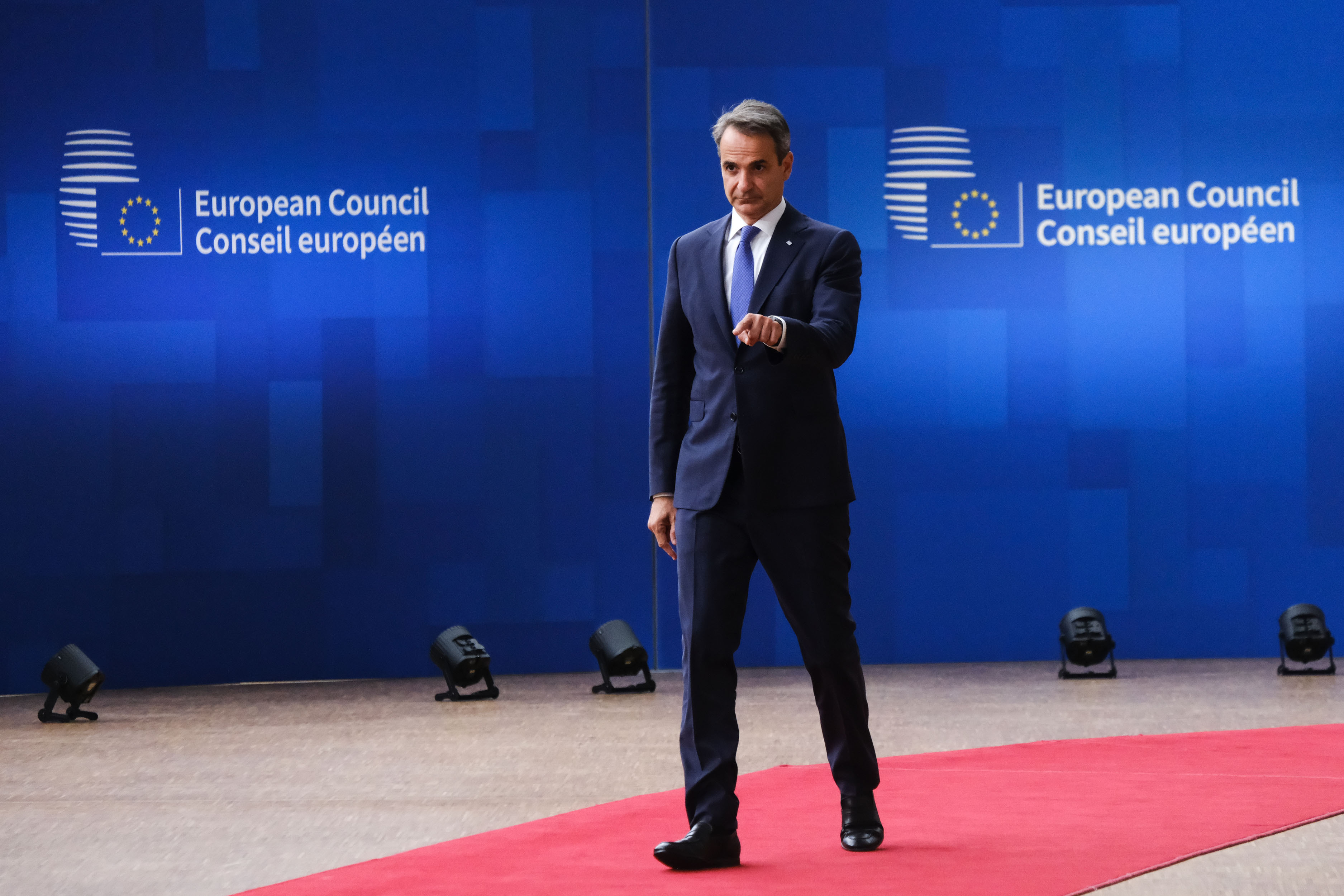
Greece assumes the rotating Presidency of the Council of the EU in less than a year, specifically in the second semester of 2027. This means that our country will be acting as the coordinator – or the ‘honest broker’ under the Brussels jargon – of EU governments, for six months, spanning from the 1st of July 2027 to 31st December 2027. In connection with EU legislative procedures, Greece will also be negotiating with the European Parliament, for and on behalf of EU governments, for the enactment of EU legislation and will be considered as the Council’s representation body vis-à-vis the EU’s executive branch, i.e., the European Commission.
One can easily assume that the Greek rotating Presidency, which is going to be the 6th one since the country’s accession to the European Communities, presents a significant and symbolic opportunity. Of course, Greece will be able to influence EU policy making, actively engage in agenda-setting, and position itself as a pillar of growth and stability in southeast Europe, especially in the aftermath of a 10-year-long economic crisis that shattered the country. From fisheries to financial services, digital markets, and international trade, Greece will be playing for 6 months an instrumental role in shaping EU policies within the delicate institutional balance in Brussels.
But, most importantly, the rotating Presidency presents a window of opportunity to reflect upon our position within the European project. Shall we seek more integration, politically and economically, or shall we prioritise national considerations and calls to regain “sovereignty”? What are the lessons learned by the country’s poor and substandard management – with exceptions – of its relations with European counterparts during the economic crisis? To what extent EU legislation affects the legislative and executive powers of the Greek state and why Brussels has, on several occasions, taken over in practice the competencies of the Greek Parliament or Government in Athens? All those, and many more, are aspects for consideration that are not preferentially reserved for lawyers, policymakers, or academics, but should bother every active and politically aware Greek citizen. The Presidency can reinvigorate the necessary public discourse about our country’s self-knowledge and stance vis-à-vis the big strategic challenges facing the EU, attracting pan-European interest.
But there come the ‘threats’ to the success of our rotating Presidency. If I were to consider how susceptible we are to voting for football players or celebrities as our representatives in the European Parliament, I would be bound to say that the opportunity for reflection upon our country’s posture within the EU is destined to be again dramatically and inevitably lost.
At the same time, it is true that the Greek administration will be highly stretched during the months of the rotating Presidency, with the negative scenario of failing to deliver on the expectations of EU governments always looming; and this pressure will additionally coincide with a turbulent national political environment, where general elections will be on the way, either in the spring of 2027 or possibly earlier. Even though I trust in the skills and personal efforts of Greek civil servants, we all know how general elections would affect the effectiveness and capabilities of the Greek administration in practice.
Without doubt, the Greek Presidency of the Council of the EU is a symbolic moment that will position the country at the epicenter of European interest and will call for its unequivocal leadership. After all, it takes place almost every 13 years and will vest Greece with a neuralgic coordination role that it does not enjoy regularly. Like every project in life, it bears both opportunities and threats. Our duty is to make sure that we seize the opportunities and mitigate the threats.
Dionysis N. Fotopoulos is a lawyer, Of Counsel at Ballas Pelecanos Law, and LL.M. candidate at National University of Singapore. He served as an adviser at the Permanent Representation of the Republic of Cyprus to the EU and supported the 2026 Cyprus Presidency of the Council of the EU.