 Μake us preferred on Google
 The 49th Annual Conference on Oceans Law & Policy will bring leading experts in maritime law, ocean governance and maritime security to Athens on Sept. 21-22, with the Mediterranean facing increasingly complex security challenges and competing maritime claims – a timely range of issues of critical importance to Greece.
Held at the National and Kapodistrian University of Athens’ (NKUA) main auditorium under the theme “Maritime Security in the Mediterranean Sea & Beyond,” the conference will examine maritime boundaries, shipping, critical infrastructure, migration, marine biodiversity, emerging technologies and the law of naval warfare.
Among the most prominent speakers are Professor James Kraska of the US Naval War College, Professor Ronán Long of the World Maritime University-Sasakawa Global Ocean Institute, former Foreign Minister Dora Bakoyannis, Professor Linos-Alexandre Sicilianos of the National and Kapodistrian University of Athens and former president of the European Court of Human Rights, and Professor Maria Gavouneli of Athens PIL and NKUA.
The program reflects the increasingly broad definition of maritime security. Discussions will cover shadow fleets and sanctions enforcement, the role of the International Maritime Organization, maritime disputes and litigation, vulnerable shipping routes and strategic chokepoints, as well as robotics, artificial intelligence and autonomous systems.
Other sessions will focus on the law of naval warfare, submarine cables and pipelines, maritime critical infrastructure and the protection of increasingly digitalized shipping networks. A dedicated panel will examine “Due diligence in contested waters” and the protection and equitable use of ocean resources in the Mediterranean.

Prof. Maria Gavouneli
“These are the crème de la crème of the world’s maritime law experts and scholars — some 60 speakers representing more than 25 countries,” Prof. Gavouneli told To Vima International.
Asked about the significance of Athens and Greece hosting an event of this caliber, she said:
“It’s inconceivable for Greece not to be a focal point in any global discussion on shipping, commerce and energy routes. This conference offers an opportunity for a sincere exchange of views and an effort to find solutions to real problems. The participants are top advisers and aides to governments; they are the negotiators, the opinion makers and the people who formulate proposals on these issues for their governments,” she said, describing the two-day event as a forum conducive to “brainstorming.”
The ‘elephant in the room’ effect
The conference comes at a particularly sensitive time for Greece, given longstanding and mostly unilateral claims with Turkey over maritime jurisdiction and other issues in the Aegean and eastern Mediterranean.
Athens maintains that the delimitation of the continental shelf and Exclusive Economic Zone (EEZ) is the sole bilateral dispute that could be referred to international adjudication, while rejecting Turkish claims concerning Greek sovereignty and the status of Aegean islands. Ankara maintains that a broader range of Aegean issues remain unresolved, including maritime jurisdiction, territorial waters and continental-shelf delimitation.
Those differences have gained renewed prominence in recent months as both countries have taken initiatives affecting the maritime domain.
In August, Turkey announced two marine parks in the northeastern Aegean and eastern Mediterranean, including areas extending beyond its territorial waters. Greece rejected the move where the designated areas extend into waters it considers fall within Greek jurisdiction.
The issue was followed in early September by a new maritime dispute after Turkey dispatched a research vessel south of Kastellorizo.
Ankara issued a navigation notice for the vessel’s research activities, while Athens issued a counter-Navtex challenging Turkey’s authority to issue navigational instructions for the area and asserting Greek jurisdiction over the relevant maritime zone.
Turkey has also continued to raise its longstanding objections concerning Greek territorial waters, maritime jurisdiction and the status of certain Aegean islands. Greece has again flatly rejected those claims and reiterated its position that dialogue must be conducted on the basis of international law, especially the UN Convention on the Law of the Sea (UNCLOS).
Even on this issue, the two sides start from fundamentally different premises: Athens is a signatory, ratifying state and strong advocate of implementing UNCLOS, while Ankara has maintained its status as a “persistent objector,” refusing to become a party to the convention while selectively invoking its provisions at its discretion.
Against this backdrop, the Athens conference offers a timely international forum for examining many of the legal principles underlying the broader Greek-Turkish maritime debate, although it is not specifically devoted to bilateral relations.
Conference highlights
The conference will also examine the legal mechanisms through which states pursue maritime interests, including international institutions, courts and tribunals. Another session will address the law of naval warfare and the rules governing maritime zones, targeting, capture, blockade and naval operations during armed conflict.
The event will conclude with a debate on “Maritime security in an uncertain world,” featuring Kraska, Long, Gavouneli and Prof. Yücel Acer of Ankara University’s National Center for the Sea and Maritime Law.
The Athens meeting is part of a long-running international conference series that has evolved alongside developments in the law and policy of the oceans. The 48th edition, held in New Delhi in September 2025, brought together more than 250 maritime and ocean experts and addressed issues including maritime boundaries, offshore infrastructure, seabed resources, autonomous shipping, maritime security and fisheries.
The significance of the Athens conference extends beyond the immediate Greek-Turkish context. Questions that were once largely technical or legal — who can regulate a maritime area, how boundaries are delimited, who can conduct research, how infrastructure is protected and which courts can adjudicate disputes — are increasingly intertwined with geopolitics and national security.
A ‘Battle of Maps’ and the revisionist Mavi Vatan Doctrine
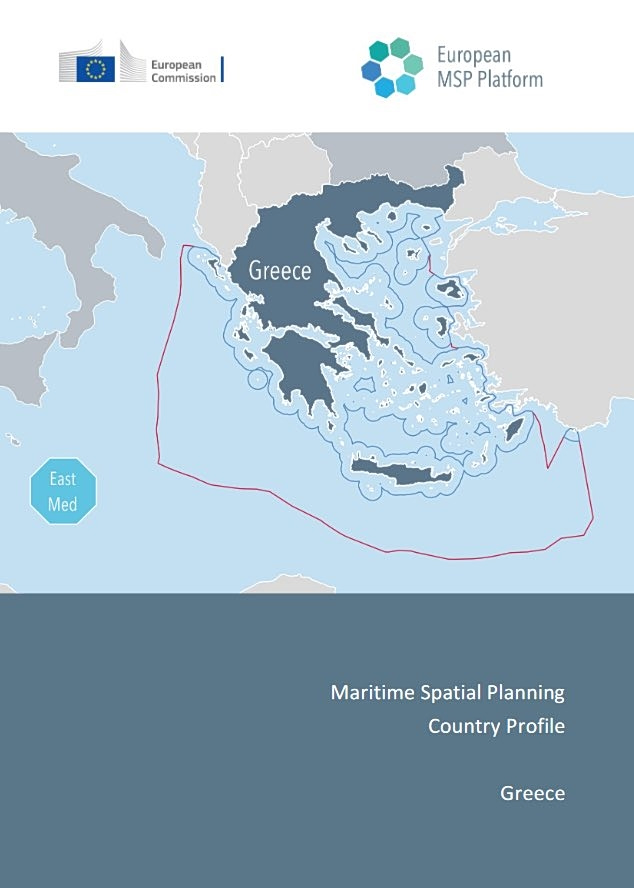
The Athens conference comes as Greece and Turkey continue to dispute maritime jurisdiction in the Aegean and eastern Mediterranean. Competing maritime spatial planning maps have added a new dimension to the longstanding disagreement, with Greece setting out its position on maritime jurisdiction and Turkey advancing a competing interpretation.
The dispute is also closely linked to Turkey’s “Mavi Vatan,” or “Blue Homeland,” doctrine, which promotes an expansive and revisionist conception of the country’s maritime interests. Greece has repeatedly and vehemently rejected the doctrine and associated claims, arguing that they challenge the established legal and territorial order in the Aegean and eastern Mediterranean.
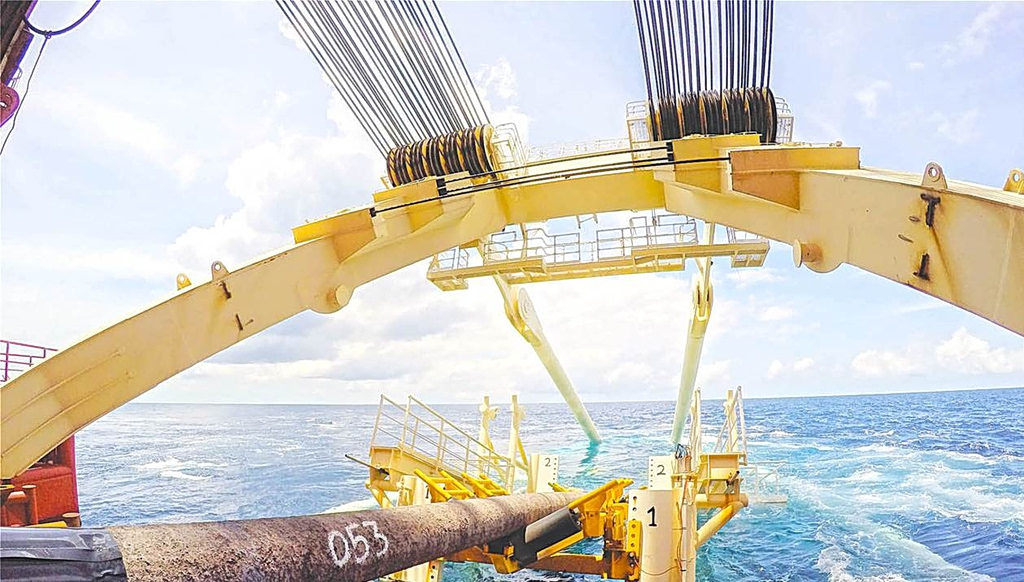
Energy infrastructure has also become entangled in the dispute as Turkey has objected to the planned route of the Great Sea Interconnector (GSI), the electricity connection linking Greece, Cyprus and Israel, arguing that parts of the route fall within what Ankara considers Turkish maritime jurisdiction. The dispute illustrates how major infrastructure and energy projects can become connected to competing interpretations of maritime rights.
Among the most serious elements is Turkey’s longstanding casus belli (cause of war) declaration over a possible Greek extension of territorial waters to 12 nautical miles in the Aegean, a standing right envisioned in UNCLOS.
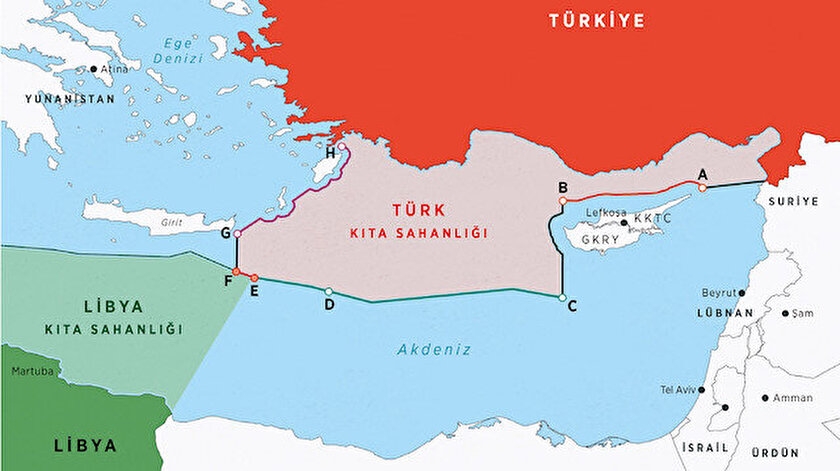
Finally, the 2019 Turkey-Libya maritime memorandum remains a central dispute in the eastern Mediterranean. Athens has consistently rejected the agreement as illegal and incompatible with UNCLOS, arguing that it disregards the maritime rights of Greek islands and effectively removes them from the region’s maritime map.
Against this backdrop, the conference’s focus on contested waters, maritime boundaries, international litigation and critical infrastructure is particularly relevant to Greece.
Issues involving spatial planning, energy projects, scientific research and environmental policy increasingly intersect with questions of national security and competing maritime claims.