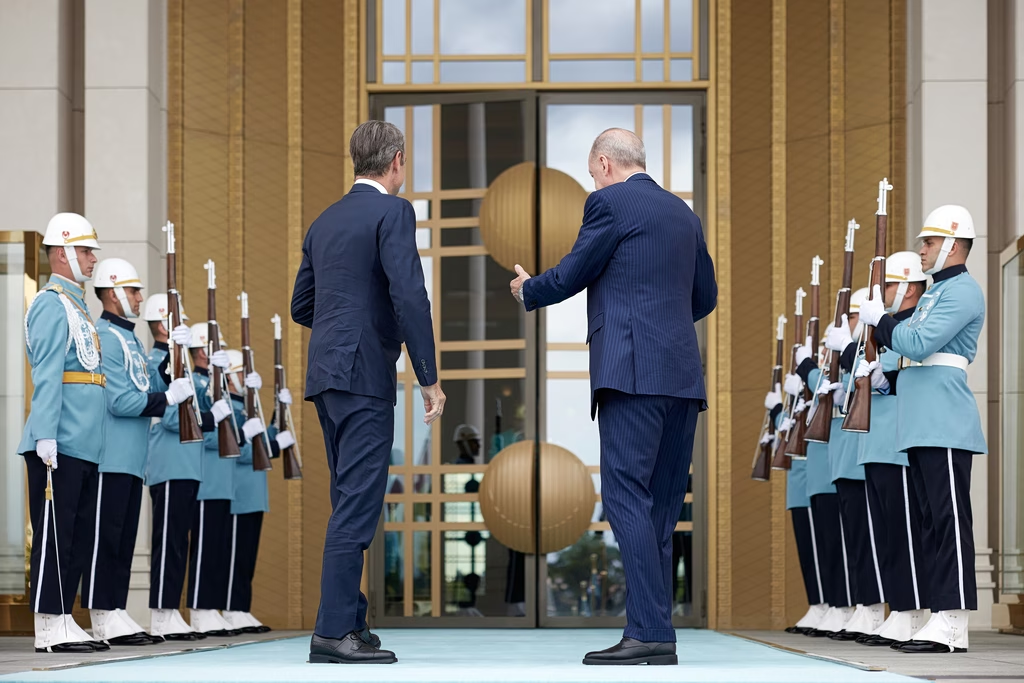
The presence of Greek Prime Minister Kyriakos Mitsotakis at last year’s 81st session of the UN General Assembly was marked by the Turkish side’s discourteous cancellation of his scheduled meeting with Recep Tayyip Erdogan. This year, when the two men arrive in New York, they are likely to look like two strangers in the same city — and in increasingly turbulent waters.
“The ‘calm waters’ we have experienced over the past two years must not be something fleeting. They must allow us to build trust, find common ground and seek solutions in the interest of both our peoples,” the Greek prime minister said from the UN podium in New York on Sept. 26, 2025. One year later, however, it has become clear that the “calm waters” were ultimately “something fleeting.”
Greece and Turkey have not only failed to take even the most basic steps toward meaningful dialogue on the major outstanding issues, but have instead once again entered the familiar spiral of tensions, with Ankara gradually advancing its revisionist agenda in the Aegean and Eastern Mediterranean: the unlawful designation of marine parks, challenges to Greece’s continental shelf and national sovereign rights, “gray zones,” and pressure for the demilitarization of Greek islands, while also raising what it presents as an interconnected issue of sovereignty over them.
The new round of Greek-Turkish confrontation is unfolding as international flashpoints remain open and show signs of further escalation. At the same time, the coming winter is expected to be difficult because of rising energy costs, with Greece already in an unofficial, prolonged pre-election period and Erdogan seeking the most favorable way to extend his hold on power, potentially even into 2027. In November, the United States will also hold midterm elections, with a possible negative result for the Republicans expected, according to the analysis, to push Donald Trump toward more erratic choices. Put simply, the outlook for the wider Eastern Mediterranean region is not positive. Within this unfavorable climate, will Athens and Ankara seek ways to ease tensions, or will they become trapped once again in an endless cycle of confrontation?
Is there a “window” for communication?
As happens in similar circumstances, the question circulating in newsrooms is whether Kyriakos Mitsotakis might meet with Recep Tayyip Erdogan on the sidelines of the General Assembly, even outside their official schedules. The prime minister told Greece’s public broadcaster ERT that no face-to-face meeting with the Turkish president had been scheduled, but left open a small possibility that one could still take place. “Many times, such a meeting can be arranged if there is an opportunity, even at the last minute,” Mitsotakis said, adding further ambiguity to what he and his team ultimately hope to achieve in New York.
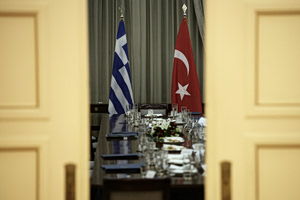
There has, however, been no preparation for such a meeting, at least not in the usual format involving Foreign Ministers Giorgos Gerapetritis and Hakan Fidan, along with the diplomatic advisers. That effectively means the necessary agenda is absent. As recently as a few hours before Mitsotakis’ latest public appearance, an informed diplomatic source described the prospect of a summit meeting as “unlikely.” In reality, the broader atmosphere, as well as Turkey’s renewed insistence on positions that Greece considers unlawful, makes such a meeting almost prohibitive, as it would convey a willingness to make concessions. According to this view, the prime minister would be legitimizing Turkey’s rapid escalation strategy, which, among other things, would further damage the government’s image in its handling of national issues, particularly just months before the elections.
There is, of course, room for the opposite view within the Maximos Mansion, the Greek prime minister’s official residence and seat of government. From this perspective, even a meeting lasting only a few minutes could help de-escalate tensions while also serving as a way to sound out Ankara’s intentions ahead of the expected resumption of work on the Greece-Cyprus electricity interconnection cable. At the same time, with the appropriate communications strategy, such a meeting could be presented as a message of firmness, showing that Greece does not intend to retreat even one step from its “red lines.” Supporters of this approach recall that Mitsotakis was the first Greek prime minister to raise with the Turkish president the issue of lifting Turkey’s casus belli — its declaration that certain Greek actions would constitute grounds for war.
Beyond the agenda and the atmosphere, however, it should be noted that the schedules of the two leaders largely do not overlap. The Turkish president’s speech to the UN General Assembly is scheduled for Tuesday morning, while Kyriakos Mitsotakis will arrive in New York from San Francisco that same afternoon, in order to attend the traditional dinner hosted by the US president, and will address the General Assembly on Thursday afternoon. Given these circumstances, a meeting could indeed be arranged only on the ground and following last-minute coordination.
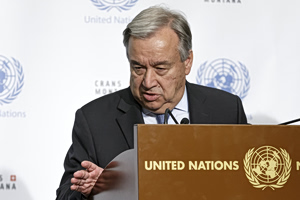
If the fact that Mitsotakis received Ibrahim Kalin, head of Turkey’s National Intelligence Organization (MIT) and a close associate of Erdogan, at the Maximos Mansion is also taken into account, it could be assumed that communication channels are operating between the two sides at the highest level, in addition to the established channels. Among the prime minister’s scheduled meetings, particular attention is being given to his meeting with outgoing UN Secretary-General António Guterres, amid developments over the Cyprus issue. There will also be strong Greek interest in the Turkish president’s meeting with Emmanuel Macron, during which the issue of the electricity interconnection is expected to be raised, with French investment group Meridiam now holding a majority stake in the project.
Diametrically opposed speeches
The presence of Mitsotakis and Erdogan at the United Nations will once again highlight the diametrically opposed, if not confrontational, approaches of Athens and Ankara to the Aegean and Eastern Mediterranean.
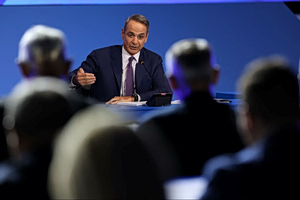
In his speech, the prime minister will present Greece as a country that will continue working for security and stability in the wider region, guided by international law, while stressing that the government will not ignore the signs of the times and that, amid a changing world, it will continue strengthening both its alliances and its defenses.
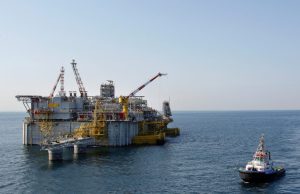
Particular emphasis will be placed on the role Greece can play in energy security, an issue that will include a message to Turkey regarding implementation of the electricity interconnection with Cyprus. Greece’s longstanding position in favor of peace and good-neighborly relations will also be clearly reiterated, with Mitsotakis once again condemning Turkey’s casus belli, amid intense pressure from Ankara for the demilitarization of the Greek islands.
Erdogan, by contrast, is expected to maintain that no energy or other project in the Eastern Mediterranean can be completed without Turkey’s permission. Interest will also focus on whether he refers to an alleged violation of international treaties by Greece concerning the deployment of defense systems in the Aegean.
The Turkish president is also expected to call on the international community to recognize sovereign equality for the breakaway Turkish Cypriot entity, while the prospects for a viable solution to the Cyprus issue continue to diminish, gradually tending toward zero — 52 years after the Turkish invasion.