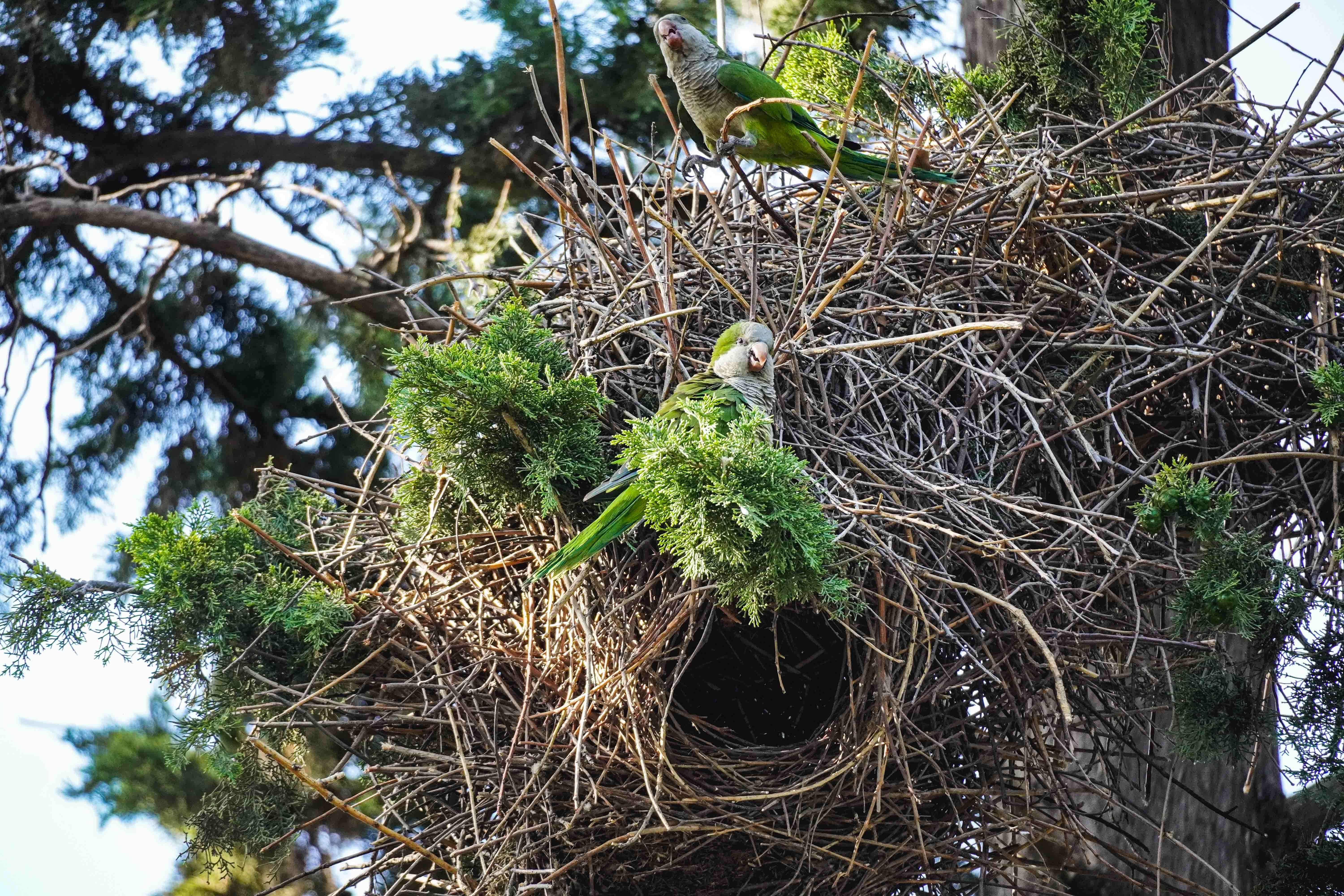
Dadia is also the “home” of many bird species. It is characteristic that 36 of the 38 species of birds of prey found in Europe occur in the Dadia–Lefkimi–Soufli Forest National Park, as Dr. Sylvia Zakkak, biologist, senior conservation officer and Deputy Head of the Management Unit of the Evros Delta and Dadia National Parks of the Organization for Natural Environment and Climate Change (NECCA), tells BHMA-Science. “In Dadia live three of Europe’s four vulture species—the cinereous vulture, griffon vulture, and Egyptian vulture—and two of them, the cinereous vulture and the Egyptian vulture, breed within the National Park. Especially as regards the cinereous vulture, Dadia hosts the only colony in the entire Balkan Peninsula.”

It was therefore only natural that concerns arose about the impact the massive 2023 wildfire would have on birdlife. “First of all, we should say that birds are not directly threatened by wildfires in the same way as terrestrial fauna, as they can move away quickly in the event of a fire. What we are monitoring is what will happen in the long term, since the major ‘enemy’ of birds of prey is that the trees where they build their nests burn and gradually collapse, and that their food supply decreases because terrestrial animals are affected by the fire,” notes Dr. Zakkak. She adds that “with regard to birds of prey other than the cinereous vulture, the survey we carried out in the spring of 2024 did not show a significant decline across the burned area. The birds were nesting even in burned trees. We will repeat this survey, as, as mentioned, the effects of wildfires on birds are long-term.”
Cinereous Vulture Nests
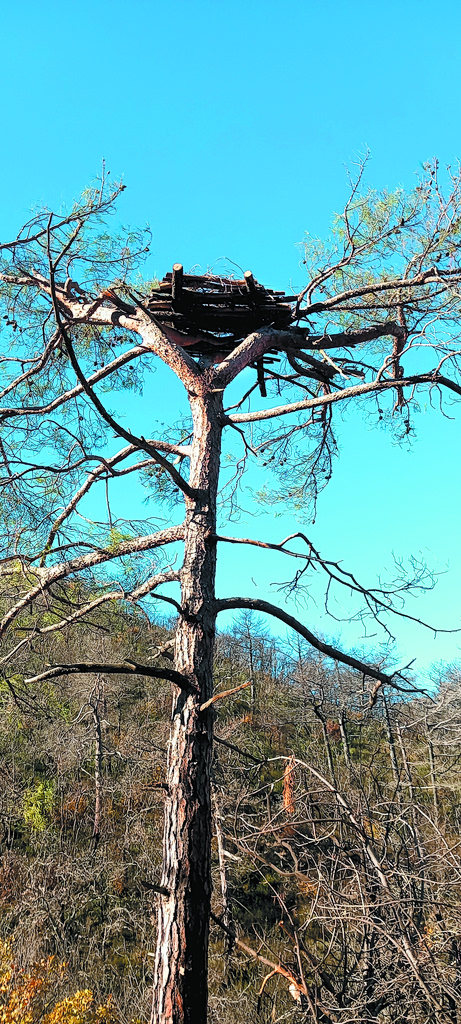
For the highly valuable cinereous vulture—a species with a wingspan of up to three meters and the largest vulture species in Europe—NECCA took swift action to prevent a population decline after the fire. “It is a large-bodied species that requires only large, mature trees to nest and is also very faithful to its colony. Thus, immediately after the fire, in the autumn of 2023, we created 15 artificial nests on burned trees so that cinereous vultures seeking to nest would have an alternative. This year we installed another 15 nests.”
So far, according to Dr. Zakkak, cinereous vultures have not used the artificial nests. They continue to remain faithful to Dadia, nesting on burned trees, and their populations have in fact increased since the fire. “Before the fire, we had recorded 36 breeding pairs, and in 2025 we recorded 47 pairs. A new census will be carried out in 2026.”
The installation of artificial nests and feeding stations has also “revived” Dadia’s small passerine birds. As Mr. Zafeiropoulos of the Thrace Biodiversity Protection Society informs us,
“Small birds were strongly affected by the loss of natural nesting sites due to the fire. From 2024 to 2025, artificial nest boxes and feeders were installed, and systematic surveys were conducted to monitor birdlife. The results show that many forest species remain in the forest and are gradually increasing, while the artificial nests are now being used successfully, confirming that they are an effective support tool for post-fire recovery.”