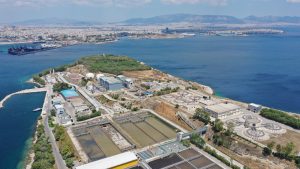
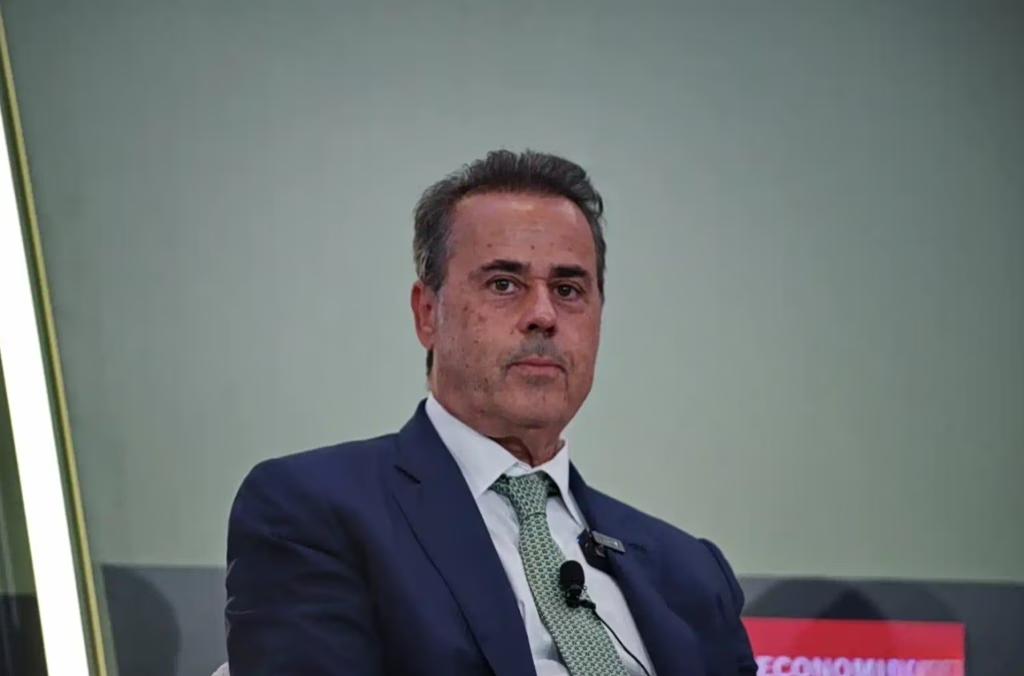
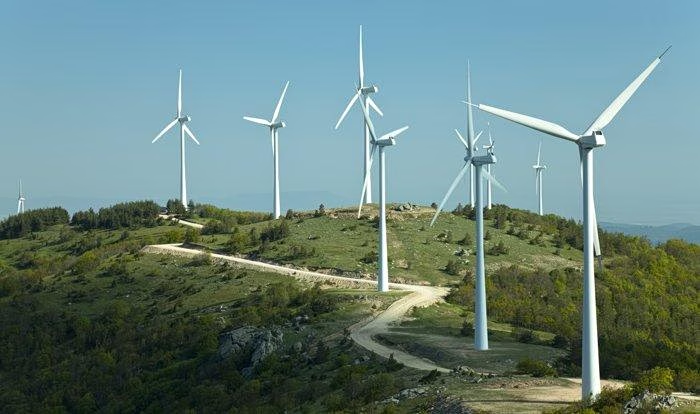
The Minister of Environment and Energy, Stavros Papastavrou, attended the inauguration of DESFA’s (The Hellenic Gas Transmission System Operator) Ampelia Natural Gas Compression Station in the region of Thessaly, central Greece. The Ampelia Compression Station is one of the largest investments implemented in recent years in the Region of Thessaly, with a total budget of […]
Rising gas and power costs across the EU, driven by extreme weather, low reserves and market volatility, are weighing heavily on households and businesses, with Greece facing some of the steepest electricity prices in Europe
In a TV interview after a Riyadh visit, Greece’s energy minister outlined three strategic connectivity projects with Saudi Arabia, framed within EU energy policy, maritime decarbonization talks, and efforts to curb household power costs.
Industry estimates indicate that Chevron is expected to begin initial seismic surveys in these offshore blocks in 2026.
Athens and Riyadh agreed on a shared vision: positioning Greece as a hub for transporting Saudi-produced renewable energy and, in the longer term, green hydrogen to European markets.
As energy bills strain households and businesses, Greece’s energy communities reveal a split reality: ambitious collective initiatives promise relief, while regulatory hurdles, grid limits, and stalled projects expose the fragility of the model.
A new energy landscape in 2026 – the HERON–NRG deal, AKTOR’s entry, and major investments by PPC, MOH, DEPA, and HELLENiQ ENERGY
Green light for the 80 MW Olive Data Center in Spata. The growth of data centers, energy and water demands, and reactions from local communities
From offshore gas exploration to long-term U.S. LNG deals, 2026 marks a turning point as Greece begins to see results from major energy agreements signed over the past two years
From Jerusalem, Greece, Cyprus and Israel present their trilateral partnership as a pillar of stability between East and West, with energy projects, U.S. involvement and a clear message to Ankara shaping the geopolitical stakes in the Eastern Mediterranean
Greek and US officials discussed energy cooperation, major investments and regional stability, underlining Greece’s growing strategic role in Europe’s energy landscape
Greece, Cyprus and Israel—backed by the United States—revive their strategic “3+1” alliance, putting the Great Sea Interconnector, new gas routes and LNG corridors at the heart of a high-stakes agenda discussed by Mitsotakis, Christodoulides and Netanyahu.
Two high-level summits are expected in Washington with U.S., Greek, and European stakeholders, with Greece to be represented by AKTOR CEO, Alexandros Exarchou.
Minister Papastavrou's visit came at a moment when governments across the region are reassessing supply routes and strategic alignments in response to shifting Middle Eastern dynamics and Europe’s ongoing effort to break from Russian gas
Legislators expressed particular interest, officials said, in Greece’s recent energy agreements and in the next round of meetings under the 3+1 format with Cyprus, Israel and the United States, which is expected to reconvene in Washington in April
A meeting in Thessaloniki between US Ambassador Kimberly Guilfoyle and Deputy Minister Konstantinos Gkioulekas highlighted Northern Greece’s growing strategic role, recent energy agreements, and new opportunities for American investment
Papastavrou confirmed that American exporters have reached agreements with Greek companies — and added that “this LNG will make its way all the way to Ukraine.”
The Greek energy minister also talks with the President of the Export–Import Bank of the United States (EXIM), John Jovanovic on the Bank’s €100-billion financing program.
The meeting came shortly after the P-TEC energy conference in Athens, where the United States sent its largest delegation to date and where several agreements pointed to a more structured phase of cooperation between the two countries
Naturally, the question arises whether Greece is becoming excessively tied to the United States