 Μake us preferred on Google
 As Greece braces for another record-breaking tourism season, a pressing question is once again confronting aviation authorities, airlines and airport operators: Can the country’s aging air traffic control system withstand the pressure of another summer surge in flights?
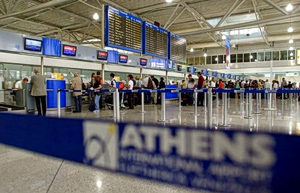
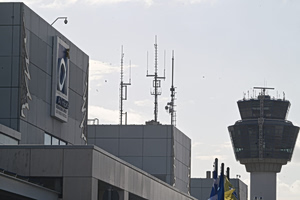
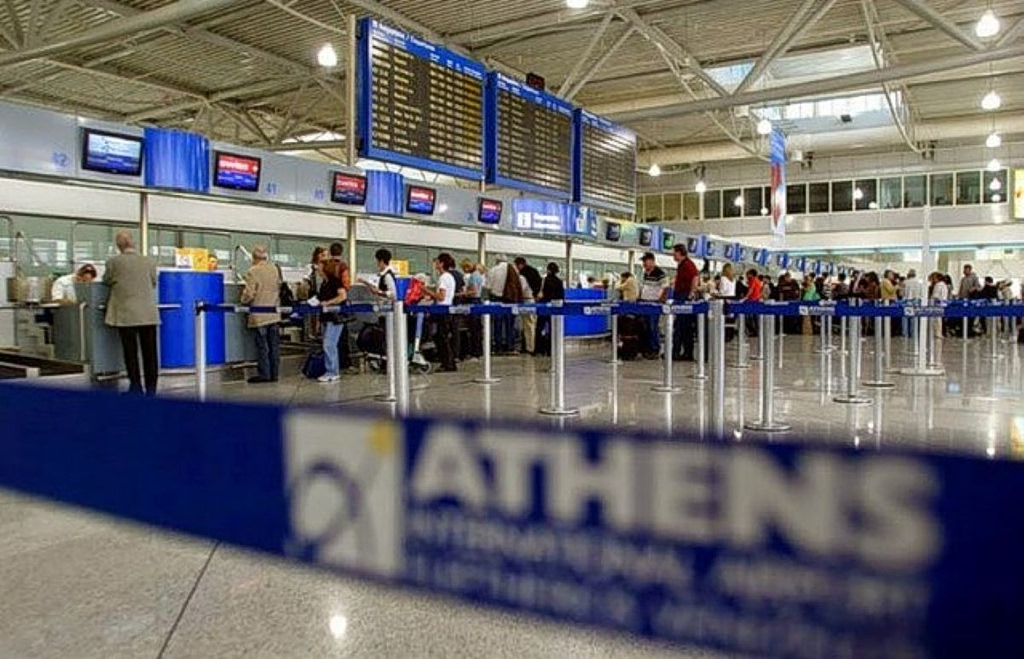
The concern has become increasingly urgent following a series of technical failures and disruptions affecting Athens International Airport as well as the Hellenic Civil Aviation Authority (HCAA), the agency responsible for managing air traffic across Greek airspace.
According to data from Eurocontrol and the HCAA, Greece had already handled by the end of May 154,115 flights to and from its airports and 217,050 overflights. That represents increases of 6% and 9%, respectively, compared with the same period last year. Compared with 2019, before the pandemic, traffic has jumped by 30% and 52%.
With Greece’s aviation network having served more than 83 million passengers in 2025, industry stakeholders are now asking whether the system can cope with even higher volumes this summer without suffering major operational disruptions.
Safety vs. Capacity
Officials at the Civil Aviation Authority insist that air traffic control operations are protected by multiple layers of safety mechanisms and backup systems with internationally mandated procedures in order.
Even in the event of radar failures or data disruptions, they say, contingency protocols are activated. In such cases, air traffic controllers can slow the flow of aircraft through Greek airspace by increasing the distance between planes and reducing the number of flights allowed in a given area.
“The issue is not an immediate threat to flight safety,” employee representatives argue. “The problem is the growing operational pressure being placed on aging infrastructure that is already operating close to its limits during peak summer demand.”
A January Blackout Raises Questions
The Ministry of Transport has sought to reassure the public, pointing to an ambitious modernization program consisting of 364 separate projects under a long-term master plan. The problem, however, is that the overhaul is not expected to be completed until around 2030.
Behind the government’s assurances lies a more complicated reality.
For years, the Civil Aviation Authority has struggled with delays, bureaucracy and chronic underinvestment. Those weaknesses were thrust into the spotlight on Jan. 4, 2026, when radio communications between the Athens-Macedonia Area Control Center and aircraft operating within Greece’s Flight Information Region (FIR) were lost for several hours.
Although aviation officials and industry stakeholders stressed that safety was never compromised. However, one question remains unanswered: What would happen if a similar incident occurred in July or August, when Greek airspace is far more crowded?
Technology From Another Era
At the heart of the problem is the country’s radar and surveillance infrastructure.
Much of the equipment currently used by the Civil Aviation Authority is based on technology developed in the previous century. Greece’s last major radar procurement took place in 1999.
While software upgrades have been carried out over the years, most recently in 2018 through the PALLAS 3G system, the authority itself now acknowledges that the technology is outdated, expensive to maintain and increasingly incompatible with modern operational requirements.
A €160 Million Upgrade Plan Split in Two
Against that backdrop, the Civil Aviation Authority’s board decided on May 12 to revise a previous procurement plan that combined a radar replacement program with an upgrade of the country’s Data Processing System (DPS), a package valued at roughly €160 million. The project will now be divided into two separate contracts.
Under the first phase, the Civil Aviation Authority plans to award a €126 million contract directly to French aerospace and defense company Thales. The project will replace the authority’s existing PALLAS 3G air traffic management software — which processes flight plans and surveillance data — with the newer TopSky ATC One platform. The Transport Ministry has already approved an initial €92.38 million for the project.
The second phase will involve a separate international tender for the procurement and installation of seven new radar systems at Kamara, Hymettus, Elliniko, Lefkada, Kythira, Pelion and Merenda. The new equipment will replace aging radar infrastructure, much of which has been in service for more than two decades.
Procurement Disputes and Rising Costs
The revised approach follows the collapse of the original procurement plan, which would have awarded the entire project directly to Thales.
That proposal faced repeated objections from competing companies, including Italian firm Leonardo, which argued that the tender had been designed in a way that favored a specific supplier and carried an excessive price tag.
The controversy intensified as the project’s cost ballooned from €77 million in 2022 to €160 million in 2026, an increase of 108%.
Little Has Changed for This Summer
Despite the modernization plans and procurement debates, the most pressing issue remains the operational reality facing Greece this summer.
And on that front, relatively little has changed since last year.
The only significant progress has been the accelerated installation of a new Voice Communication and Recording System (VCRS), launched after the Jan. 4 communications blackout.
The project has been financed through donations from major private-sector stakeholders, including Aegean Airlines, Sky Express, Athens International Airport, TERNA and Fraport Greece.
Source: TA NEA