 Μake us preferred on Google
 A €1,500 monthly bonus for doctors serving on islands with fewer than 4,000 residents brought fresh optimism about staffing small islands, but gaps in the national health system (ESY) remain.
Behind the persistently unfilled posts, repeated job postings, and doctor departures lies a deeper, newer problem: the housing crisis in tourist destinations. Greece has doctors, but in many cases can’t guarantee them the basics, starting with a place to live.
The bonus drew applicants, but didn’t solve the problem
The new incentive appears to have mobilized interest: the first call for primary care positions on small islands in the program drew 57 applications for 42 ESY doctor posts.
Response was especially strong in places like Hydra, Poros, and Spetses, where multiple candidates competed for the same posts. The program covers 47 small islands and is funded through a seven-year, €10.08 million donation from the Stelios Philanthropic Foundation aimed at strengthening public health infrastructure. But the picture isn’t uniform.
Positions remain empty in the most remote areas
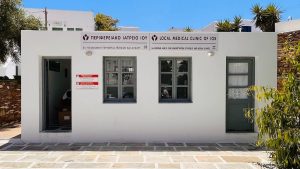
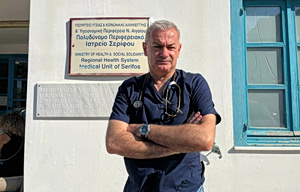
Despite the financial incentive, 13 facilities received no applications at all, accounting for 16 vacant posts, on islands including Agios Efstratios, Psara, Folegandros, Agathonisi, Nisyros (Mandraki), Koufonisia, Thymaina, Serifos, Thirasia, Kimolos, Kea, Skyros (family medicine and radiology), and Alonnisos. The data suggest the financial incentive works, but isn’t enough where isolation, difficult transport, and above all the cost of living discourage applicants.
Regional breakdown
The strongest response came from the 2nd Health Region: 49 applications for 35 posts. The 5th Health Region drew 7 applications for 6 posts, and the 6th just 1 application for 1 post. The takeaway is twofold: doctors respond when incentives exist, but some areas remain unfilled even with the extra pay.
95 re-advertised positions
The scale of the problem became clear in January 2026, when the Health Ministry was forced to re-advertise 95 specialist doctor posts that had already gone unfilled, most on islands, in mountainous areas, or in remote regions.
The issue isn’t limited to one or two specialties: in 2026 alone, 1,131 new specialist posts were advertised for the ESY, along with 441 permanent posts for Health Centers and multi-purpose regional clinics.
The constant re-postings suggest the staffing shortage isn’t a one-off, but has become a permanent feature.
The real obstacle: housing
The main reason now surfacing more and more often isn’t just salary, it’s the inability to find a place to live. Greece has created a new absurdity: the state finds the doctor, but the doctor can’t find a home.
On popular tourist islands, the growth of short-term rentals has drastically shrunk the housing available for long-term leases. A newly appointed doctor can be posted to one of the country’s best-known destinations and still be unable to afford a small apartment. For a public sector professional with specialized training, housing costs can eat up nearly half their income.
They arrive for duty, then leave
In several cases doctors accept the post, move to the island, and then find they can’t secure decent housing. The result: departures, new vacancies, doctors being shuttled in from other regions, and added strain on already stretched health facilities. The problem isn’t just that doctors can’t be found anymore, it’s that they can’t stay where they’re posted.
Islands don’t just serve residents
Island healthcare isn’t only a matter for permanent residents; it has a tourism dimension too. During summer, the population of many areas multiplies, and small health facilities must serve not just residents but hundreds of thousands of visitors. An island without a doctor isn’t just a social problem, it’s a matter of public safety and tourism credibility.
Maybe the answer isn’t more bonuses, but housing
Current policy leans heavily on subsidies and financial incentives. A different approach could be building permanent housing infrastructure for health workers. A rough estimate suggests that 200 units of 50 square meters (10,000 sq m total), at a construction cost of about €1,700 per square meter, would require roughly €17 million, a network that could support hundreds of doctors for decades.
Meanwhile, temporary fixes carry ongoing costs: if each vacant post creates roughly €50,000 a year in extra costs for transfers, emergency coverage, and substitutions, the 95 unfilled posts alone cost about €4.75 million annually, nearly €20 million over four years.
In other words, a house is a lasting asset while a bonus runs out. The real question isn’t how many more posts will be advertised, but whether the country can offer doctors posted where they’re needed most the most basic thing: a home to live in.