 Μake us preferred on Google
The ancient theater of Maroneia, one of the most significant archaeological monuments in Thrace, is moving closer to a new chapter as a functioning cultural venue, with the culture ministry advancing plans for its protection, restoration and renewed use.
The Central Archaeological Council (KAS) has unanimously issued a positive opinion on three studies covering the architectural presentation of the monument, rainwater management and lighting. The planned interventions aim to protect the site from surface-water damage, improve visitor facilities and make the theatre more accessible and easier to interpret, while preserving its authenticity and historical character.
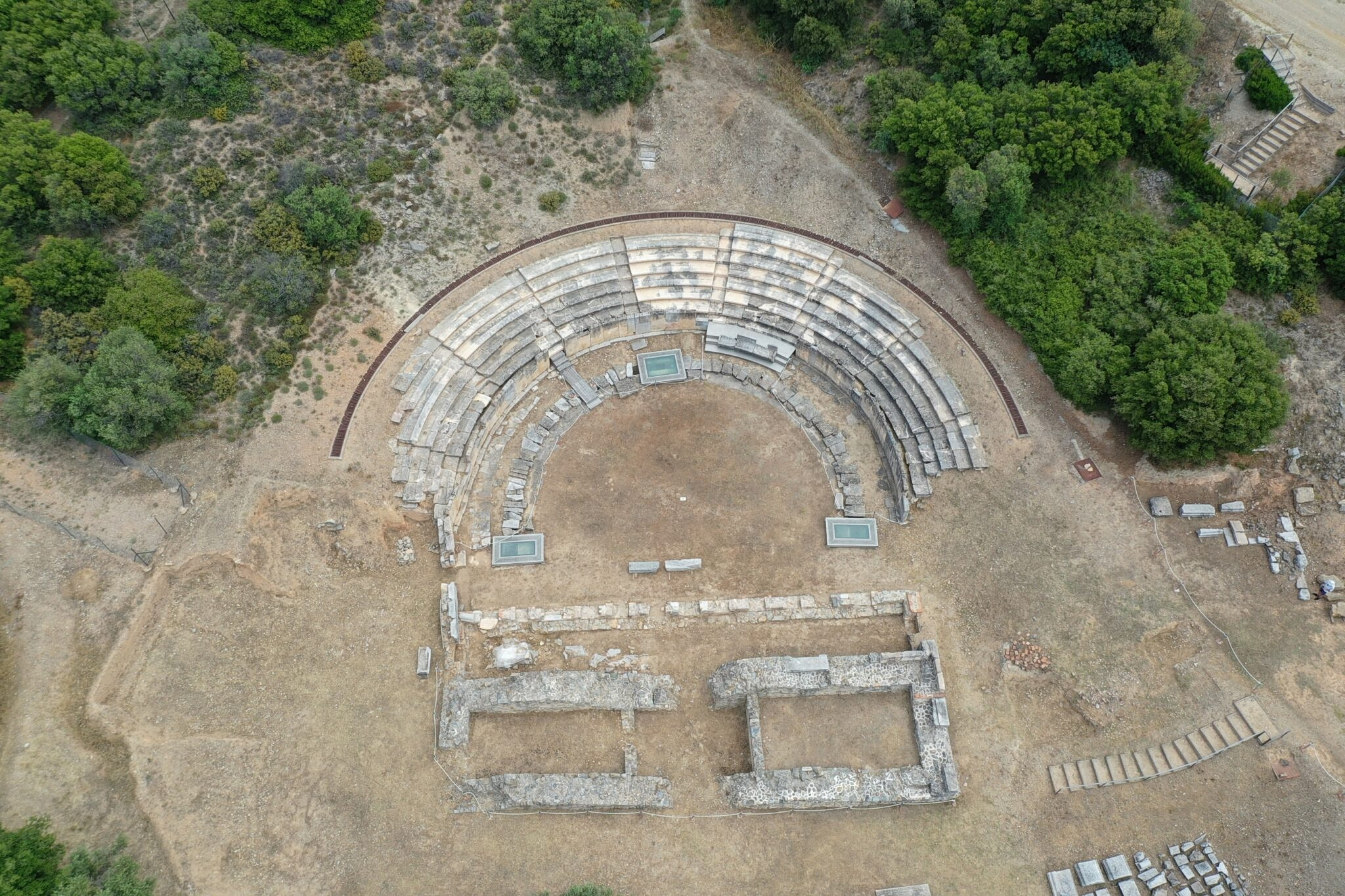
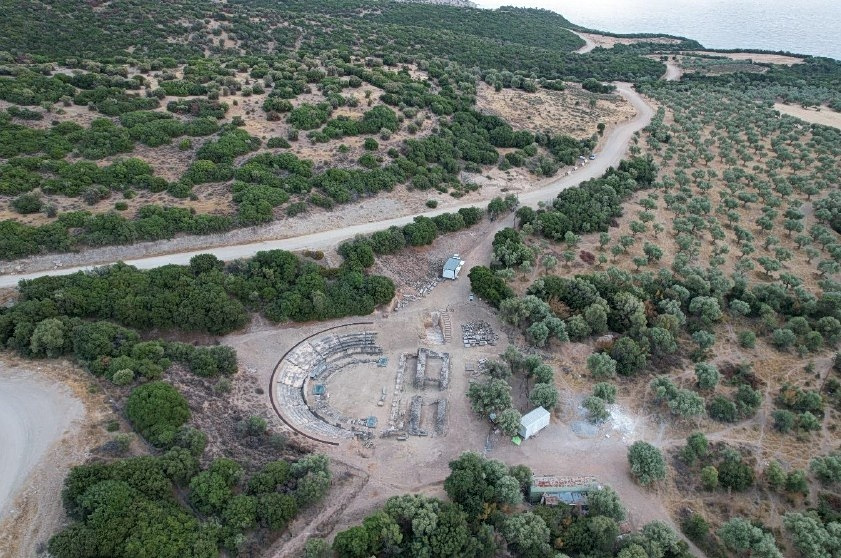
Although the theatre and its surrounding archaeological site are in relatively good condition, thanks to the continued care of the local archaeological service, further work is needed to complete its presentation. Immediate priorities include restoring the orchestra to the level of the Roman arena and improving the overall legibility of the monument.
The seating area, or cavea, has been affected by the site’s present-day terrain, a stream that cuts across the slope, earlier excavation trenches and irregular ground formations. These features have complicated the interpretation of the theatre’s original layout and the presentation of its surviving architectural elements.
Culture Minister Lina Mendoni said the project would provide the infrastructure needed to protect the monument, improve its presentation and allow it to function again as a living cultural venue.
“The project addresses both the conservation needs of the monument and the requirements of a modern, safe and high-quality visitor experience,” Mendoni said, adding that the work would restore the legibility of the theatre, organize and display important architectural fragments and update plans for a reversible extension of the upper seating area.
She said the aim was not for ancient theatres, where their state of preservation allows, to remain solely monuments of the past, but to serve as active centers of culture, education and sustainable development for local communities.
A monument shaped by three historical phases
Built on the slopes of Mount Ismaros, overlooking the sea, the theater was an important public building in ancient Maroneia. Three main construction phases have been identified. The Hellenistic phase included the seating area and a drainage channel.
During the Roman period, the orchestra was enlarged and converted into an arena, while a protective barrier and a stage building were added. A third phase, dating to late Roman times, involved mainly repairs and adaptations.
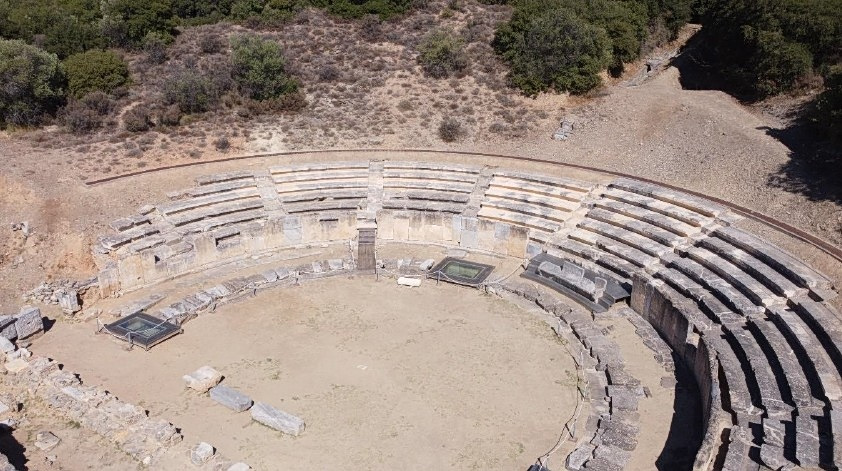
The surviving remains include the first three rows of stone seats, stairways, a covered drainage channel and ruins of the stage building.
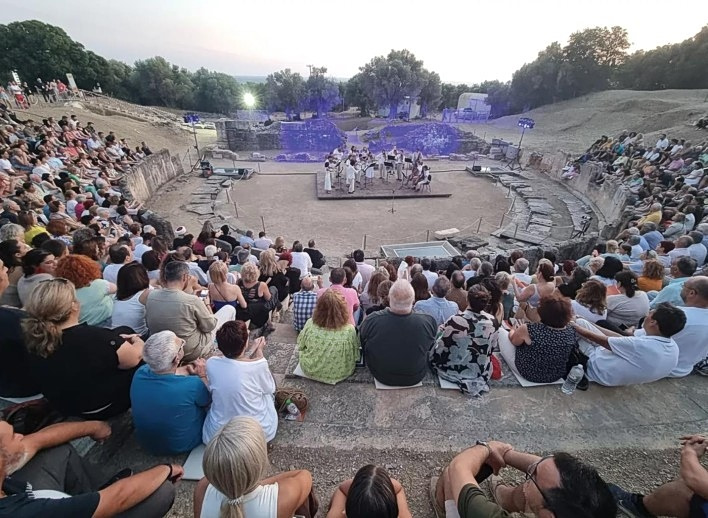
The Maroneia theater can currently accommodate approximately 350 spectators and has basic facilities for visitor access and services. Restoration works were carried out between 2004 and 2009, but new archaeological findings subsequently made it necessary to revise the original architectural plans.
In 2020, following the completion of almost all excavation and restoration work, a study for a new entrance building was approved. The facility is designed to include a guard post and restrooms, a route to a viewing point accessible to people with disabilities, and steps leading down to the level of the theatre.
One of the main elements of the updated plans is a reversible extension to the upper section of the cavea, where no ancient seating survives. The proposal envisages wooden seats installed on a removable steel supporting structure, arranged to follow the layout of the original stone seating.
The orchestra will also be filled to the level of the Roman arena, restoring the monument’s later configuration.
The proposed extension would increase the theater’s capacity from approximately 350 to around 750 spectators. The plans also provide for the organization and display of some of the most important architectural fragments recovered during excavations.
The use of a removable structure is intended to allow the additional seating to be installed without permanently altering the ancient monument.
Access is also expected to improve with the completion, scheduled within 2026, of the new coastal road linking Maroneia with Petrota.