 Μake us preferred on Google
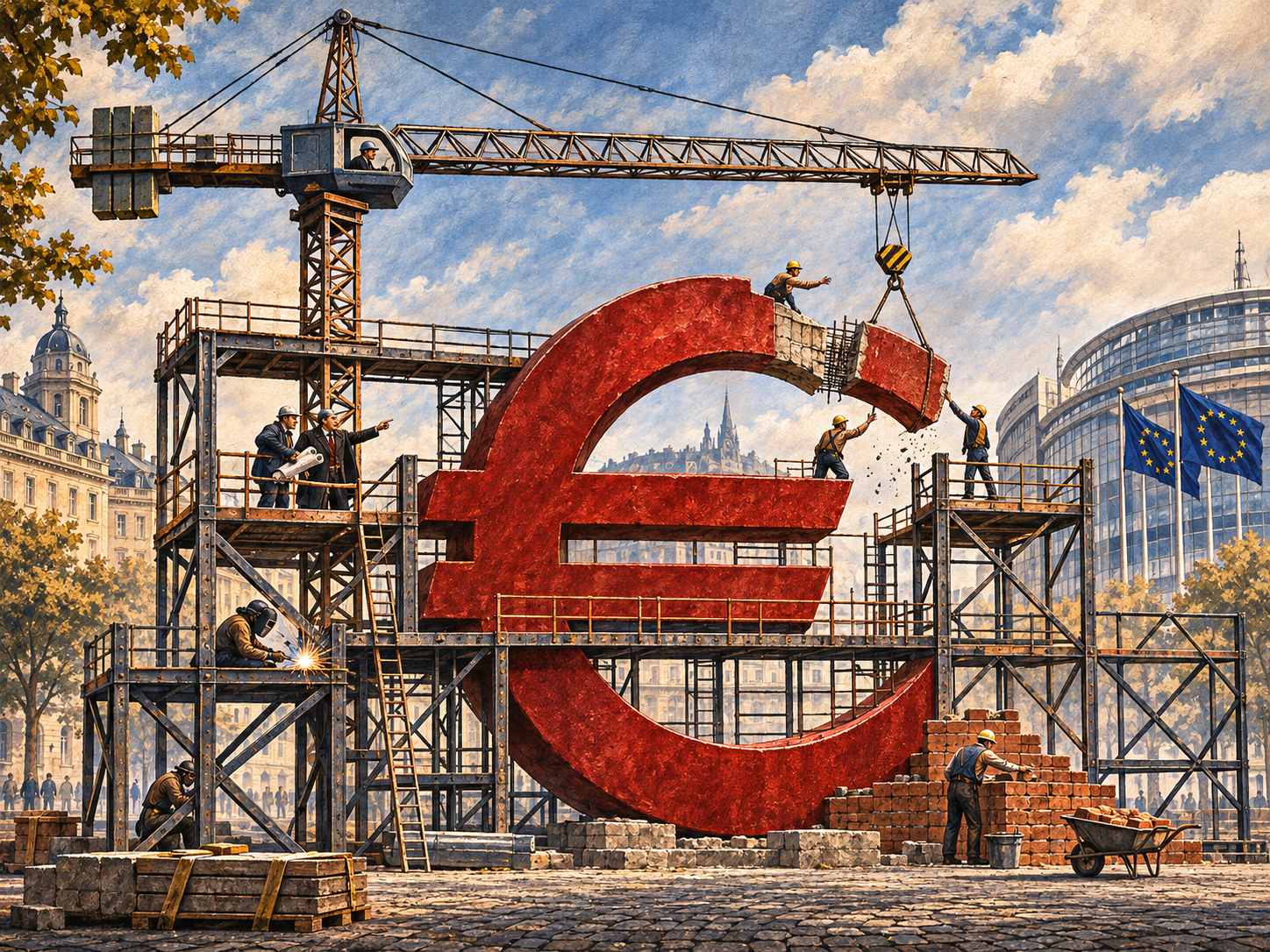
A European paradox remains unresolved: the eurozone has a common monetary policy, but its fiscal architecture remains largely national. Although member states share a currency and a central bank, national governments retain primary responsibility for taxation and public expenditure, subject to common European fiscal rules and coordination. This institutional asymmetry matters beyond economic efficiency. When crises affect member states differently, their governments have unequal capacities to protect their citizens, while the EU lacks a permanent fiscal capacity comparable to its monetary institutions. Fiscal integration is therefore not merely a technocratic exercise, but a potential prerequisite for a more resilient and democratically accountable European Union.
Monetary and fiscal policies are distinct but interdependent instruments of macroeconomic management. The ECB conducts monetary policy to maintain price stability, while national governments use taxation, public expenditure and borrowing to provide public services and support economic activity. Their interaction became particularly important during the pandemic, when coordinated monetary and fiscal measures helped cushion the economic shock and support recovery (European Central Bank, n.d.). Grounded in Articles 3, 119-144, 136, 219, and 282-284 of the Treaty on the Functioning of the European Union (TFEU), the EU’s economic architecture has continually evolved to build a robust framework for coordination and surveillance (European Parliament, 2017). Prompted by the sovereign debt crisis and subsequent spill over effects from unsustainable public finances, sweeping legal reforms; culminating in the framework revisions of 2011-2013 and 2024; have sought to reinforce sound fiscal governance, simplify regulatory compliance, and reconcile budgetary sustainability with strategic investments in the green and digital transitions (European Parliament, 2024).
Over the past two decades, the structural weaknesses of eurozone economic governance have exposed tensions between economic integration and democratic accountability. Following the optimistic expansion of market economies in the late twentieth century, the 2008 global financial crisis and the subsequent eurozone sovereign debt emergency severely undermined the alignment between market capitalism and democratic stability (Matthijs, 2017). This macroeconomic destabilisation catalysed an asymmetric core-periphery divergence: while Northern European economies recovered with relative speed, Southern member states shouldered the main burden through severe economic contraction, elevated unemployment, and externally imposed fiscal consolidation by the “Troika” institutions (Matthijs, 2017). Crucially, this economic hardship intensified tensions between national democratic accountability and European economic governance (Matthijs, 2017).
Although subsequent extraordinary interventions; most notably during the post-pandemic recovery; demonstrated institutional resilience, underlying structural imbalances persist. Despite modest macroeconomic stabilization, household confidence remains depressed, and the operational execution of the EU’s reformed economic governance framework continues to face major political and structural headwinds (European Commission, 2024; OECD, 2025). As persistent inflationary pressures and acute housing affordability issues have sparked social unrest and mass protests across several member states, economic discontent has increasingly spilt over into the political arena. The 2024 European Parliament elections revealed a fragmented political landscape in which divisions over European integration continue to shape political competition (Blavoukos et al., 2025). Ultimately, persistent regulatory and capital market fragmentation fuels regional inequality, reinforcing nationalistic entrenchment and posing an existential challenge to the political cohesion of the European Union (Blavoukos et al., 2025; European Commission, 2024; Matthijs , 2017).
To mitigate structural fragility and reverse systemic divergence across the eurozone, economic federalism emerges as a practical necessity rather than a theoretical ideal, requiring a synchronized progression across four interconnected pillars: a genuine Economic Union, a Financial Union, a Fiscal Union, and a Political Union (Juncker et al., 2015). Any move toward fiscal federalism must remain consistent with the EU’s foundational values of democracy, equality and the rule of law, as established in Article 2 of the Treaty on European Union (Eur-lex, 2012). Grounded in these foundational principles, the establishment of a permanent European fiscal mechanism can offer targeted stabilization for member states facing disproportionate economic shocks without incentivizing fiscal imprudence. Coupled with the completion of the Banking Union and Capital Markets Union to decouple financial stability from individual sovereign capacity, this federalist framework reinforces systemic resilience while strengthening democratic accountability through an empowered European Parliament. Ultimately, embedding these structural solutions within a balanced, multi-pillar federal architecture ensures that the eurozone does not merely survive, but thrives as a cohesive economic bloc (Juncker et al., 2015).
The eurozone’s incomplete economic architecture is not merely a technical problem; it raises fundamental questions about the relationship between economic integration and democratic legitimacy. Fiscal federalism offers a potential institutional response to the eurozone’s economic and democratic challenges. One of these is the economic crisis, which can be triggered by various factors; however, the fact that fiscal policy still remains within the competence of individual states hinders the proper functioning of macroeconomic policy. This policy is effectively split between the EU and its member states, as the EU controls monetary policy while the member states manage fiscal policy. This division is dysfunctional, as it generates internal inequalities while preventing the EU from reacting effectively to the economic crises it encounters. Furthermore, it poses risks to democracy, as economic inequalities erode it. The erosion of democracy in the member states also constitutes a threat to the EU itself, because interstate inequalities result; as evidenced by recent developments in many countries; in a retreat to the national level rather than the European one, gradually weakening the EU. Thus, economic integration can ensure not only the smoother functioning of the EU, but also its continued survival.
Nikoleta Sarantou is and LL.M. Candidate in International Commercial Law at EUC, Master Editor of the Association for International and European Affairs and Member of JEF Greece