Once again the current heat wave has caught the Greek state unprepared when it comes to protecting workers from heat stress. On Monday, July 20, with the heat wave already underway, the Labor Ministry simply reissued a 2024 circular offering general, non-binding advice, one signed by a former senior labor official who resigned six months ago.
The GSEE labor union confederation, through its Health and Safety at Work Secretariat, also issued detailed heat-stress guidance meant to support local unions, labor centers, and federations in informing workers, aiming to prevent health harm, workplace accidents, and to trigger timely inspections. But neither the ministry circular nor the union guidance is enough to protect workers, since there’s no complete legal framework with permanent, binding provisions.
Down to the wire
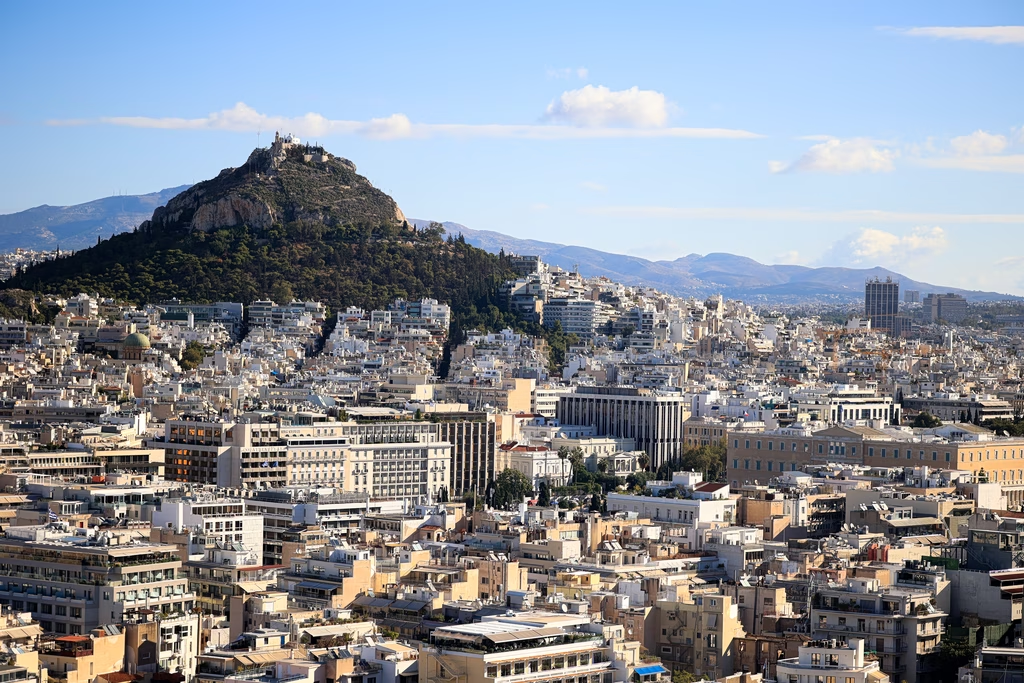
Only late in the afternoon of Tuesday, July 21 (7:30 pm), after strong union protests, did the Labor Ministry finally issue a new circular with emergency measures for Wednesday, July 22. As in previous cases, it orders a halt to work between 1 pm and 5 pm in Attica, Thessaly, the eastern Peloponnese, and eastern Central Greece, where extreme temperatures and high discomfort levels are forecast.
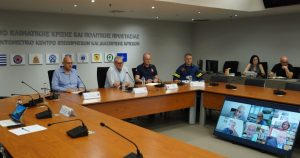
Dr. Andreas Stoimenidis, head of the Federation of Technical Workers’ Unions of Greece (OSETEE) and the GSEE’s health-and-safety secretary, said labor inspectors report that employers often ignore the circular, treating it as merely advisory; he said that in areas around Athens where small and mid-sized technical projects are underway, work at most sites doesn’t stop even during extreme heat.
Stoimenidis argues that issuing a circular at the last minute is a makeshift response to a serious health and safety issue, especially when other countries in the same climate zone have permanent legislation, a plan already exists in the minister’s office agreed by social partners and experts, and there is relevant EU-OSHA guidance — yet a circular remains a token gesture with no real legal force.
What the unions are demanding
GSEE’s health-and-safety committee wants the Labor Ministry to draw on the 2018 special working group’s findings and existing labor-employer agreements to push for clear, binding provisions, and says labor inspection planning should rest on firm legislation and ministerial decisions rather than circulars and announcements.
Workplace measures proposed
Recommended measures include plentiful cool drinking water at 10–15°C, building interventions to improve microclimate, adjusted schedules with breaks, and avoiding strenuous work during peak hours. Also proposed: reducing or halting work in heat-exposed areas between noon and 5 pm, shaded or air-conditioned rest areas, and hygiene rules where air conditioning is used.
Mandatory work stoppage
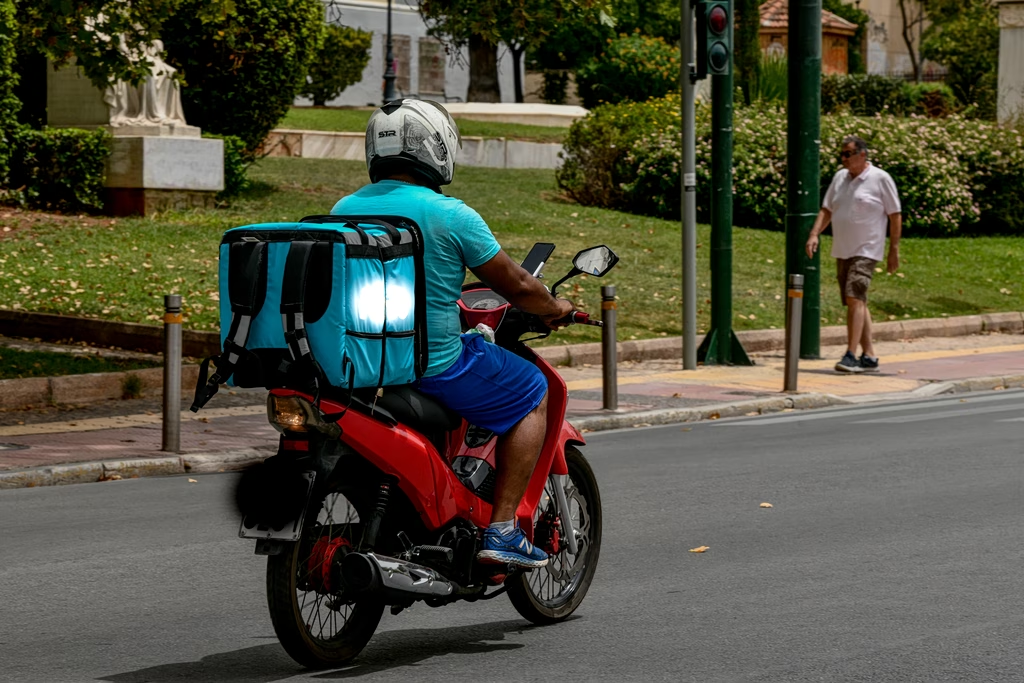
A halt to outdoor manual labor becomes mandatory between noon and 5 pm when temperatures exceed 40°C with at least 20% humidity, or 42°C with at least 14% humidity, or when the WBGT heat-stress index tops 32.2. Special provisions apply to construction sites, two-wheeled delivery workers regardless of contract type, shipyards (under a separate schedule), and mines and quarries.
Vulnerable groups
High-risk workers — those with heart or lung conditions, chronic illnesses, certain medications, pregnant workers, and those over 60 — can be offered remote work where the job allows, certified by a medical note or occupational doctor’s opinion.
Inspections and penalties
The Labor Inspectorate is responsible for intensive preventive checks, prioritizing outdoor sites, high-heat industrial activity, and manual labor. Violations carry a €2,000 fine per worker, and inspectors can order a temporary halt to production where there’s immediate danger to workers’ life or health.