 Μake us preferred on Google
“Souvlakia,” “magkout” and “mihanakia” (little machines). These are three code words that those involved in the “To Horiatiko” case used to communicate about drugs, cash and POS transactions without referring to them directly.
The special vocabulary decoded by police is one of the findings of the investigation, which is uncovering a network of many people centered on hundreds of companies and suspicious transactions.
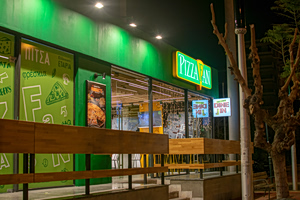
From nightclubs where foreign women were prostituted to a complex web of companies that succeeded one another, the case appears to reveal a network of activities with multiple connections and implications. Behind the bakery’s glossy front, an industrial-scale mechanism of tax evasion and money laundering was allegedly hidden.
The case began to unravel after a complaint reached the police on January 14, 2026, and the total financial fraud is estimated to exceed 100 million euros. Following the money trail, investigators uncovered business activity that extended across Attica, Rhodes and Mykonos, with a network of about 433 businesses. Dozens of them were food service establishments, with activities ranging from bakeries and cafés to café bars, entertainment venues and nightclubs with strip shows.
One of the main patterns emerging from the investigation is the successive replacement of companies that built up debts. When a business reached a dead end because of its debts, another company took over the activity at the same location, allowing the store to keep operating. Under scrutiny are debts from payroll taxes, VAT, income tax and social security contributions, as well as amounts related to repayable advances and lease fees for beaches and the foreshore in the Municipality of Rhodes.
The “Headquarters” On Kifisou Avenue And Dozens Of Straw Men
The “Central Office” of this huge business “machine” was not in a luxury office in central Athens. According to the investigation, the central operational and coordination headquarters of the criminal organization was housed in a building on Kifisou Avenue in Peristeri.
From there, the leader of the network, Angelos Giannakopoulos, appears to have pulled the strings. The structure was strictly hierarchical but also highly closed off. He was at the top, below him were the executives who set up the businesses, and at the base of the pyramid was an “army” of disposable straw men.
According to the investigation, the first step was to secure people who would formally appear as the owners of the businesses. They were allegedly paid monthly fees of about 1,000 euros. According to the same information, these were people with a low standard of living or health problems, while the list even included people who had died or did not actually exist.
Then, through accounting offices and, according to the case file, without the knowledge of these people, private capital companies (IKEs) were set up in their names, bank accounts were opened and businesses were created. Other members of the organization handled the actual operation of the stores and the management of their activities, in order to serve the interests of the alleged leader.
The POS Scheme
The core of the alleged activity was avoiding tax and other obligations to the state, with responsibility for the legal and civil consequences shifted onto the straw men, who formally appeared as the owners of the businesses.
At the same time, to hide and move money coming from illegal activity, the ring allegedly used bank accounts in foreign countries, including Iceland and Denmark. These accounts were linked to the stores’ POS terminals, through which sums of money were channeled. The money was then transferred to companies and falsely presented as income from abroad. According to the investigation, the money was used to buy properties and land, acquire vehicles and invest in financial products.
The Imaginative Code Names: The “Group,” The “Little Machines,” The “Souvlakia” And The “Magkout”
According to the case file, all members of the criminal organization used coded words and phrases in their communications when referring to places and facilities used by the organization, as well as to other stages of their activity:
- The entire set of company structures secretly managed by defendant Angelos Giannakopoulos was called the “Group.”
- The office space on the first floor of the building on Kifisou Avenue in Peristeri was called the “office” or the “central office.”
- A nightclub with strip shows on Syngrou Avenue was called “ALCA,” while an illegal gambling club operating in Nea Smyrni, also on Syngrou Avenue, was called the “club” or the “casino.”
- The areas where prostituted women performed sexual acts with clients inside each venue were called the “ROOM” or the “PRIVE.”
- The electronic devices that process debit cards, credit cards and digital wallets, known as POS terminals, were called “mihanaki” (little machine).
- Ready-to-sell doses of drugs, probably cocaine, were called “souvlakia.”
- Cash was called “magkout.”