 Μake us preferred on Google
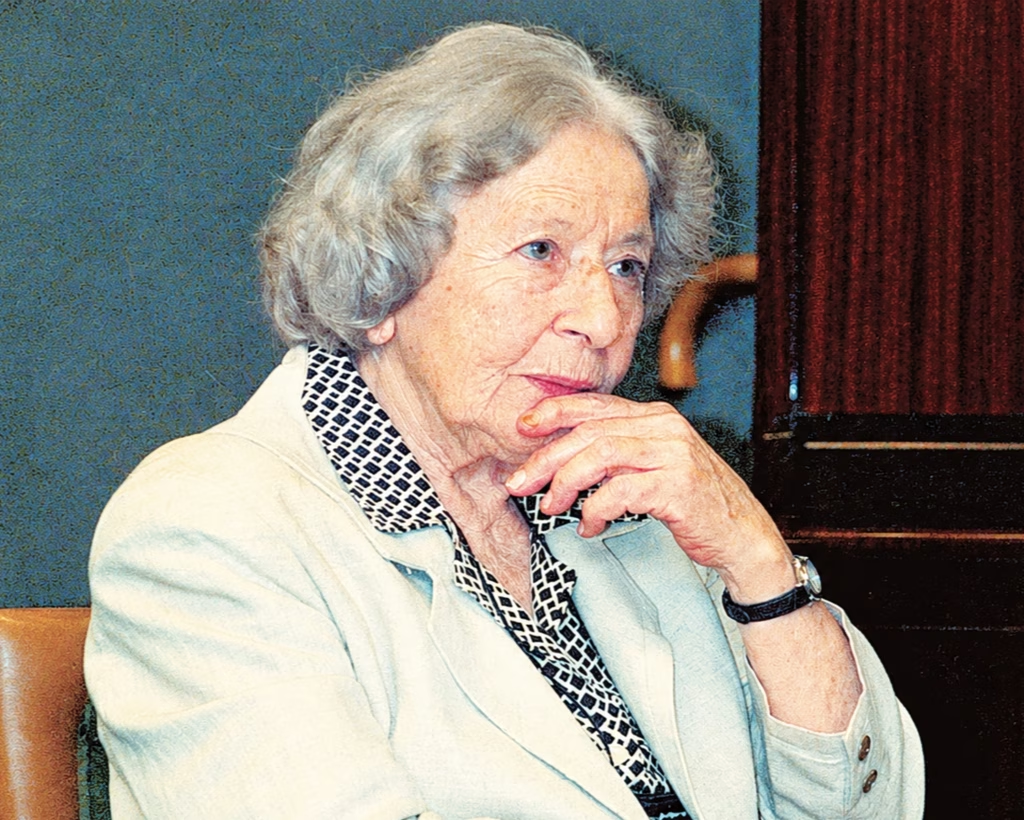
On October 27, 2009, Elli Pappa died at the age of 89. A fighter of the Left, a journalist and an author, her life was intertwined with the major political battles of the 20th century.
In 1952, she was sentenced to death along with Nikos Beloyannis for their illegal communist activity. At the time she was in prison, where she had already given birth to their son, Nikos. Her death sentence was never carried out. She lived another 57 years, recounting an entire era of imprisonment, loss and political conflict.
On October 28, 2009, the day after her death, ΤΟ ΒΗΜΑ published a report by L. Stavropoulos on her life, her relationship with Beloyannis and the sealed envelope she had left with instructions that it be opened after her death.
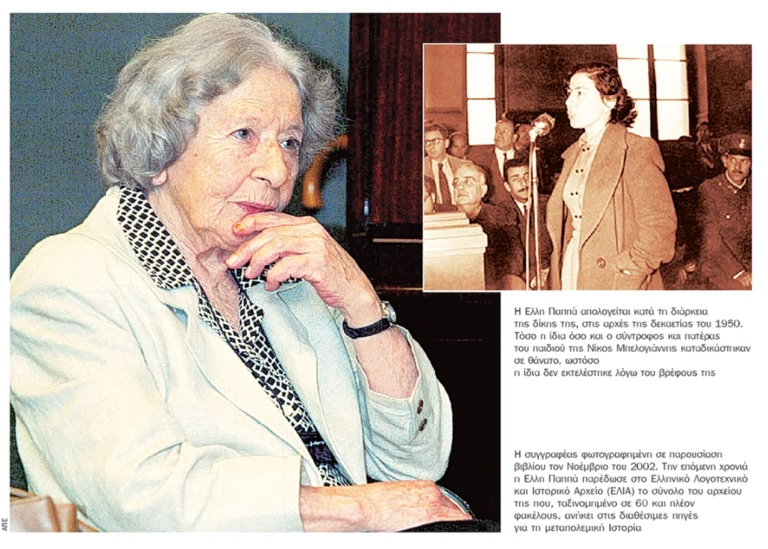
“TO BHMA,” 28 October 2009, Historical Archive of “TO BHMA” | “TA NEA”
From Smyrna to the Working-Class Neighborhoods of Piraeus
“Born in Smyrna in 1920, the daughter of Evangelos Pappas and Marianthi Papadopoulou, she was the youngest of five siblings: Iro, Despoina, Dido (the well-known author Dido Sotiriou) and Giorgos,” the report noted.
After the Asia Minor Catastrophe, the family settled in Piraeus. Looking back on her childhood, she described the hardships of refugee life:
“‘My first wet nurse was a goat, something I was very proud of when I found out as I grew older,’ she wrote in her autobiographical writings, as, she recounted, ‘my mother refused to nurse me.’ ‘I survived thanks to her older sister, who got a little goat for my sake,’ she wrote, while she considered her second wet nurse to be ‘the chestnuts of refugee life in winter and the grapes in summer.’
“‘The sea of Piraeus took charge of my health and the street kids of Piraeus took charge of my upbringing. Everything suggested that my proletarian consciousness was secured.’”
Her political awakening began in her school years. In her final year at the Piraeus Girls’ High School, she took part in distributing leaflets against the 4th of August dictatorship, and together with classmates she raised a red flag at a church in Kokkinia.
She went on to study at the School of Philosophy and the Law School, but was unable to finish because of the Occupation. She joined EAM and the Communist Party of Greece (KKE), was active in the Resistance and took part in the resistance press.
The Great Love and the Arrest
Meeting Nikos Beloyannis in 1950 marked one of the most decisive periods of her life.
Beloyannis had returned to Athens illegally in June of that year, tasked with rebuilding the KKE’s underground organizations.
Pappa herself summed up what followed:
“The euphoria of Liberation, the Dekemvriana, the defeat, the Civil War, the brutal persecutions, the efforts to rebuild the Left and Democracy, the first elections, the arrival of Beloyannis and of the great love. Our arrest, at Christmas 1950. The endless months in the dungeons of the Security Police, with our unborn child keeping us company. Giving birth in Averof Prison, the trials, our death sentences, the separation when the Plastiras government did not dare execute the mother of an infant.”
In December 1950, Pappa and Beloyannis were arrested four days apart. For seven and a half months, she was held in a dark cell at the Athens Security Police headquarters on Kapodistriou Street, measuring just one and a half by one and a half meters.
In an interview with TO BHMA, she recalled the conditions in which her partner was held:
“Nikos was locked up for ten months. His cell was bigger, 1.70 by 1.70 meters, I think. And it had light. A lamp that burned blindingly day and night.”
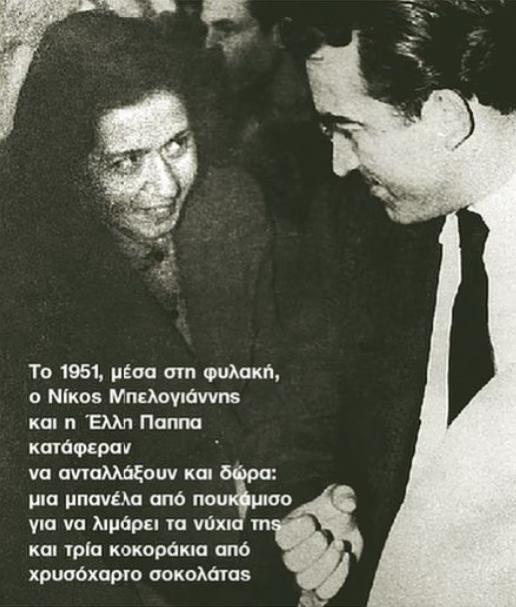
Caption reads: “In 1951, Nikos Belogiannis and Elli Pappa managed to exchange gifts: A shirt collar stay for filing her nails and three little roosters made from chocolate foil. Source: “TO BHMA,” 29 October 2009, Historical Archive of “TO BHMA” | “TA NEA”
In August 1951, their son Nikos was born in Averof Prison. Two months later, the first trial took place, with 91 other co-defendants. Among the members of the military court was Georgios Papadopoulos, who later became dictator.
The second trial followed in February 1952, leading to the death sentences.
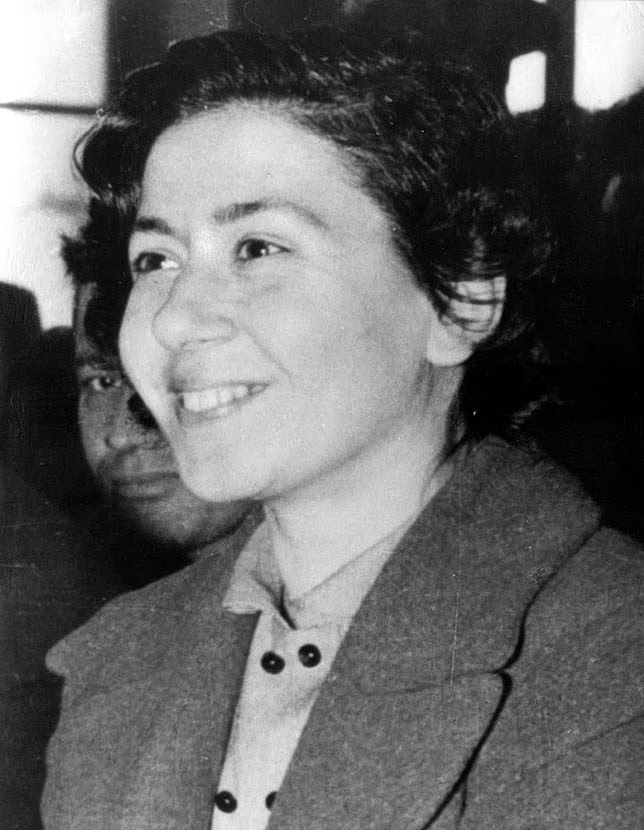
Elli Pappa during her second trial in 1952.
“Live for the Child and for Revenge”
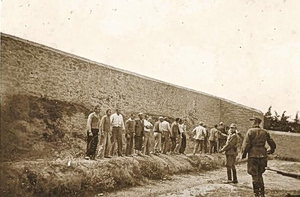
In the early hours of Sunday, March 30, 1952, Nikos Beloyannis was taken to the firing squad along with Dimitris Batsis, Nikos Kaloumenos and Ilias Argyriadis.
TO BHMA’s article reconstructed those dramatic moments:
“The execution took place in the early hours of Sunday, March 30, 1952. Not even the Germans executed people on Sundays. Her cell was not opened.”
She had described the moment she realized she would not follow her partner to execution:
“You’re not on the list,” the chief guard told her.
The government had decided not to carry out Pappa’s death sentence, taking into account that she was the mother of an infant only a few months old.
According to her testimony: “Beloyannis came up to the small window. He leaned his face close to hers. His expression was frozen. ‘Live,’ he told her, ‘for the child and for revenge.’”
He was executed at the age of 36. She survived and spent more than eleven more years in prison.
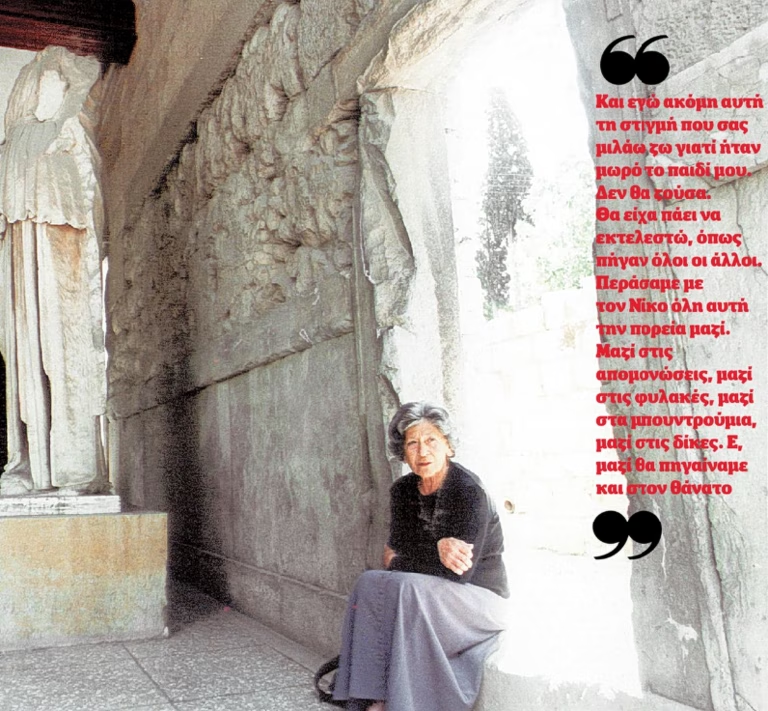
Quote reads: “The reason I’m talking to you right now is my child was still a baby. I would have been executed like the rest. I lived that whole journey together with Nikos. Together through isolations, through jails and dungeons, and trials. We would have faced death together as well”. “TO BHMA,” 1 November 2009, Historical Archive of “TO BHMA” | “TA NEA”
Release and the Break With the KKE
Elli Pappa was released on New Year’s Day 1964. She continued her political and journalistic work through EDA (United Democratic Left) and the newspaper Dimokratiki Allagi.
The persecution, however, was not over. When the dictatorship was imposed in 1967, she was arrested again and exiled to Gyaros. She was released from exile in July 1968 because of serious illness.
According to TO BHMA’s report, she turned down an offer to live in the Soviet Union because she opposed the Soviet invasion of Prague.
After the restoration of democracy, she rejoined the KKE, hoping for the reunification of the Left. That path, however, ended in new disappointment:
“The reunification began with good omens and had a miserable end. I left the KKE, which its leadership also wanted,” she wrote.
Years of writing and journalism followed. Her work includes political and philosophical essays, studies, autobiographical texts and children’s books.
She defined the goal of her writing as:
“My contribution to cleansing Marxist thought of the Stalinist distortions that dragged it into a renewal of Platonism.”
Elli Pappa’s Secret Will
Elli Pappa’s death on October 27, 2009, brought back into focus not only her personal story but also a secret she had chosen to reveal only after her death.
In 2003, she had handed over her personal archive, organized into more than 60 folders, to the Hellenic Literary and Historical Archive.
However, she had entrusted part of her personal and political testimony to the Benaki Museum on one specific condition: that it be opened after her death.
In its October 28, 2009, report, TO BHMA revealed:
“This is Elli Pappa’s political testament, in which, it is believed, she refers to the Beloyannis case, both to the circumstances of his arrest (mainly whether or not he was betrayed and by whom) and to the trials.”
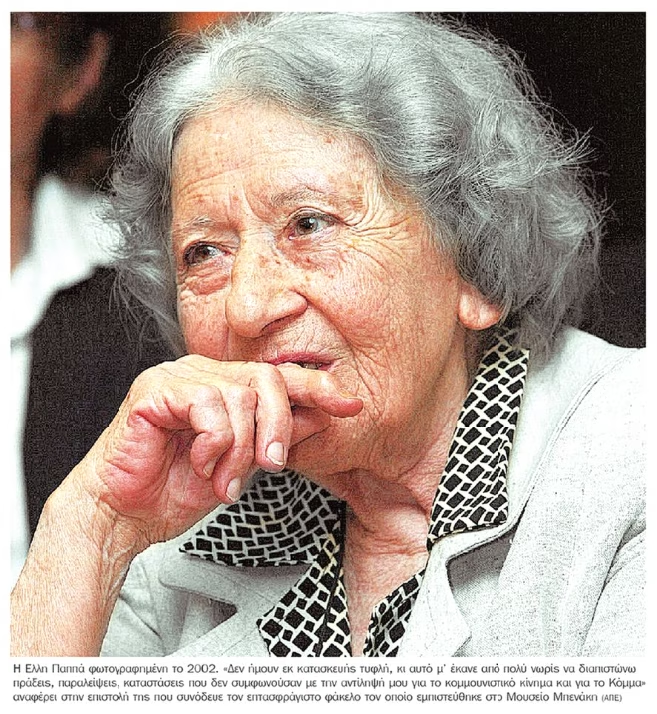
“TO VIMA,” 1 December 2009, Historical Archive of “TO VIMA” | “TA NEA”
What Her Political Testament Revealed
Elli Pappa’s political testament was published by the Benaki Museum in 2010 under the title “Testimonies of a Journey.” It included, among other things, her text “The Ploumpidis Affair,” autobiographical writings, letters and accounts of the political conflicts of the time.
Through her writings, Pappa sought to restore the memory of Nikos Ploumpidis, who had been branded a traitor by the KKE leadership of the time, despite his efforts to prevent Beloyannis’ execution.
She also challenged the choices of the party leadership under Nikos Zachariadis, offering her own view of the internal party conflicts and the circumstances that led to her partner’s execution.
Beyond her political testament, a different side of her life was captured in the “Miniatures,” the handmade books she created in prison for her son. Through stories, drawings and imagination, she tried to keep her bond with her child alive despite her long imprisonment.
A woman who escaped the firing squad and lived through imprisonment, exile, loss and political disillusionment left behind a personal testimony that shed light on events that marked the Greek Left and the country’s postwar history.