 Μake us preferred on Google
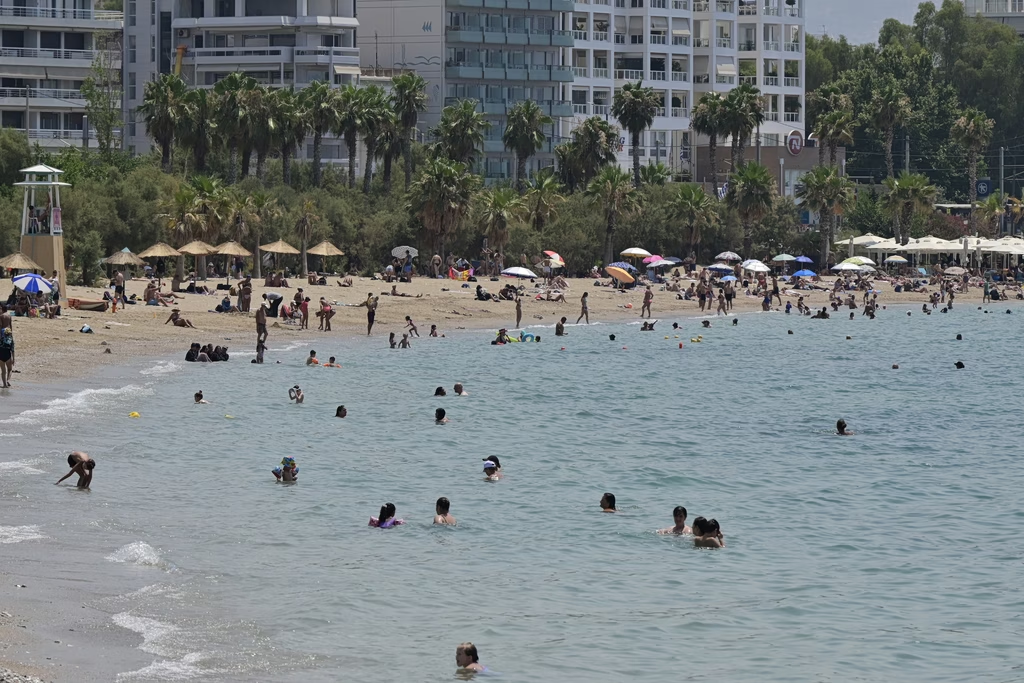
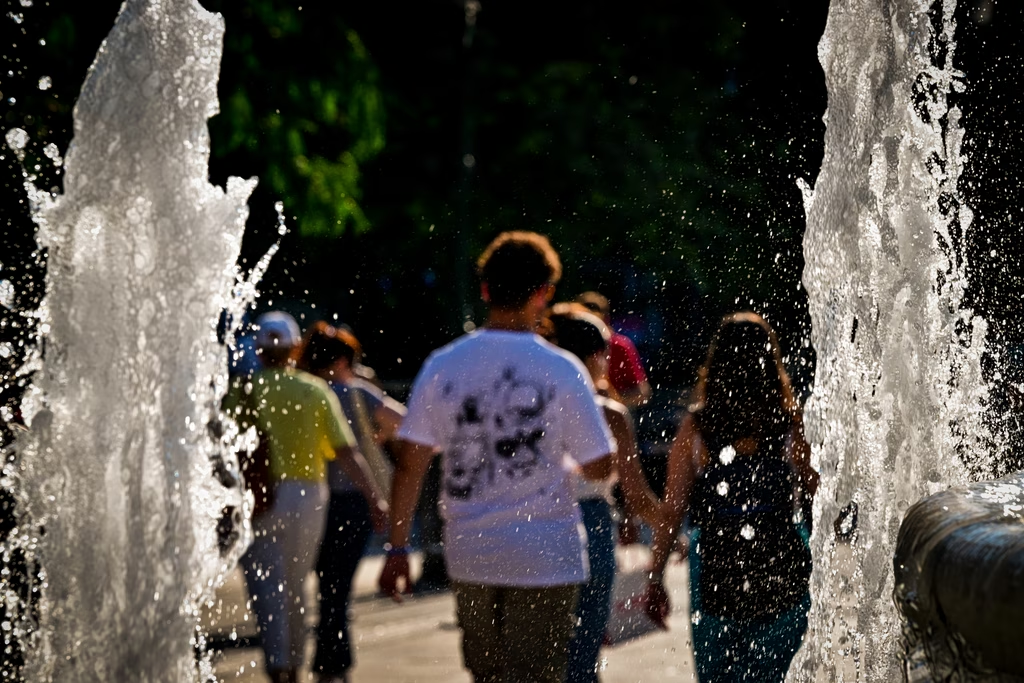
 Greece’s heatwave is reaching its peak, placing millions under intense heat stress as the hottest day of the weather event tests residents’ endurance. The combination of soaring temperatures, little wind, and densely built urban areas has made conditions particularly oppressive in the country’s largest cities.
In the Attica region, concrete and asphalt are acting as powerful heat reservoirs, driving surface temperatures to extreme levels. Thermal camera readings showed the asphalt on Athens’ Kifisos Avenue exceeding 60°C, while rooftop surfaces and parked vehicles reached temperatures of up to 75°C.
In central Athens, the Evzones—the ceremonial guards of Greece’s Presidential Guard—have remained at their posts despite the extreme conditions, receiving water and regular care from the officer on duty. Meanwhile, Thessaly, and especially the city of Larissa, continues to record the highest air temperatures on the Greek mainland.
By contrast, parts of northern Greece experienced abrupt weather changes. Areas including Drama, Kilkis, and Kavala were hit by sudden squalls, severe thunderstorms, and strong winds, causing temporary disruptions to daily life.
Meteorologists’ Forecasts
As the heatwave continues, meteorologists are closely watching competing forecast models to determine just how high temperatures will climb. According to meteorologist Theodoris Kolydas, the latest forecast runs point to a slight shift toward more moderate projections.
Germany’s ICON-EU model has slightly lowered its forecast maximum temperature from 43.6°C to 43.3°C, while still indicating localized spikes above 43°C. Meanwhile, the European Centre for Medium-Range Weather Forecasts (ECMWF) model remains unchanged, forecasting highs of up to 40.8°C—roughly 2.5°C lower than the German model.
Kolydas said the key question is no longer whether Greece will experience extreme heat—which is considered certain—but which forecasting model will more accurately reflect actual conditions. Final temperatures will depend on local factors, including downslope winds, the dryness of the air mass, and the terrain of lowland areas.
Mandatory Work Stoppage From 1 p.m. to 5 p.m. Wednesday
The heatwave has prompted emergency measures to protect private-sector workers, according to an announcement by Greece’s Ministry of Labor and Social Security. Authorities said the goal is to safeguard public health and worker safety during the period of extreme temperatures.
On Wednesday, July 22, 2026, all outdoor work must stop between 1:00 p.m. and 5:00 p.m. in areas expected to experience exceptionally high temperatures. Authorities said the measure will be strictly enforced.
A circular signed by Labor Relations Secretary General Nikos Milapidis requires employers to implement all necessary technical and organizational measures to protect workers from heat stress, with the aim of preventing accidents and cases of heatstroke.
The mandatory suspension applies to eastern Central Greece, Thessaly, the eastern Peloponnese, and all of Attica. During the four-hour period, outdoor manual labor is prohibited at construction sites, engineering projects, and ship repair facilities, as well as for the delivery and transport of goods using motorcycles, scooters, bicycles, or roller skates.
The measure applies to all workers regardless of their employment status, including those working through digital platforms.
Exemptions
Activities related to critical public infrastructure are exempt from the mandatory work stoppage. These include healthcare services, water supply, electricity services, air transport and ground handling, as well as maritime, road, and rail transportation.
These sectors may continue operating provided employers implement the necessary protective measures and appropriately organize working hours to ensure employee safety.
Fines and Special Provisions
Companies that violate the mandatory work suspension face fines of €2,000 per employee, which may be imposed by Greece’s Labor Inspectorate.
In addition, businesses are required to offer remote work to employees considered at high risk from extreme heat whenever their duties can be performed remotely.
To allow employers greater flexibility in adjusting work schedules, businesses operating in areas covered by the emergency measures will not be required to submit advance notification of changes to employees’ working hours through Greece’s ERGANI employment information system.
Special Rules for Delivery Services
The work suspension also applies to delivery businesses, including both physical stores and digital delivery platforms.
However, businesses may continue accepting customer orders for pickup and may carry out deliveries using air-conditioned vehicles. Deliveries by motorcycles and mopeds are not permitted during the restricted hours.
Authorities emphasized that protecting workers remains the top priority and urged employers to strictly comply with the emergency measures throughout the heatwave.
Wildfire Alert
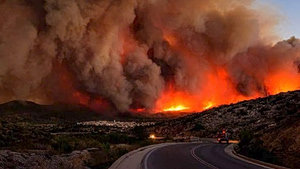
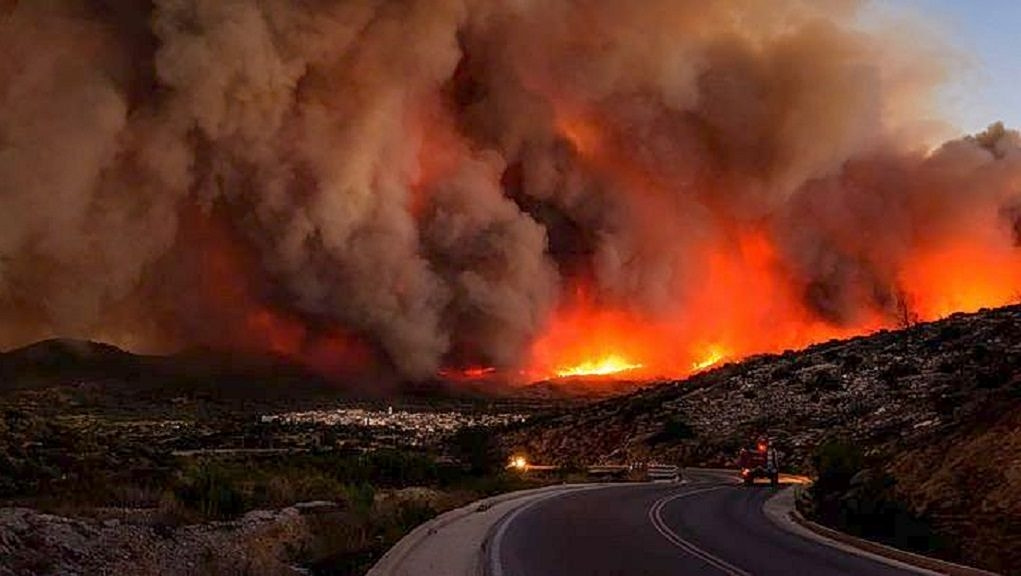
Beyond the extreme heat, authorities remain on red alert over the risk of wildfires.
Greece’s Civil Protection agency has warned that the combination of prolonged drought and locally strengthened winds is creating particularly dangerous fire weather conditions, significantly increasing the risk of wildfires igniting and spreading.
The heatwave is expected to begin easing on Thursday, when temperatures are forecast to gradually decline