 Μake us preferred on Google
“If Europe wants to avoid war, Europe must get ready for war”. This was the message that the European Commission’s President, Ursula von der Leyen, sought to make clear in her speech at the Royal Danish Military Academy in March 2025. A few days before this speech, the European Commission had presented the ReArm Europe Plan/Readiness 2030, proposing to mobilize over €800 billion in defense spending, signaling Europe’s entry into a new era of rearmament.
However, the EU’s plans for defense do not rely solely on military and economic resources, but also on public support for these policies. Hence, a key question that needs to be answered is how willing are European societies to follow this path in a period of economic uncertainty and how ready is the European Union to rearm amid increasing geopolitical instability.
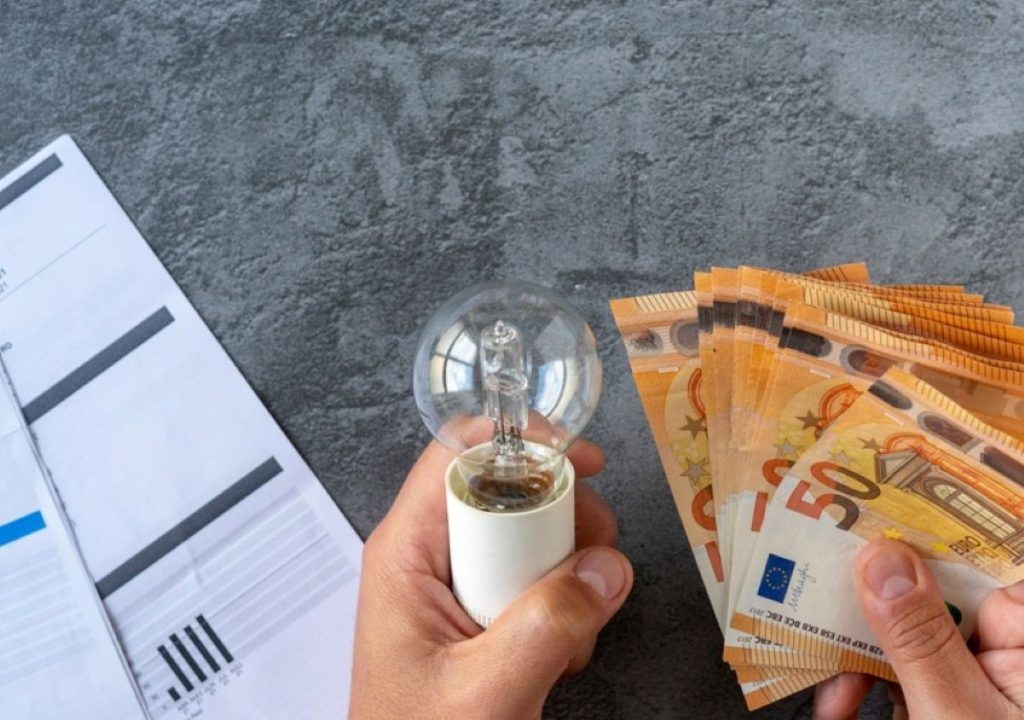
The latest demonstrations across numerous European countries over rising living costs, energy prices, the housing crisis and other economic pressures depict the social unrest many EU governments are facing. At the same time, growing discontent over the handling of migration has caused further distrust in established political parties’ policies and has led to the rise of radical political forces. These pressures are reflected in recent election results, including the AfD’s victories in Saxony-Anhalt and Mecklenburg-Western Pomerania, Die Linke’s success in Berlin, and the polling trends ahead of France’s presidential elections, that show increased public support to Marine Le Pen and Jean-Luc Mélenchon.
Geopolitically, the situation is no less complicated, with the EU finding itself, more or less, at odds with the U.S., China, and Russia. Following Russia’s full-scale invasion of Ukraine in 2022, the EU has aimed to reduce its dependence on Russian energy and has decided, among other, to phase out Russian LNG and pipeline gas imports by the end of 2026 and autumn 2027 respectively. To replace Russian gas imports, the EU has turned, to some extent, towards more expensive American LNG, which has helped diversify European energy suppliers but has also created concerns about the risk of replacing one external dependency with another. Furthermore, the energy pressures that the EU is facing have been augmented by hostilities in the Middle East.
Regarding transatlantic relations, increased EU dependence on American energy would appear as a sensible decision, considering the traditionally close EU-U.S. relationship in trade and defense. Nonetheless, under current conditions, this relationship has become uncertain. Since the beginning of the second Trump administration, the U.S. has repeatedly threatened the EU with tariffs, even after the bilateral trade agreement, reached in July 2025. Additionally, Trump has successfully pressed his fellow European allies in NATO to agree to an increase in their defense spending while—paradoxically—at the same time threatening to annex Greenland, generating a rift in Euro-Atlantic relations. Meanwhile, reduced U.S. aid to Ukraine under Trump has placed a greater burden of the support to Kyiv onto European governments, further stretching their financial and military resources.
Concerning EU relations with China, it has become obvious that the bloc’s goods trade deficit of around €1 billion a day has become difficult to sustain. Currently, the EU has intensified its diplomatic efforts to address this issue, but any substantial rebalancing of trade could have economic consequences for European industries and consumers, particularly in the short and medium term. China also has leverage over the EU through trade of critical raw materials. According to Eurostat, China accounted for 46.8% of EU’s rare-earth imports in 2025, while Russia was the second largest supplier. This dependence is very significant considering the EU’s ambition to expand its defense-industrial capabilities, which require access to critical materials, components, and technologies.
Despite the internal and external instability the EU is facing, European leaders continue to pursue rearmament. As the European Parliamentary Research Service has noted in its briefing on the ReArm Europe Plan/Readiness 2030, it was Russia’s invasion of Ukraine in 2022 that accelerated and made urgent the debates on how to finance the EU’s defense industry. Undoubtedly, the invasion heightened the EU’s security concerns and reinforced the need to strengthen its defense mechanisms. However, the economic and political costs of achieving these objectives must not be disregarded.
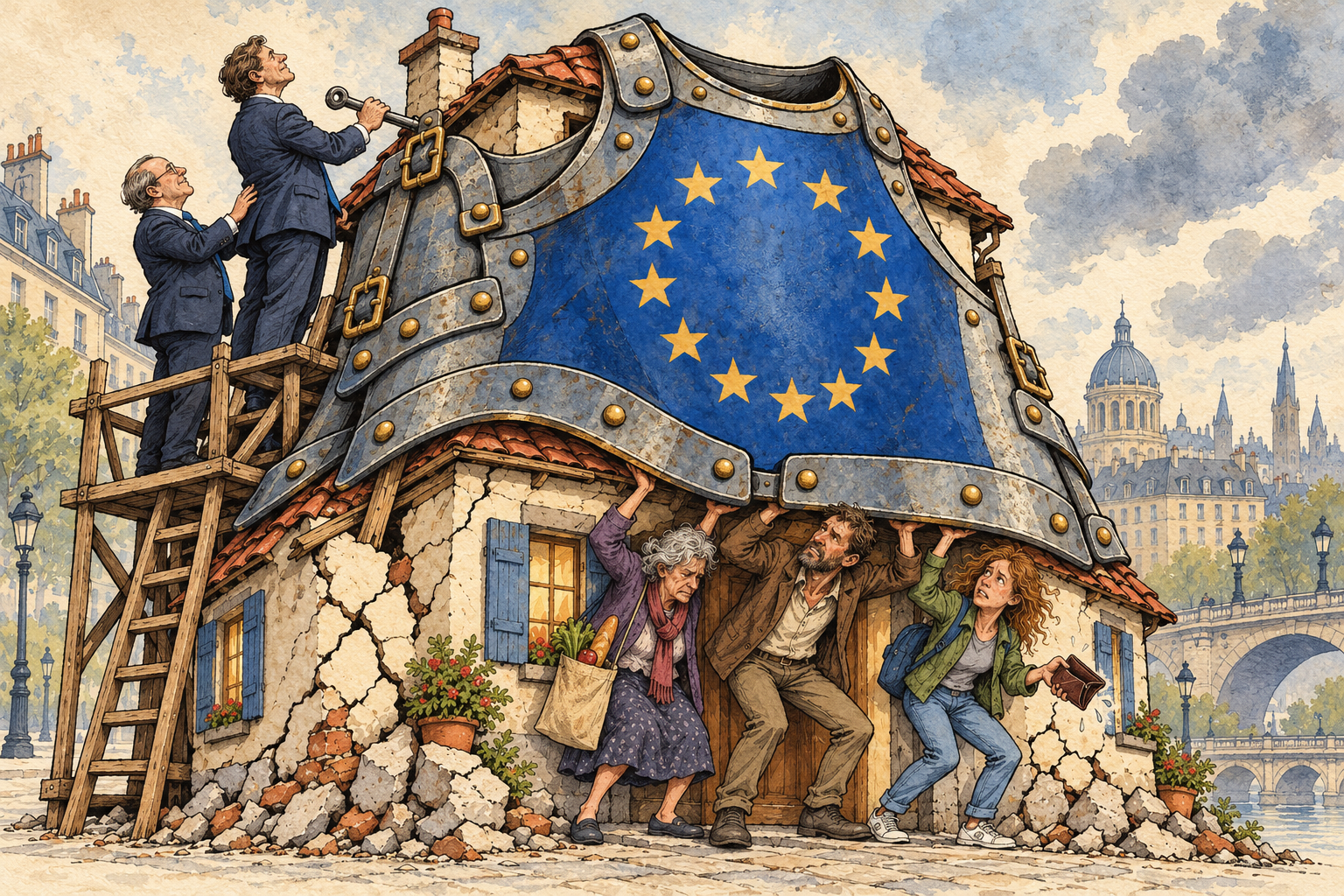
The rise of anti-establishment and radical parties across Europe, as well as growing discontent over the rising costs of living and energy prices, show that rearmament is not among European societies’ top priorities. More importantly, the EU’s rhetoric to justify its rearmament plans have presented a void regarding the scale of the Russian threat. On the one hand, Russia is portrayed as an existential threat to European security, thus making rearmament urgent. On the other hand, according to EU officials, Russia has not achieved its military objectives in Ukraine. Therefore, the reasons why Russia poses a potential existential threat to the EU, despite its inability to achieve significant military results in Ukraine, have not been explicitly demonstrated.
As the war in Ukraine approaches its fifth anniversary, Russia controls around 20% of Ukraine’s territory, including Crimea and areas occupied before the full-scale invasion. Meanwhile, the EU has been providing Kyiv with substantial military and financial support while seeking ways to reduce its economic relations with Russia. These policies, nevertheless, have had significant costs for European societies.
As things stand, an end to the war in Ukraine remains uncertain. Moreover, the growing economic pressure that European households and industries are facing may further weaken public confidence in traditional political forces’ policies and increase the popularity of radical political parties. Some of these parties advocate closer relations with Russia or oppose further assistance to Ukraine.
The aforementioned developments illustrate that the EU is currently at a crossroads. As anti-systemic voices gain ground and geopolitical tensions continue to intensify, European leaders must decide between a reassessment of their strategic objectives to ensure that achieving them does not come at the expense of living standards and doubling down on the current trajectory. Whether European societies continue to support present policies will depend on their leaders’ ability to recognize the limits of their ambitions before growing public discontent leads to radical changes in the political establishment.
Athanasios Aivaliotis, is an Executive Board Member of the Association for International and European Affairs, and a postgraduate student at NKUA.