 Μake us preferred on Google
 New evidence in the investigation into the death of beloved Greek singer Giorgos Mazonakis is raising questions about what health authorities knew about the equipment being used at the Athens clinic where he was treated and whether warning signs were followed up soon enough.
The Athens Medical Association, (ISA), was informed in July 2024 that the Kolonaki practice had acquired a machine from Switzerland, according to information presented Tuesday by journalist Vassilis Lambropoulos on radio station Mega News 104.6.
The clinic described the device as equipment used for ozone therapy. But an ISA employee who looked into the Swiss supplier found that the company manufactured only plasmapheresis machines, according to the same report. That finding prompted a recommendation for further checks on the company, the clinic and the equipment itself. The inspection, however, did not take place at the time and was said to have been postponed until late September because of the summer period.
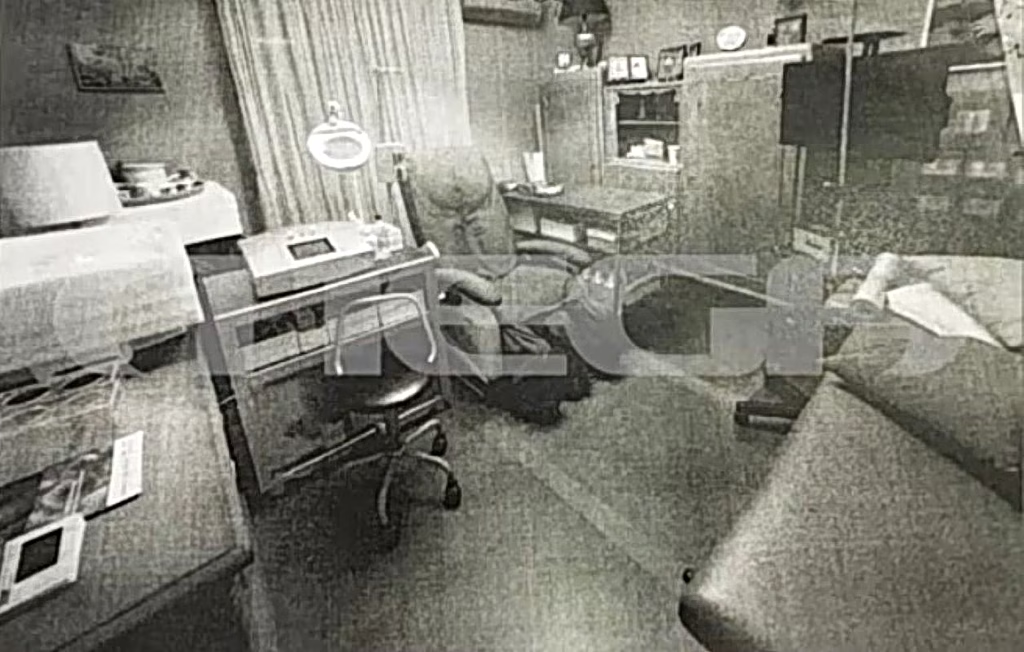
The disclosure has taken on added significance since Mazonakis’ death. ISA has since confirmed that inspectors found two plasmapheresis machines at the clinic during an inspection carried out as part of the investigation. ISA said the two medical practices operating at the premises, a pathology practice and a general medical practice without a registered specialty, were not authorized to perform plasmapheresis.
The findings do not, on their own, establish that the procedure caused Mazonakis’ death. The circumstances in which it was performed, and the medical decisions made before and after his condition deteriorated, are now part of the judicial investigation.
Earlier checks come under scrutiny
Questions are also being raised over inspections carried out before Mazonakis’ death. According to Lambropoulos, a separate complaint was made in 2025 alleging that a plasmapheresis machine was being kept at the clinic. Three inspections were subsequently carried out, he said.
The equipment was not found during the first two visits. On the third, inspectors arrived during the clinic’s operating hours but found the premises closed. ISA has confirmed that the practice was inspected repeatedly in 2024 and 2025 and that its inspectors did not find plasmapheresis equipment during those visits.
The association’s account, together with the reported July 2024 correspondence over the Swiss machine, is now likely to intensify scrutiny of whether the available information should have prompted a more extensive investigation at the time.
Pressure builds over health oversight
The case has also reopened a broader debate over the regulation of private medical practices offering specialized or unconventional treatments. Health Minister Adonis Georgiadis said Tuesday that the state bore responsibility in the sense that the system had failed to identify what he described as fraudulent operators.
He said ISA doctors had gone to inspect the clinic three times but had been unable to establish what was happening there. Referring to information about how the clinic responded to inspections, Georgiadis said the doctor would move the machine out of sight when inspectors arrived. He also questioned whether the current system provides sufficiently specialized oversight.
Greece’s former Health and Welfare Services Inspectorate, a dedicated health-sector inspection body, was abolished in 2019 and absorbed into the National Transparency Authority. Georgiadis said during the same TV appearence that he would not oppose bringing back a specialist health inspection body, saying the issue would be reviewed.
Doctors appear before investigating judge
On the judicial front, the two doctors who run the clinic appeared before an investigating judge shortly before 1 p.m. Tuesday, after the charge against them was upgraded to homicide with possible intent. The proceedings before Greece’s 32nd regular investigating judge are expected to last several hours. The defendants were due to submit written statements setting out their positions before appearing in front of the judge.
If convicted, the doctors could face life imprisonment. They also face the possibility of being held in pretrial detention.
Investigators are examining the sequence of events inside the clinic, including machine data indicating repeated alarms, the timing of attempts to restart the procedure and the delay before emergency services were called.