Dense fog covered the Cyclades islands on Wednesday, creating a rare and striking scene as the sea appeared to disappear beneath a thick layer of mist.
Videos posted on social media showed the unusual phenomenon spreading across the sea, prompting many observers to identify it as “sea smoke.”
Meteorologist Theodoros Kolydas, however, offered a different explanation, saying the weather conditions in the Cyclades did not allow sea smoke to form.
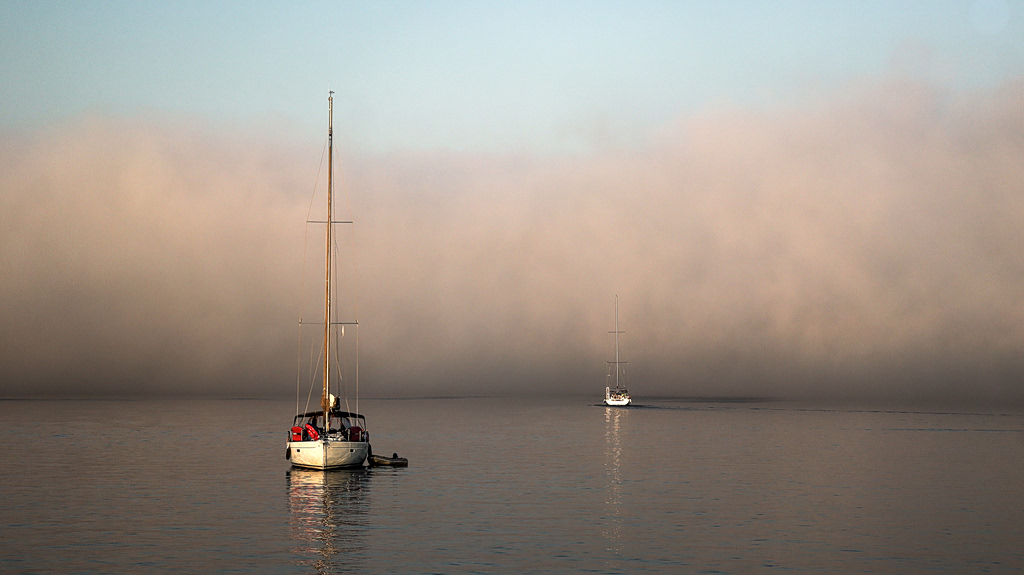
KIMOLOS – DENSE FOG COVERED THE CYCLADES, PARTICULARLY THE ISLAND OF KIMOLOS, DUE TO THE SEA SMOKE PHENOMENON (THODORIS KARAGIANNIS/EUROKINISSI)
Why it was not sea smoke
In a post explaining the phenomenon, Kolydas said the fog did not meet the conditions required for sea smoke.
“It’s not ‘sea smoke,’ as reported in several posts,” Kolydas wrote. Sea smoke forms when cold air moves over significantly warmer water.
The conditions in the Cyclades were essentially the opposite, he explained. Very humid and, in some areas, warmer air moved over relatively cool seawater with temperatures of 23-24°C.
The slight additional cooling was enough to bring the air to its dew point, causing condensation and the formation of what is known as advection sea fog.
The result was the dense layer of fog that covered the sea around the Cyclades and produced the unusual images shared online.