 Μake us preferred on Google
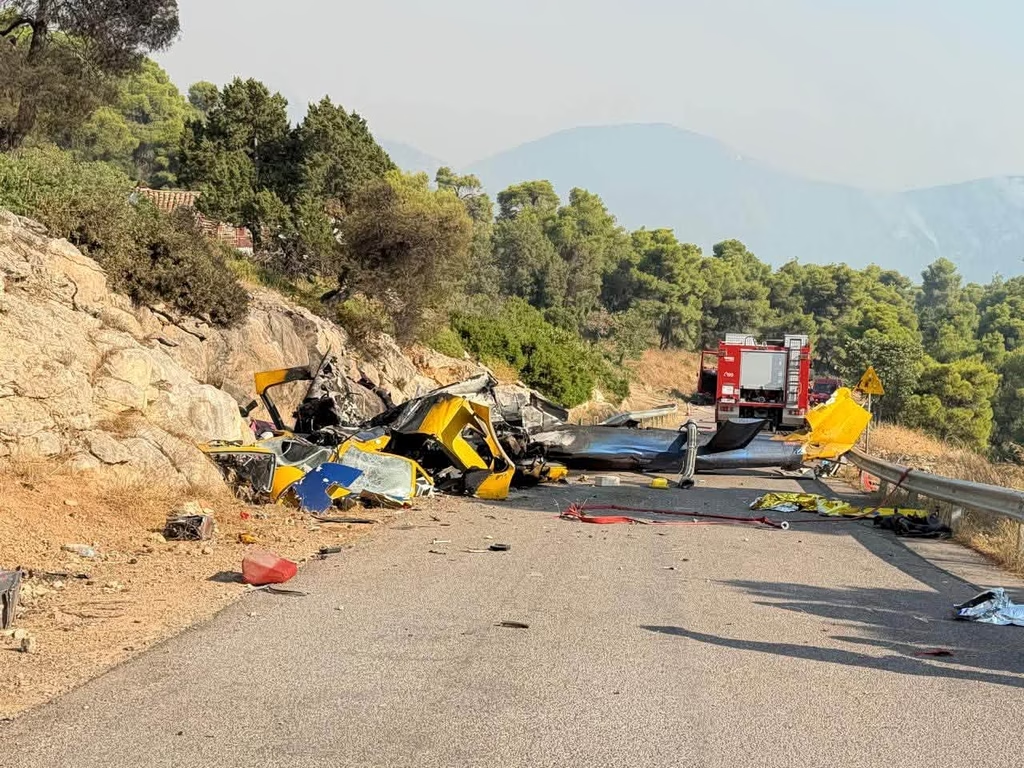
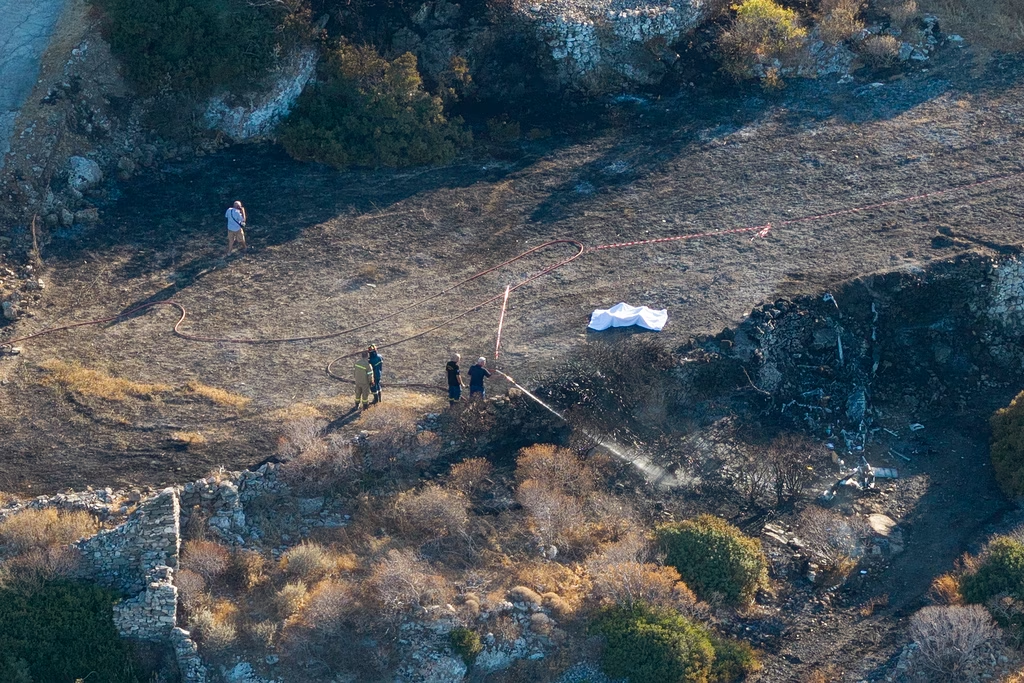
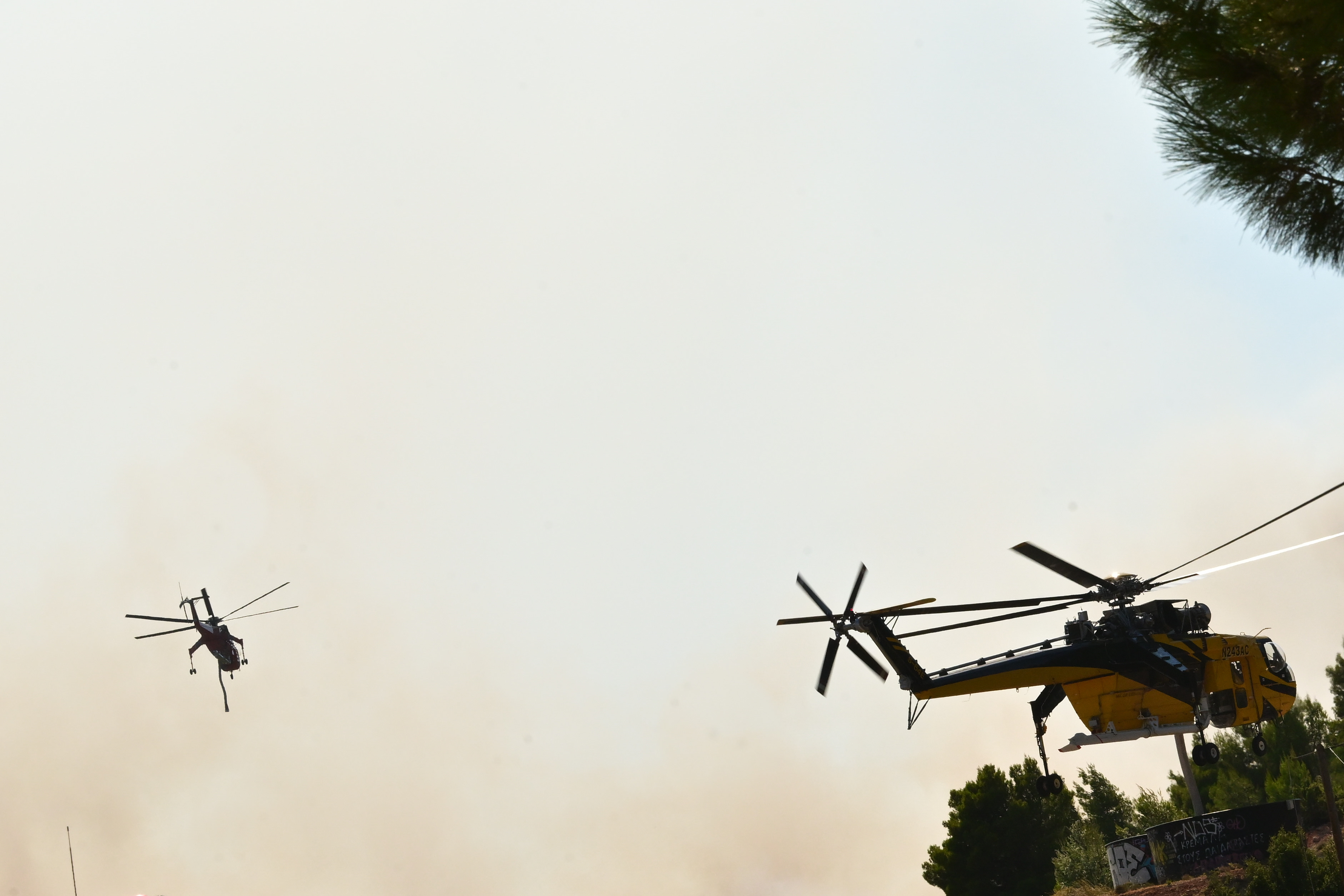
 New details are emerging about the Aug. 2 accident in which two helicopters collided near Psatha, during a firefighting operation against a major blaze that had affected areas stretching from Boeotia to western Attica.
According to information from the preliminary investigation, authorities have so far taken at least 15 statements from officials, firefighters and local residents.
The witnesses include the British pilot of one of the helicopters and the Greek interpreter aboard the same aircraft, which managed to land safely after the collision.
Crews say they did not see the other helicopter
In their statements, the British pilot and Greek interpreter said they did not have visual contact with the helicopter they collided with.
They said that at the moment of impact, they believed they may have struck power lines. They also said they were following another helicopter and operating as part of a formation.
Their instructions were to make their water drop after the helicopter flying ahead had completed its own drop.
According to the information being examined by authorities, the survivors said they did not know a third helicopter was participating in the operation.
Another source said the crew heard the crew of a third helicopter announce over the radio that it was approaching. It has not been established exactly when that communication took place or when the survivors became aware of the third helicopter.
The crucial 15 minutes before the collision
Investigators are focusing particular attention on the approximately 15-minute period before the collision.
During that time, the ground coordinator, a senior Fire Service officer, had to leave the coordination process because the fire had flared up again on the ground.
Coordination was then transferred to an airborne coordinator who was aboard a helicopter. However, according to the information being examined, the airborne coordinator was not in the Psatha area either, but several kilometers away in the Fyli area.
Investigators are examining whether this affected the understanding at the time of the movements and positions of the helicopters operating in the area.
Radio communications under scrutiny
Authorities are also examining audio recordings and recorded communications between officials and helicopter crews.
The aim is to establish exactly what was said before the collision, what instructions were given, whether warnings were issued about the presence of other helicopters, and whether there was any lapse in communication or coordination between the aircraft.
Meanwhile, the helicopter wreckage is expected to be transferred to Tatoi, where it will be examined by experts and technical investigators.
The coordinators are expected to give their statements last, once the remaining evidence has been collected.