
 Μake us preferred on Google
 A pioneering procedure to treat severe mitral valve regurgitation has been successfully performed for the first time at a public hospital in Thessaloniki, Greece, on a 79-year-old patient for whom conventional open-heart surgery was considered extremely high-risk.
The transcatheter mitral valve repair was carried out at AHEPA University Hospital in collaboration with the 1st Department of Cardiology of Aristotle University of Thessaloniki and the Cardiology Department of Papageorgiou General Hospital.
The patient had severe mitral valve regurgitation as well as heart and kidney failure, atrial fibrillation and diabetes. He also had an implantable defibrillator.
His condition had deteriorated significantly in recent months, with shortness of breath, easy fatigue and frequent hospitalizations at the First Cardiology Clinic. According to the hospital, his life was at immediate risk.
Why open-heart surgery was ruled out
Because of the patient’s serious health problems, the heart teams at AHEPA and Papageorgiou, which included cardiologists, cardiac surgeons and anesthesiologists, determined that open-heart surgery would carry an extremely high risk.
The teams therefore decided to attempt a percutaneous repair of the mitral valve as the treatment option posing the lowest possible risk to his life.
Following the procedure, the 79-year-old experienced a clear improvement in his symptoms. He was discharged from the hospital and is now undergoing regular cardiological follow-up.
How the procedure works
Transcatheter mitral valve repair is a minimally invasive technique that has been used internationally in recent years for patients who cannot undergo conventional heart surgery because of serious health problems.
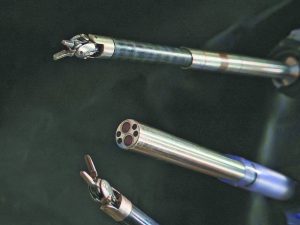
During the procedure, a specialized device is guided into the heart through a vein in the lower limbs and brings together the leaflets of the diseased valve, without requiring the chest to be opened.
The technique can provide a treatment option for patients who in the past might have been considered inoperable, with the goal of improving their symptoms and quality of life.
The 1st Department of Cardiology of Aristotle University of Thessaloniki and the Cardiology Department of Papageorgiou General Hospital were recently recognized as Greece’s first joint center for the nonsurgical implantation of devices to correct intracardiac defects and received authorization to perform these procedures.