 Μake us preferred on Google
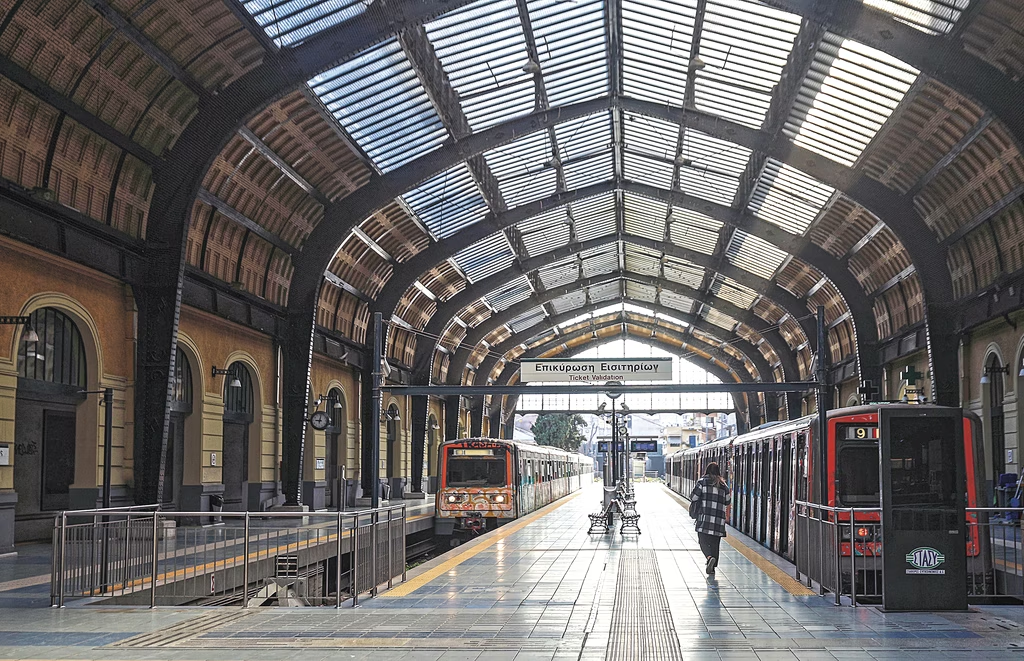
 For more than two decades, putting Metro Line 1 (formerly ISAP) underground on the Neo Faliro to Piraeus stretch was presented as one of the most important projects that would change the face of the city. Today, however, everything suggests the plan is being shelved for good, as operator Statheres Synkoinonies (STASY) and the Ministry of Infrastructure and Transport are leaning toward the easier and cheaper option of renovating and modernizing the existing line.
The undergrounding idea took shape shortly before the 2004 Olympic Games and called for sinking the tracks from Neo Faliro to just before the Piraeus station, along with building a new underground stop near the former Kerani factory site, to serve residents of Kaminia and the surrounding neighborhoods.
In fact, this plan was the very reason the stretch was left out of the general reconstruction of Line 1 carried out between 2009 and 2011. So while the rest of the network got new track beds and higher train speeds, the Faliro to Piraeus section kept its old infrastructure, which still forces trains to run at low speeds for safety reasons to this day.
The plans were derailed during the financial crisis. The studies became outdated, contracts with the planners were terminated, and STASY argued at the time that the project was not viable, since, among other things, it would require shutting down the line entirely for about two years.
Despite periodic efforts to revive the undergrounding plan, mainly from the Municipality of Piraeus and the Piraeus Chamber of Commerce, the necessary funding was never secured, not even for the studies.
Today, the picture appears to be shifting for good. STASY has already moved ahead with studies and is preparing tender documents for renovating the infrastructure, track bed, signaling, power supply, and telecommunications systems along the roughly 2.5 kilometer stretch between Faliro and Piraeus.
The project is estimated to cost around 20 million euros, compared with the roughly 100 million euros originally projected for undergrounding.
Difficulties and Pushback
On the undergrounding option, STASY has also flagged additional technical hurdles, including the possible discovery of antiquities, which could lead to major delays and further drive up costs. By contrast, officials argue that modernizing the existing line could be completed faster and at a clearly lower cost.
That choice, however, is drawing strong pushback in Piraeus. City authorities still view undergrounding as a project that would knit the city together and meaningfully ease traffic congestion around the country’s largest port, which serves 18 million passengers a year. Mayor Yannis Moralis has raised the issue repeatedly, though without securing any concrete commitment so far.
In fact, just a few days ago the mayor of Piraeus sent a letter to the Prime Minister, asking the government to take the initiative and push forward the undergrounding of STASY’s Line 1. In the letter, he notes that the project is already at an advanced stage, since the required studies have been completed and approved, and the approved environmental terms remain valid until 2027.
In addition, the relevant departments at the Ministry of Culture have already issued favorable opinions in the past, incorporating protections for antiquities and cultural heritage. Speaking to TA NEA, Mr. Moralis stressed that undergrounding the rail line is a project of regional and national importance.
“It’s not just about Piraeus, but about the operation of the country’s largest port and of transport at a national level as a whole.
That’s why I sent a letter to the Prime Minister, asking that the project’s advancement be examined, since this is a mature, long-standing demand from the city, one whose completion would bring major benefits for Piraeus, Attica, and the country.
Piraeus keeps growing and is a key pillar of the country’s economy and development. To meet its strategic role, it needs modern infrastructure that can keep up with the growing needs of residents, visitors, and businesses. This is an extremely important cause, and we will keep pushing for it with consistency and persistence.”