 Μake us preferred on Google
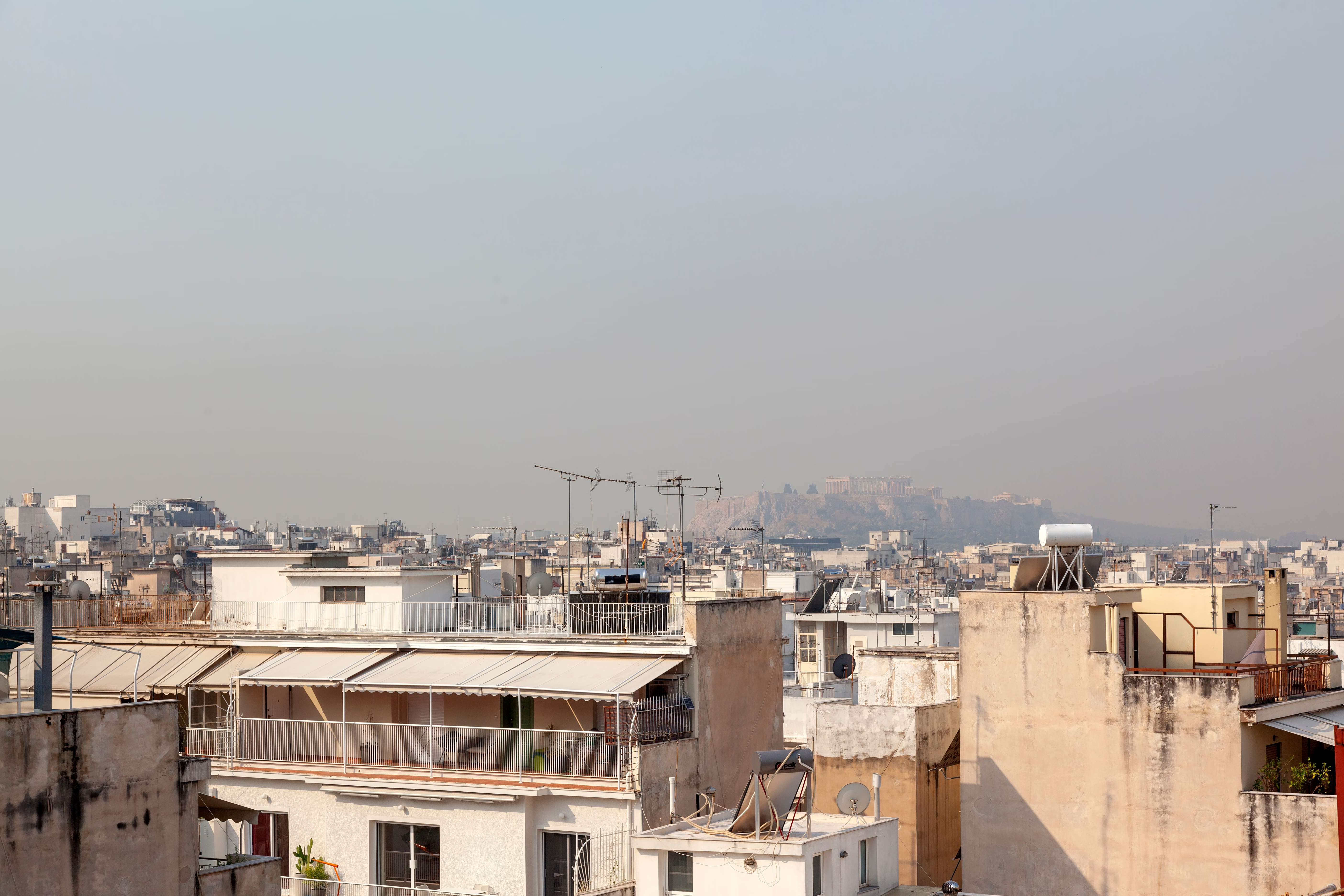
Six Greek cities rank among the worst-performing 10% of 761 European cities for estimated mortality risk associated with long-term exposure to air pollution, according to a recent assessment by the European Environment Agency (EEA). Eight other Greek cities also rank poorly, placing all 14 Greek cities included in the study among the bottom 30% of the European ranking.
The assessment examines exposure to three major air pollutants — fine particulate matter (PM2.5), nitrogen dioxide and ozone — during 2024 and 2025. The six Greek cities in the bottom 10% are Ioannina, Athens, Thessaloniki, Larissa, Trikala and Patras.
The findings indicate that Greece’s air pollution problem extends beyond its largest urban centers to smaller cities, where limited interventions and local geographical conditions can contribute to poor air quality.
Ioannina ranks near the bottom of the European list
Among the 761 cities assessed, Ioannina ranked 754th, followed by Athens at 745th, Thessaloniki at 729th, Larissa at 726th, Trikala at 697th and Patras at 696th.
The other Greek cities included in the assessment were Heraklion, Serres, Volos, Katerini, Kavala, Kalamata, Xanthi and Chania. All 14 ranked within the bottom 30% of European cities for estimated mortality risk linked to air pollution.
Stavros Dafis, a physicist and meteorologist who is part of the Climatebook scientific team and analyzed the data, said Greece’s pollution levels have remained stable or even increased despite a decline in industrial activity.
Fine particulate matter, known as PM2.5, consists of tiny airborne particles that can penetrate deep into the respiratory system and are associated with cardiovascular and respiratory diseases. Nitrogen dioxide is produced mainly by combustion, with road traffic making a significant contribution. Ozone forms in the atmosphere through photochemical reactions.
Dafis pointed to the age of Greece’s private vehicle fleet, inadequate vehicle maintenance — which he said has worsened because of the economic crisis — and the use of diesel vehicles as factors contributing to the problem.
Heating and agricultural burning add to pollution
Domestic heating is another major source of air pollution in Greek cities, particularly the burning of wood and pellets, as well as poorly maintained heating systems. The seasonal burning of agricultural waste also contributes to emissions.
Dafis said satellite images frequently show widespread smoke over Greece during the first five days of November, after the country’s fire-prevention season ends on November 1. He highlighted agricultural burning in the Thessaly plain and Macedonia as particular sources of concern, adding that this pattern occurs across the Balkans.
The availability and reliability of air-quality measurements are also a concern. Monitoring stations do not cover all regions evenly, and regular operation and calibration are essential to produce reliable data.
Dafis cited a station in Amfissa operated by the Environment Ministry that functions on only 20% of days, leaving 80% of potential data unavailable.
Geography and limited measures affect smaller cities
Dafis said Athens and Thessaloniki have seen some measures introduced to improve air quality, while smaller cities have not received the same level of attention.
Local conditions also influence how pollution accumulates. In Ioannina, natural gas connections began only in 2025. Volos has natural gas, but its geography favors the trapping of pollutants close to the ground.
Larissa, located in an enclosed plain, experiences winter temperature inversions that can lead to episodes of elevated pollution, particularly at night when emissions from heating and road traffic coincide.
These factors help explain why air pollution risks can remain high even outside Greece’s largest cities.
Air pollution remains a major European health risk
The EEA has reported that 95% of people living in European cities are exposed to air pollutant concentrations above World Health Organization recommendations.
For 2023, the agency estimated that within the European Union, 182,000 deaths associated with exposure to PM2.5, 63,000 linked to ozone and 34,000 associated with nitrogen dioxide could have been avoided if pollution levels had fallen to the WHO’s recommended limits.
At the lower-risk end of the European city ranking were Oulu in Finland and Uppsala in Sweden. Milan in Italy and Slavonski Brod in Croatia had the highest estimated risks.
Greece’s progress lags behind other European cities
Dafis said air pollution in Greece has improved slightly compared with levels recorded in the 1980s, 1990s and 2000s. However, he said the improvement has been concentrated mainly in the largest cities and has been negligible compared with reductions achieved elsewhere in Europe.
He cited Paris, where pollution has fallen by nearly 50%, attributing the decline to restrictions on vehicles in the city center, the electrification of public transportation and, to some extent, heating systems.
Similar measures could help improve air quality in Greece, Dafis said. These would need to combine changes to heating systems, reductions in industrial emissions and improvements to public transportation with continuous pollution monitoring, public access to data and more intensive inspections.