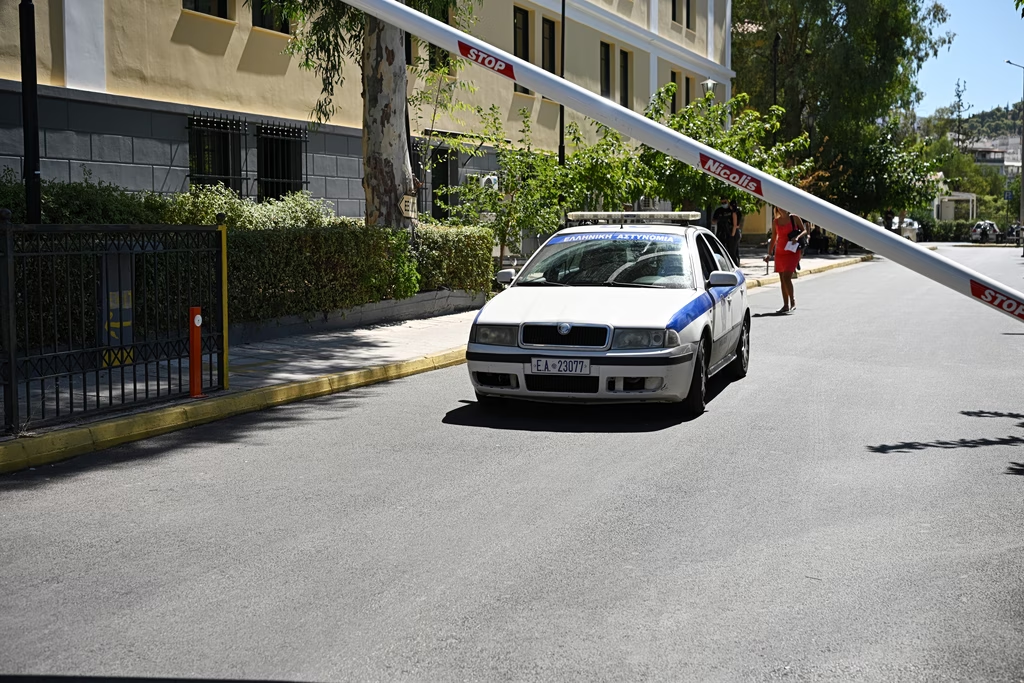
The trial over the Tempi train disaster in Greece continued Monday with the prosecutor’s recommendation on a request to examine the seized mobile phone of the stationmaster who was working the night shift when the crash occurred.
The request, submitted by a lawyer representing the prosecution, seeks an examination of the stationmaster’s phone, including incoming and outgoing calls, text messages and messages on applications such as Viber, as well as its memory card and SIM card.
The case is being heard by the Three-Member Felony Court of Appeals in Larissa.
Request follows testimony from victim’s daughter
The request followed testimony last Monday from the daughter of George Koutsoumbas, a train driver who was killed in the passenger train crash.
During her testimony, she referred to requests made by the families to appellate investigating judge Sotiris Bakaimis for the seizure of the recording equipment at Larissa railway station and the lifting of telephone confidentiality for the stationmaster’s phone.
She also cited a report by the families’ technical adviser, which was associated with the case three days before the trial began on March 23. The report stated that there had been interference with audio recordings from the station’s recording system.
The witness also highlighted what she described as an “11-minute gap” in communications between stationmasters and train drivers after the passenger train departed Larissa station. She said this was surprising because communications had been regular throughout the preceding period.
Evidence phase underway
The testimony of Koutsoumbas’ two daughters and wife also marked the beginning of the evidentiary phase of the trial.
On Tuesday, Antonis Psaropoulos, the father of Martha Psaropoulou and a lawyer representing the prosecution, testified as a witness. He spoke about actions that, in his view, were not taken during the investigation, particularly concerning the causes of the fire that followed the collision of the two trains.
“The investigation into what ultimately caught fire was extremely inadequate,” Psaropoulos said.
On Wednesday, relatives of the two drivers of the freight train, Dimitris Massalis and Spyros Voulgaris, testified.
The drivers’ parents spoke about the psychological toll on their families caused by the publication of theories and technical reports alleging that the freight train was carrying an “illegal cargo.”
They also referred to evidence in the case file, including a court-appointed expert report by a professor at the National Technical University of Athens’ School of Mining and Metallurgical Engineering, footage of the freight train, witness statements and audio recordings. They said the evidence rules out the scenario that the train was carrying “illegal cargo,” particularly in the drivers’ cabin.
Survivor expected to testify
A total of 10 witnesses have testified so far.
After the prosecutor presents her recommendation on the request to examine the stationmaster’s phone, the lawyers will state their positions on the recommendation before the court makes its decision.
The trial will then continue with testimony from relatives of the victims. A passenger who survived the collision while traveling aboard the Intercity train is also expected to testify Monday.
36 people charged in Tempi case
A total of 36 current and former officials and executives from organizations involved in Greece’s railway system are facing charges in connection with the disaster. They include personnel from the Hellenic Railways Organization (OSE), ERGOSE, Hellenic Train, the Regulatory Authority for Railways and the Ministry of Transport.
Of the 36 defendants, 33 are accused of dangerous interference with rail transportation with possible intent, involving acts that endangered the safety of railway transport and could have created a common danger to property and a risk to human life.
The charges allege that the acts resulted in the deaths of a large number of people, serious bodily injuries to multiple people and significant damage to public infrastructure. The alleged offense was committed repeatedly and jointly, according to the indictment.
The felony offense carries a penalty of up to life imprisonment.