 Μake us preferred on Google
Russian spy satellites appear to have played a key role in a series of precise attacks on Saudi Arabia by Iranian-backed militias, according to satellite tracking data and officials who spoke to The Associated Press.
In September, militias struck the pumping stations of the kingdom’s most important oil pipeline. Days later, another attack hit a Saudi air base and damaged an Italian fighter jet parked in a hangar. In both cases, a group of Russian reconnaissance satellites had gathered over the targets in the days before the strikes.
AURORAH Geosignal Intelligence, a private geospatial intelligence firm based in Geneva, says it reviewed 40 missile and drone attacks carried out against Saudi Arabia by Yemen’s Houthi rebels and Iraqi militias between July 1 and October 19. In every case, it found Russian government and military satellites passing over the targeted areas for days before and after the attack. The firm’s founder, Nawaf Obaid, described the link between the satellite activity and the strikes as a “100% match.”
Officials Point to Russian and Chinese Help
Three officials, including a Saudi official and a senior Houthi figure, along with a private intelligence analyst, told the AP that the Houthis and other Iranian allies have benefited from Russian intelligence and from Chinese capabilities. According to the AP, Iranian advisers in the field analyzed the information and passed it on to the militias.
Rayed Krimly, the Saudi Foreign Ministry’s deputy minister for public diplomacy, told reporters last week that Iran and the Houthis receive intelligence from elements in Russia and China, sometimes including commercial ones. He added that Riyadh raises these issues regularly with both countries and will keep doing so.
Moscow has rejected similar accusations in the past. In March, Kremlin spokesman Dmitry Peskov dismissed as “fake news” a Wall Street Journal report claiming Russia was supplying Iran with advanced satellite imagery and drone technology.
Russia and Iran have a long history of military cooperation, including the transfer of drone technology. Although Russia has not joined the region’s wars directly, U.S. and European officials have said it shares intelligence with Tehran. Shortly after the U.S.-Iran war began, the Washington Post, citing three officials, reported that Russia was giving Iran targeting information that included the locations of U.S. warships and aircraft in the Middle East, according to Reuters. Analysts noted at the time that Iran has only a few military-grade satellites and no constellation of its own, which makes Russian imagery especially valuable.
The Pipeline Attack
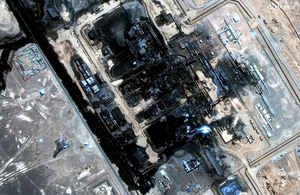
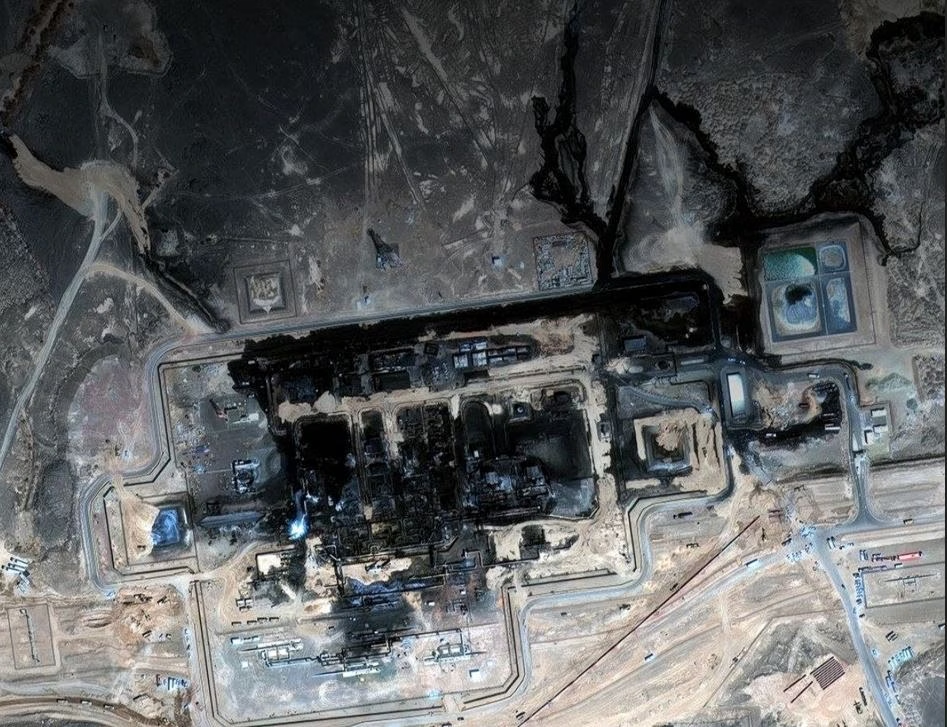
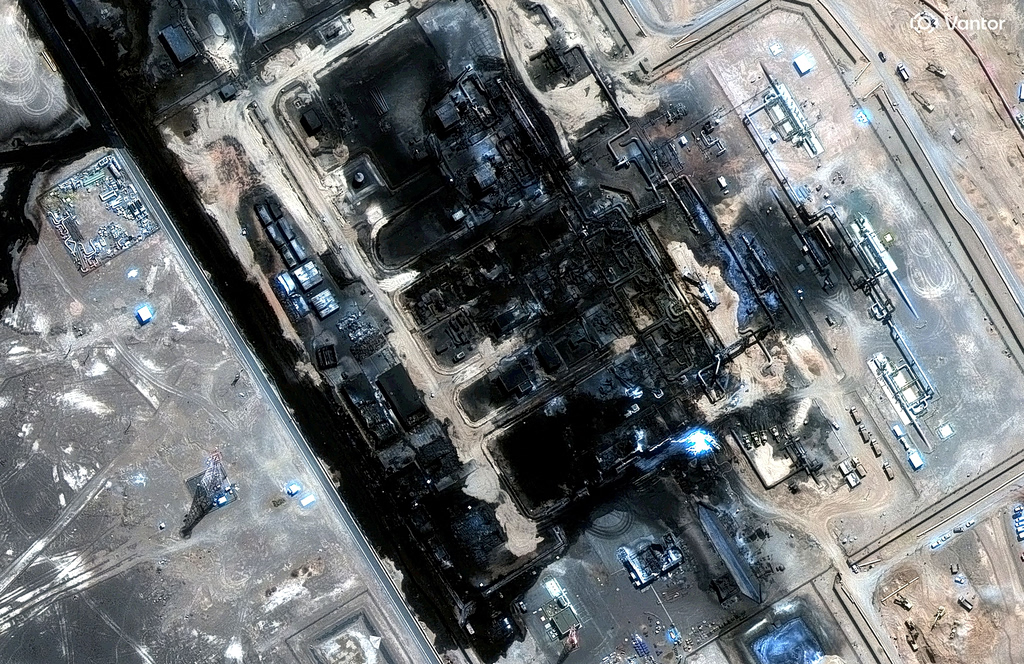
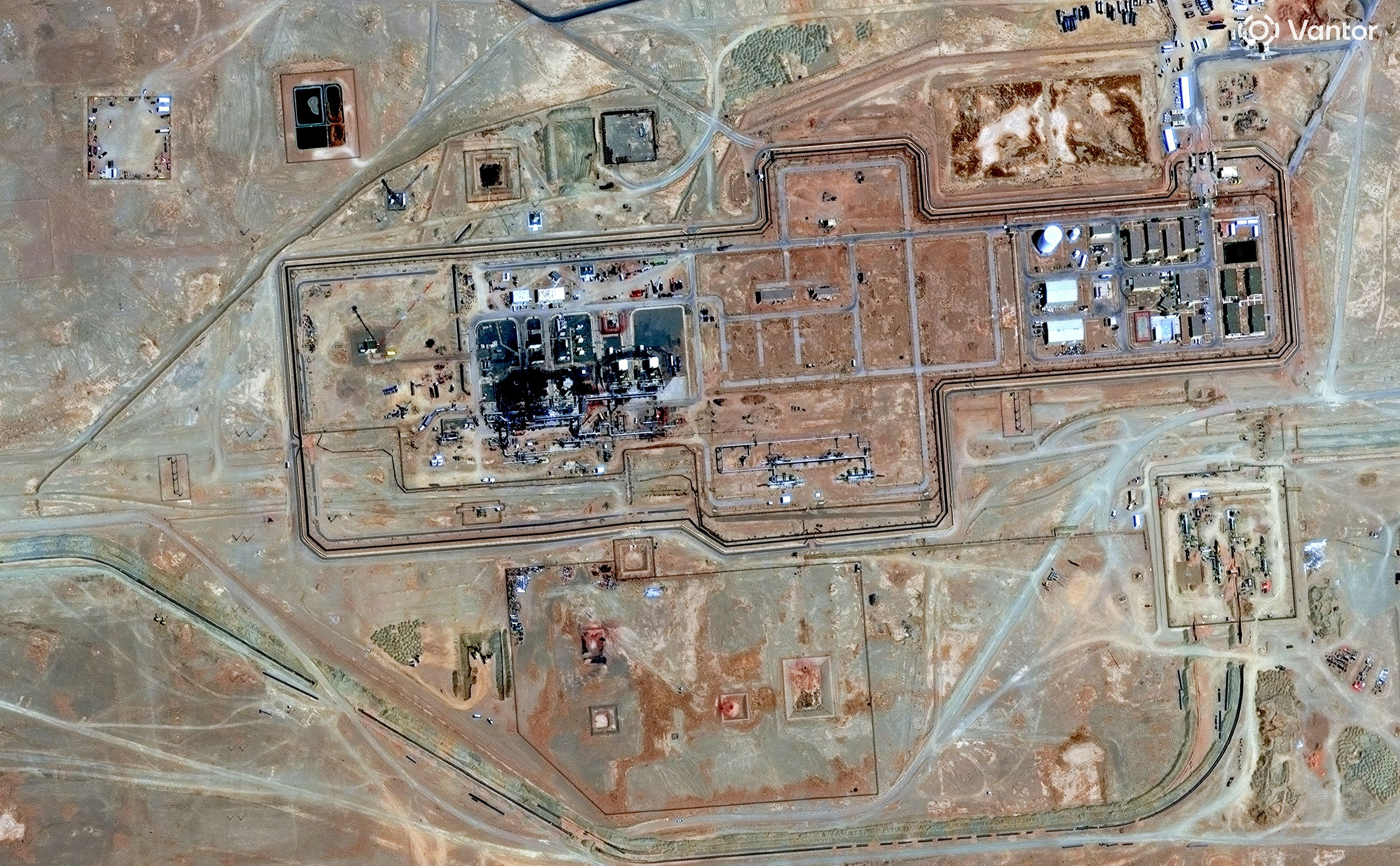
On the morning of September 10, drones launched from Iraq hit three key pumping stations on Saudi Arabia’s East-West Pipeline, immediately halting the flow of oil. The 1,200-kilometer (746-mile) line has become a vital export route for Saudi crude as Iranian attacks disrupt shipping in the Strait of Hormuz. According to Reuters, the pipeline had been carrying 4 million to 5 million barrels a day, roughly 4% to 5% of global supply.
Riyadh announced on September 11 that the pipeline was being closed, with the Energy Ministry calling the move a precaution, though satellite images showed fires at pumping stations. Reuters later reported that at least two European refiners were told they would receive no Saudi crude in October, and the pipeline resumed operations at reduced volume on September 22, with full capacity expected to take six to eight weeks to restore. In Baghdad, Iraqi leader Zaidi condemned the attack, ordered an investigation into the military command of Maysan province, which borders Iran, and removed its operations commander.
Obaid, a fellow at the Department of War Studies at King’s College London and a former adviser to Saudi officials, explained that the pumping stations are essential because the pipeline climbs more than 1,100 meters (3,608 feet) as it crosses the Najd Plateau before descending to the Red Sea coast. That, he said, is exactly where the Iraqi militias chose to strike.
His firm says 11 Russian Cosmos 2600 series satellites began focusing on those three sections of the pipeline in July, with flybys increasing in the weeks before the attack and in the hours surrounding it. This pattern points to reconnaissance both before and after the strike, Obaid said.
The Air Base Strike
About a week later, the Houthis fired several projectiles at King Fahd Air Base in Taif. In addition to damage to hangars, an Italian air force Eurofighter Typhoon was hit, according to Italy’s Defense Ministry. Italian Defense Minister Guido Crosetto confirmed the damage, and the base has hosted Task Force Air-Arabia, an Italian deployment of about 300 personnel, since late March 2026.
AURORAH says that for both the pipeline and the air base attacks, the number of Russian satellites over the targets rose by about 50% during the 72 hours around each strike, compared with July levels. Obaid argued that the precision of the Taif attack, which hit the Italian jet rather than Saudi aircraft at the same base, points to specialized intelligence that neither the Houthis nor Iran possess on their own. The Houthis have repeatedly warned foreign countries against helping Saudi Arabia.
How the Satellites Were Tracked
Using open-source data and other intelligence, AURORAH says it identified 72 Russian reconnaissance satellites among the more than 11,000 spacecraft in orbit and tracked their movements against military activity on the ground.
Obaid acknowledged that the firm has not intercepted any actual transfer of intelligence to Iran or its allies. Instead, he said, the consistent positioning of Russian satellites over strategic targets before strikes indicates that intelligence is being gathered and shared for targeting by the Houthis and Iraqi militias. He added that the same pattern appeared before Iranian strikes on U.S. bases during the U.S.-Iran war that began in February, and said the intelligence behind a weapon is becoming as important as the weapon itself.
Adam Marsh, vice president of technological solutions at California-based orbital intelligence firm LeoLabs, said such a concentration of satellites is consistent with intelligence gathering. Russia can deny it, he noted, but with no regulatory body and only general policy in place, there is little that can stop it.
Impact on the War in Yemen
An official briefed on Saudi investigations, who spoke on condition of anonymity, said intelligence confirmed that Russian satellites had helped the Houthis and Iraqi militias hit sensitive targets, including the pipeline pumping stations. The same official said satellite data also supported Iran’s March strikes on Prince Sultan Air Base, where a U.S. surveillance plane was badly damaged, and on a CIA unit within the U.S. Embassy compound in Riyadh. The investigations also found Russian- and Chinese-made parts in Houthi missiles and drones.
According to Obaid and a Houthi leader, Russian satellite intelligence has also supported major Houthi gains against Saudi-backed forces in Yemen’s civil war. AURORAH linked satellite activity to an October 15 Houthi strike on the presidential palace in Aden and a nearby Saudi-led coalition command center, as well as to an attack on a government recruitment center in Shabwa province that killed 75 recruits.
A senior Houthi leader told the AP that Iranian advisers in Yemen provide the group with targeting data based on Russian satellite intelligence. Security analyst Mzahem Alsaloum, who has tracked Iranian-backed groups for nearly a decade, said the advisers use this information to prepare target lists and operational details. The Houthi leader added that Iran has also supplied more advanced equipment, including drone control systems and technology to help missiles evade air defenses. He said the equipment was either developed by Iran, bought commercially or supplied by Russia and China, though he did not know whether those countries were aware it was being used in Yemen.