 Μake us preferred on Google
 New epidemiological data show that Thessaly records the highest rates of Parkinson’s disease in Greece, according to an investigation by Solomon, which examined possible links between the disease and environmental exposure, particularly pesticides.
The data, published in July 2025 by the University of Crete and based on national prescription records, found that Thessaly registers about 69 new Parkinson’s cases per 100,000 residents annually- nearly double the rates recorded in Crete and the South Aegean. Thessaly also ranks first nationwide in total number of patients and in mortality associated with the disease.
Parkinson’s disease mainly affects men over 60, but researchers said demographic factors alone do not explain the regional differences. Dr. Giorgos Makris, a neurologist who participated in the University of Crete study, told Solomon that no causal relationship has yet been established and that further epidemiological and clinical research is needed to assess possible genetic and environmental factors.
The report includes testimonies from residents in rural areas near Trikala who were diagnosed with Parkinson’s after years spent working in agriculture or living near frequently sprayed farmland. The individuals described long-term exposure to pesticides or repeated spraying in their communities.
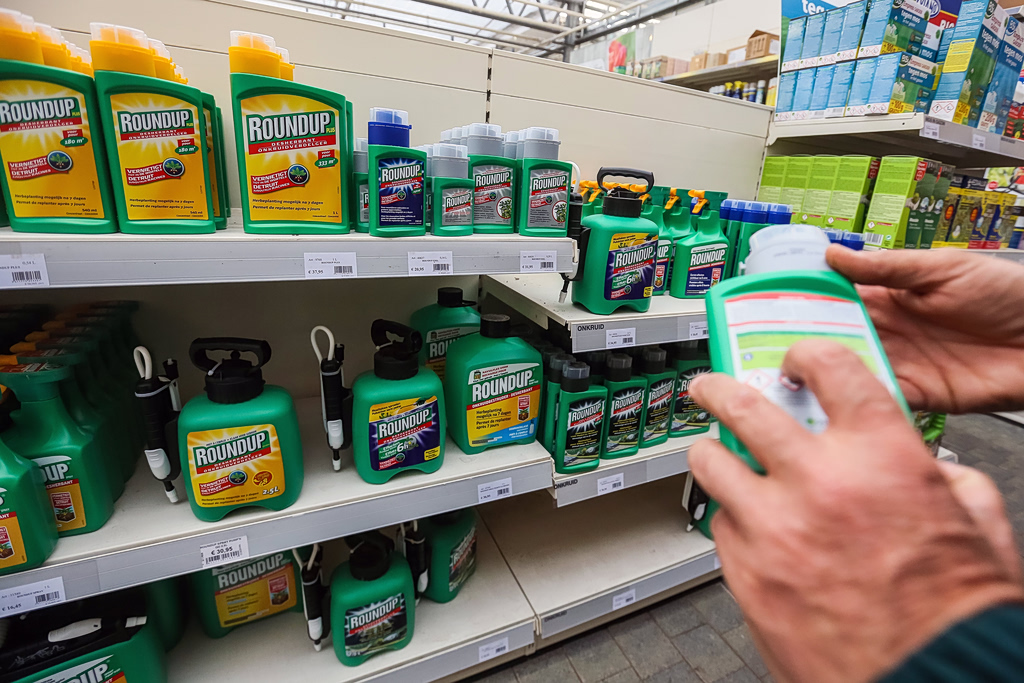
A man shows bottles of ‘Roundup’ which contain glyphosate in a garden store in Brussels, 23 October 2017. Members of the EU Parliament (MEPs) on 24 October 2017 are to vote on a draft resolution calling for a phasing out of the herbicide glyphosate and its total ban by 2020. The herbicide glyphosate is an active ingredient in Roundup. EPA/STEPHANIE LECOCQ
The ability to study links between higher Parkinson’s rates and risk factors is limited by the fact that Greece lacks a National Parkinson’s Patient Registry, and even among known patients, their occupations and exposure histories are not consistently recorded.
International research has linked several pesticides to increased Parkinson’s risk, including paraquat, rotenone and maneb, substances banned in the European Union between 2007 and 2017.
A Reuters investigation has previously revealed that banned pesticides continue to circulate in Greece through illegal imports and stockpiling. An estimated 25% of pesticides in Greece circulate illegally, often imported from Turkey and Bulgaria and even China.
The report further notes that chlorpyrifos, banned in the EU since 2020, was the most frequently detected pesticide in Greek-origin food products flagged in European alerts for dangerous pesticide residues between 2019 and 2024.
Meanwhile, the EU is still in the process of phasing out the powerful weed killer glyphosate, more widely known as Roundup, which has been linked to long-term health problems such as cancer and reproductive and endocrine disruption.