The two doctors accused in connection with the death of Greek singer Giorgos Mazonakis were remanded in custody after lengthy statements to investigators, during which they denied making any mistake or committing the omissions that prosecutors have included in the case against them.
Both doctors also categorically denied the allegation of intent attributed to them.
Doctors blame ambulance transfer
During their statements, the two defendants attributed responsibility for the singer’s death to Greece’s National Emergency Aid Center (EKAB), claiming that the ambulance arrived at the medical office in Athens’ Kolonaki district without a stretcher.
They said paramedics used a chair to move Mazonakis from the first floor of the medical office to the ambulance.
According to their account, cardiopulmonary resuscitation (CPR) was interrupted during the transfer. They argued that such an interruption is not permitted under medical protocols and that, because Mazonakis had already suffered cardiac arrest, it prevented any possibility of resuscitation.
Dispute over medical equipment
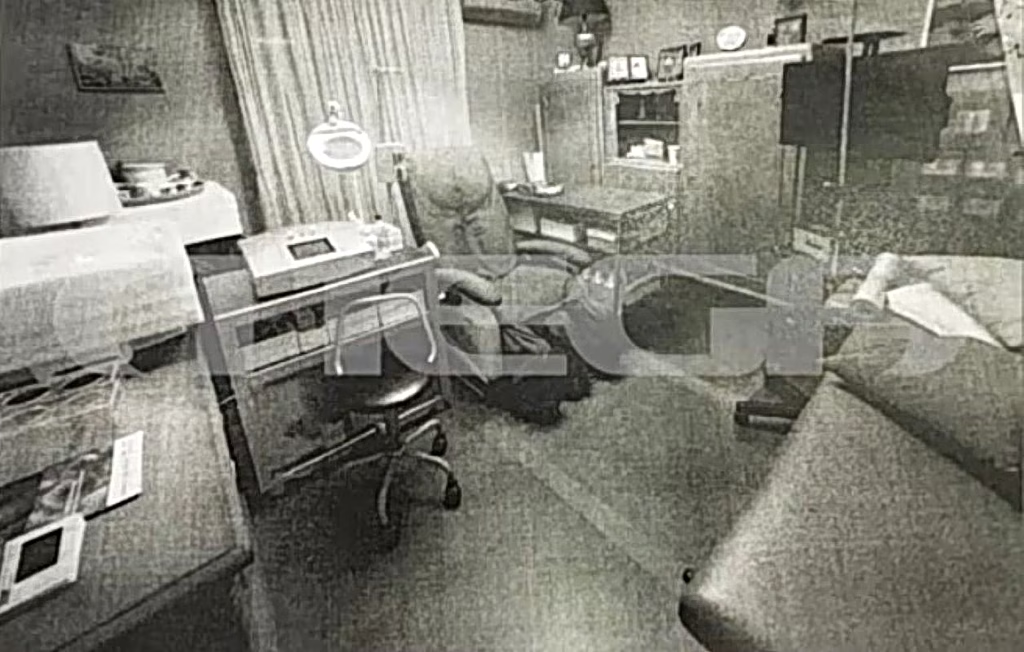
The two doctors also rejected criticism from the Athens Medical Association (ISA), arguing that the two seized plasmapheresis machines they had at the practice were completely legal.
They cited purchase invoices and said they had declared the machines to the ISA in 2025 and 2026, submitting photographs of the equipment as supporting evidence.
Plasmapheresis is a procedure in which plasma is separated from the blood. The machines in question are central to the investigation into the circumstances surrounding Mazonakis’ death.
Disputed timing of cardiac arrest
The timing of the singer’s cardiac arrest also emerged as a key point in the doctors’ statements.
Both defendants placed the time of the cardiac arrest at 4:15 p.m., while the call for an ambulance was made at 4:21 p.m.
The discrepancy is part of the evidence being examined by investigators as they reconstruct the events at the medical office.
One of the doctors, Ioanna Gaka, was questioned about a photograph she took of Mazonakis at the practice. She told the investigator that photographing patients during procedures was a routine practice for her.
The second doctor, Ilias Theodoropoulos, said there was an eyewitness to what happened at the practice, identifying the patient who was already questioned during the investigation.
Doctors deny ignoring machine alerts
Both defendants also denied allegations that they ignored alerts from the plasmapheresis machine during the procedure.
They said the alarms were related to simple blood-vessel ruptures that can occur when the venous catheter comes out.