 Μake us preferred on Google
 Greece is facing a sharp rise in West Nile virus infections, according to the latest report from the National Public Health Organization (EODY), covering data through August 26, 2026. In just the past week, 75 new locally acquired cases were diagnosed, bringing the total since the start of the surveillance period to 232.
The figures show that this year’s outbreak is almost three times larger than during the corresponding period last year.
- 165 patients developed serious central nervous system (CNS) complications, including encephalitis, meningitis or acute flaccid paralysis.
- 67 people experienced mild symptoms or had no CNS symptoms.
- 19 people have died, all over the age of 65, with a median age of 85.
- 69 patients are currently hospitalized in hospitals across the country.
EODY report in detail
The weekly EODY epidemiological surveillance report provides a summary of laboratory-confirmed West Nile virus infections diagnosed each week during the 2026 transmission season.
The epidemiological surveillance data come from reports submitted by treating physicians to EODY, as well as daily communication with partner laboratories involved in diagnosing West Nile virus: theHellenic National Reference Centres for Arboviruses and Hemorrhagic Fever viruses at Aristotle University of Thessaloniki; the Diagnostic Department of the Pasteur Hellenic Institute; the Microbiology Laboratory of the Medical School of the National and Kapodistrian University of Athens; and the Clinical Virology Laboratory of the University of Crete–University Hospital of Heraklion.
EODY’s Department of Vector-Borne Diseases, within the Directorate of Epidemiological Surveillance and Prevention of Infectious Diseases, systematically investigates diagnosed cases within 24 hours of notification. This is done through communication with treating physicians and interviews with patients to determine the likely place of exposure, the characteristics of the disease and potential risk factors. The clinical progress and outcome of every patient are also monitored daily throughout hospitalization.
From the beginning of the 2026 season through August 26, 2026, at 11 a.m., a total of 232 locally acquired West Nile virus infections had been diagnosed and reported in Greece. Of these, 165 cases involved central nervous system complications — encephalitis and/or meningitis and/or acute flaccid paralysis — while 67 cases involved mild symptoms or no CNS complications.
During the past week alone, 75 new locally acquired cases were diagnosed and reported.
A total of 19 deaths have been recorded during the 2026 season through August 26 among patients with West Nile virus infection. All were over the age of 65, with a median age of 85 and an age range of 66 to 92.
As Deputy Health Minister Marios Themistokleous points out, mathematical models leave open the possibility that 2026 could become a record year, potentially surpassing the severe 2018 season, when Greece recorded 317 cases and 59 deaths.
When is the wave expected to peak?
Health authorities estimate that Greece is currently approaching the peak of this year’s wave, which is expected within the next one to two weeks.
However, transmission of the virus will not stop immediately afterward, with new cases expected to continue being recorded at least through the end of September. Health Minister Adonis Georgiadis, for his part, stressed that despite the increase in the indicators, “there is no reason to panic,” noting that the health care system is not under pressure.
Attica on ‘red alert’: Special traps and nighttime spraying
A large share of the cases continues to be concentrated in Attica, with local municipalities stepping up mosquito-control measures:
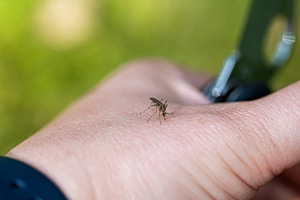
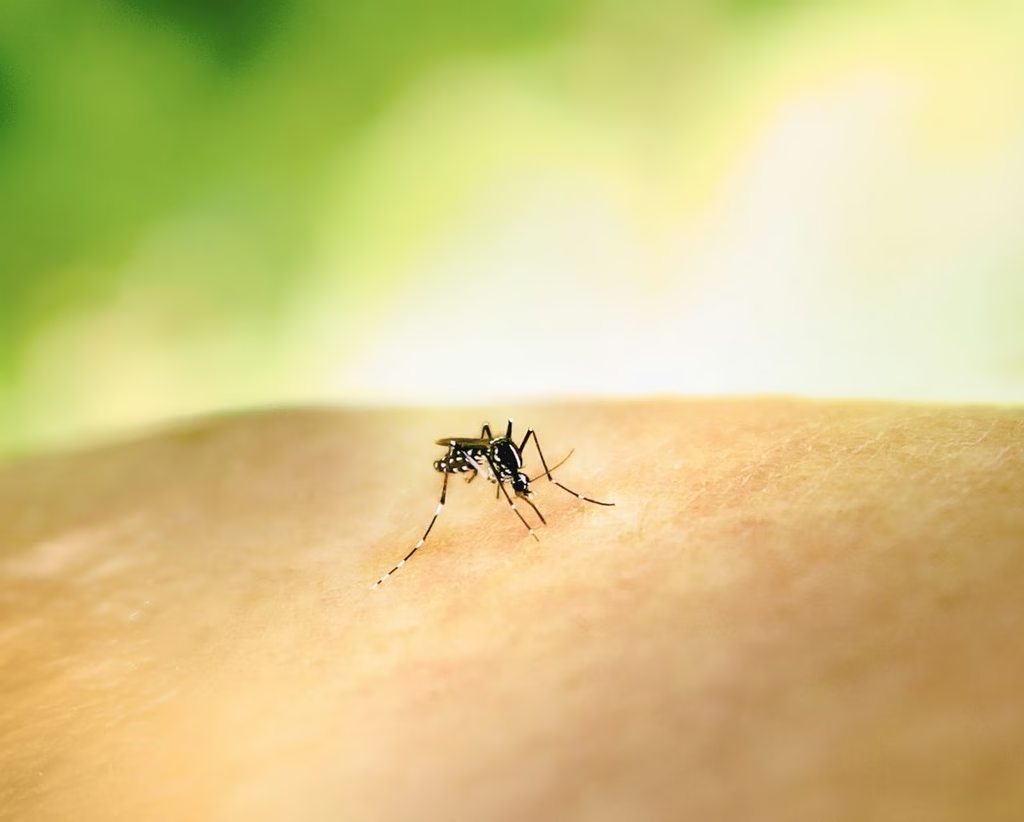
- In Pallini, where cases have increased, the municipality is using a digital risk map to map storm drains and is installing special pheromone traps to detect female mosquitoes. According to mosquito-control contractor Eirini Savouri, monitoring is focused on common Culex mosquitoes, which are the main vector responsible for transmitting the virus to humans.
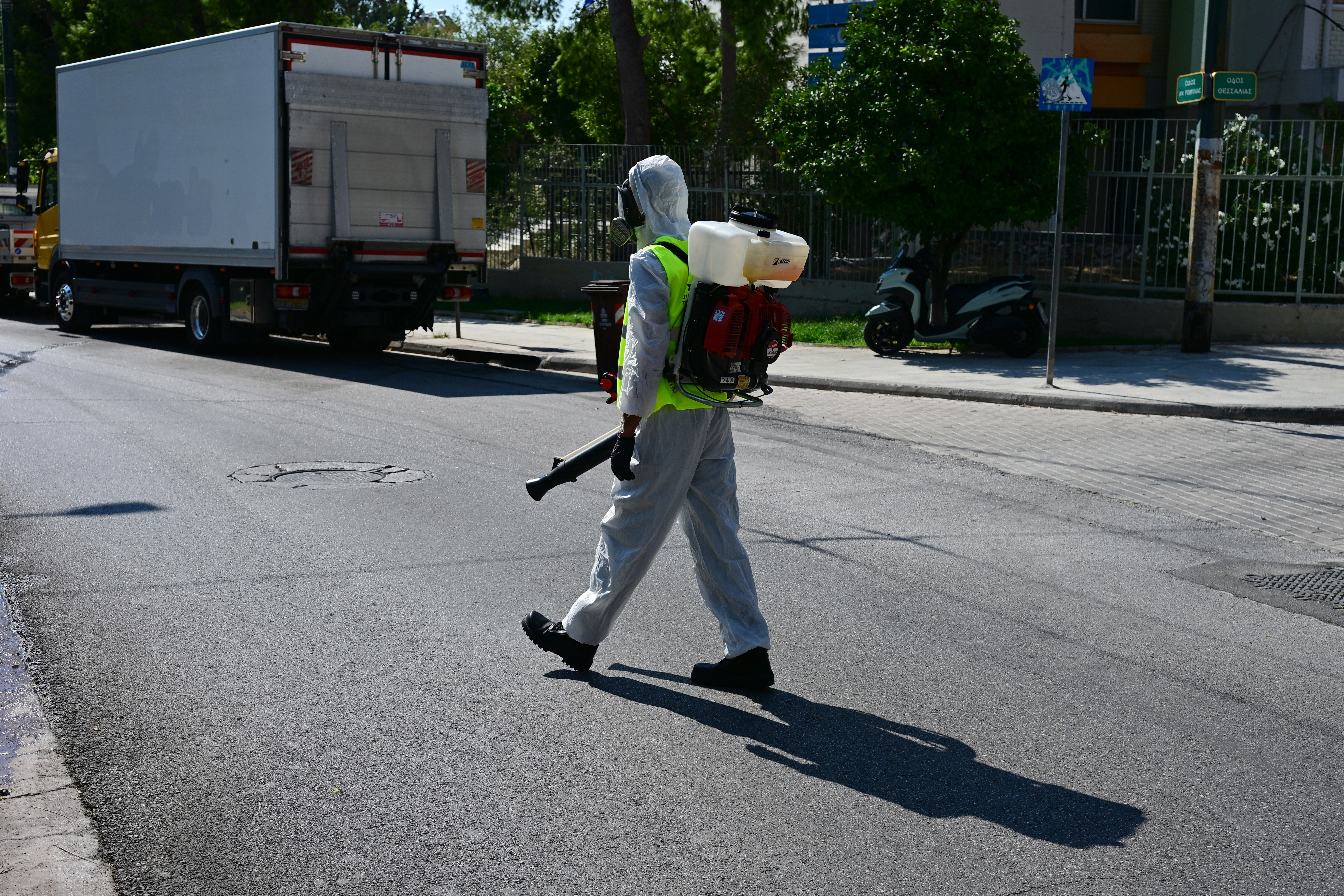
- In Filothei-Psychiko, following confirmation of a case, specialized crews carried out emergency spraying against adult mosquitoes at 3 a.m. within a 300-meter radius of the site where the case was identified.
Authorities are strongly urging residents, particularly older people, to take personal protective measures against mosquito bites throughout the fall.